A Feast for the Eyes: The Musée des Arts Décoratifs Celebrates a Pioneering Designer
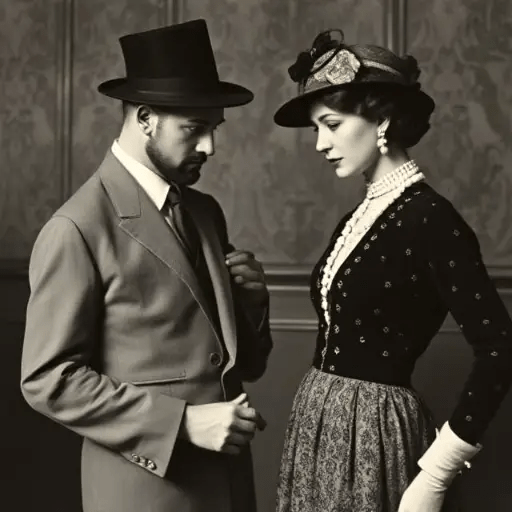
In the early 20th century, Parisian fashion was revolutionized by one man: Paul Poiret, the self-proclaimed “King of Fashion.” Poiret’s designs not only liberated women’s bodies from the constraints of corsets but also elevated fashion to an art form. His collaboration with artists such as Raoul Dufy and Georges Lepape made him a darling of the art world, and his bold use of color, inspired by Fauvism, paved the way for future generations of designers.
Born on April 20, 1879, in Paris, France, Paul Poiret was the son of a textile merchant. From a young age, he was fascinated by the world of fashion and spent hours observing the work of the city’s top couturiers. After completing his education, Poiret began his career in the fashion industry, working under the tutelage of couturier Jacques Doucet and later at the House of Worth, where he honed his skills alongside some of the most renowned designers of the time. However, it was his own eponymous label, established in 1903, that truly showcased his unique vision.
Poiret’s designs were a reflection of his eclectic personality and his love of travel. He drew inspiration from the exotic visions of the Ballets Russes, a fusion of music, dance, and art, and his use of exotic fabrics, sourced from his travels around Europe and North Africa, added an extra layer of depth to his creations. His designs were not just beautiful, but also revolutionary, as he sought to free women’s bodies from the constraints of corsets and restrictive clothing.
The upcoming exhibition at the Musée des Arts Décoratifs, “Paul Poiret: Fashion is a Feast,” will delve into the designer’s trajectory, highlighting his affiliations with visual artists and his influence on later designers. The show will feature a selection of Poiret’s designs, including the iconic “La Perse” coat, designed by Dufy in 1911, which showcased Poiret’s innovative use of graphic prints. Visitors will also get a glimpse into Poiret’s lavish themed parties, where he would don fantastical costumes that showcased his creativity. These elaborate events, often held at his Parisian mansion, were the epitome of opulence, with guests dressed to impress in Poiret’s latest creations.
Poiret’s personal life was as fascinating as his designs. He was known for his extravagant parties, where he would invite some of the most famous artists and intellectuals of the time. He was also a prolific writer, and his 1931 memoir, “The King of Fashion,” is a must-read for fashion historians. Poiret’s love of art and design extended beyond fashion, as he was also a collector of rare and exotic artifacts. His collection, which included pieces by Henri Matisse, Pablo Picasso, and Constantin Brâncuși, among others, was one of the most impressive of its kind.
Poiret’s legacy extends beyond his designs. He was a pioneer in hiring artists to work on his textiles, a practice that is now common in the fashion industry. As he wrote in his 1931 memoir, “The King of Fashion,” “I have always loved painters, and felt on an equal footing with them. It seems to me that we practise the same craft, and that they are my fellow workers.” This innovative approach to fashion not only pushed the boundaries of what was possible but also blurred the lines between art and design.
The exhibition will conclude with a reflection on Poiret’s lasting impact on the world of fashion. His influence can be seen in the works of later designers, such as Coco Chanel, who built upon Poiret’s legacy of liberating women’s bodies from restrictive clothing. Poiret’s bold use of color and innovative textile designs continue to inspire fashion designers today, making him a true pioneer in the world of fashion.
Poiret’s life was not without its challenges, however. He faced intense competition from other designers, including Coco Chanel, who would eventually surpass him in popularity. He also struggled with the changing tastes of the public, as his exotic and avant-garde designs fell out of favor in the 1920s. Despite these challenges, Poiret remained true to his artistic vision, and his legacy continues to inspire fashion designers and artists to this day.



 The Tower Post