How custody battles and cultural diplomacy encircle the world’s oldest Christian sanctuary on Mount Sinai
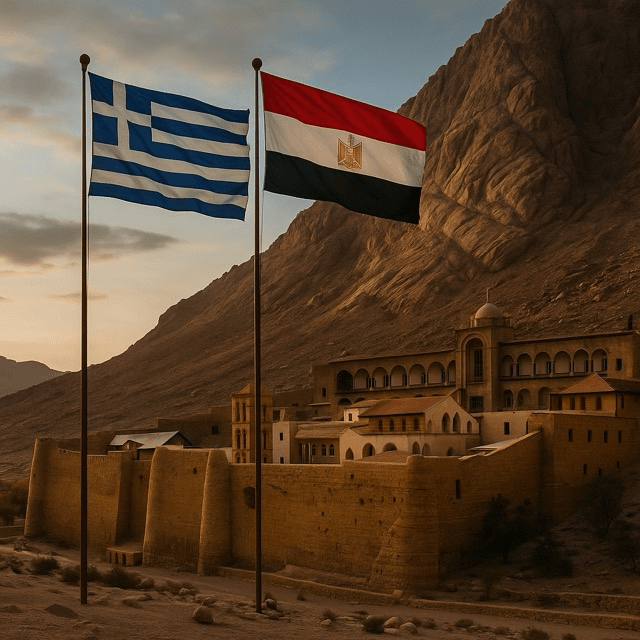
At 1,500 meters above sea level on Egypt’s rugged Sinai Peninsula, the sixth‑century Monastery of Saint Catherine appears timeless—its granite walls and hidden garden seemingly immune to geopolitics. Yet in 2025 the desert redoubt has slipped into the eye of a modern diplomatic storm. Athens and Cairo, allies on paper, are trading increasingly sharp words over who may govern, restore, and profit from what UNESCO calls “the oldest continuously operating Christian monastery in the world.”
The brotherhood of roughly twenty Greek Orthodox monks traces its custodianship to a chrysobull issued by Byzantine Emperor Justinian I in A.D. 552. Successive charters from Muslim caliphs, Ottoman sultans, and even Napoleon reaffirmed what the monks regard as near‑sovereign autonomy: the right to elect their own archbishop‑abbot, levy their own rules, and hoist the double‑headed Byzantine eagle over the fortress‑like compound. That autonomy, they argue, is threatened by Egypt’s 2023 Antiquities Law, which folds all Sinai archaeological sites into a single administrative zone.
Tensions boiled over in January 2025 when Egyptian officials inaugurated a gleaming visitor‑center complex outside the monastery’s medieval walls without the monks’ blessing. The $28 million project includes turnstiles linked to a Cairo‑based ticketing system that diverts 85 percent of gate revenue to a national heritage fund. In a letter leaked to Kathimerini, Archbishop‑Abbot Damianos denounced the scheme as “an expropriation of sacred patrimony and a violation of our ancient talisman of independence.” The Greek Foreign Ministry summoned Egypt’s ambassador two days later.
Cairo retorts that the monastery sits firmly on Egyptian soil and that its treasures—from the Codex Sinaiticus fragments to icons rescued from iconoclast flames—are part of Egypt’s civilizational mosaic. “No one is seizing the monastery,” Culture Minister Nevine el‑Kelany insisted on Nile TV. “We are safeguarding it for humanity, just as we safeguard Pharaonic tombs.” Egyptian officials point to security costs: since the 2017 ISIS‑Sinai attack on a nearby checkpoint, the army has stationed an armored battalion in Wadi el‑Arbaeen at an annual cost of €11 million.
The dispute is not only fiscal. It also taps into deeper anxieties about regional influence. Greece has spent the past decade forging an eastern‑Mediterranean bloc with Egypt, Cyprus, and Israel to counter Turkish maritime claims. For Athens, defending the Hellenic character of Saint Catherine buttresses soft‑power credentials in the Orthodox world and reinforces its image as guardian of Byzantine heritage. For Cairo, asserting sovereignty over Sinai’s holy sites strengthens President Abdel Fattah el‑Sisi’s narrative that Egypt is both Arab and protector of Christianity.
Behind the political theater lie practical dilemmas. The monastery’s priceless library—the second‑largest collection of early Christian manuscripts after the Vatican—needs climate‑controlled storage and digitization. Egypt wants the work overseen by its Supreme Council of Antiquities; the monks prefer the Stavros Niarchos Foundation, a Greek donor that funded their new wing in 2020. Meanwhile, archaeologists from the University of Athens complain that excavation permits have slowed to a trickle unless they partner with Egyptian universities.
Ecclesiastical politics add another layer. Although Saint Catherine is Greek Orthodox, the Coptic Church of Egypt has long claimed spiritual kinship with the Sinai desert, where the Holy Family reputedly sought refuge. Patriarch Tawadros II stopped short of siding with Cairo but reminded reporters that “Sinai is a gift to all Christians, not a geopolitical bargaining chip.” His words hinted at a broader concern: sectarian fallout if the monastery becomes a symbol of foreign privilege rather than shared heritage.
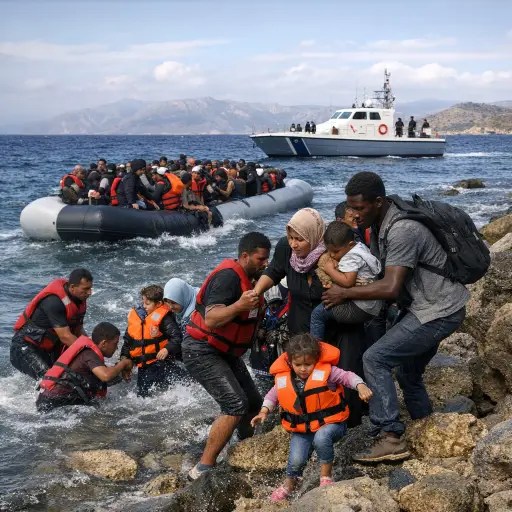
Both governments have incentives to de‑escalate. Greece relies on Egyptian intelligence to monitor migrant routes across the eastern Mediterranean; Egypt counts on Greek naval cooperation to deter Turkish hydrocarbon surveys near Crete. Analysts therefore expect a face‑saving compromise. One proposal circulating in diplomatic cables would allow gate revenues to be split three ways—monastery, Egyptian state, and a joint conservation fund—while guaranteeing the monks veto power over liturgical spaces.
Yet trust is fragile. In April a leaked Egyptian draft regulation demanded Arabic signage inside the monastery’s basilica, prompting Greek media to evoke Ottoman‑era controls. Conversely, Egyptian tabloids lambasted the monks for “hiding” manuscripts abroad after a pallet of Greek‑bound parchments failed to clear customs at Alexandria port. Social‑media algorithms fanned the outrage, turning a complex property dispute into nationalist clickbait.
History reminds both parties that Sinai’s silence can roar. When Justinian built the monastery in the sixth century, he placed its chapel over what tradition holds to be Moses’ Burning Bush—a symbolism of divine dialogue. Fifteen centuries later, dialogue rather than decree may again be the only fire that illuminates this desert shrine. Whether through a bilateral treaty, an EU‑brokered memorandum, or simply gestures of good faith, Greece and Egypt must decide if Saint Catherine will remain a bridge between civilizations or another casualty of Mediterranean rivalry.

 The Tower Post