Private talks hint at Christine Lagarde’s early departure as ECB president—raising questions over succession, inflation, and Europe’s financial future
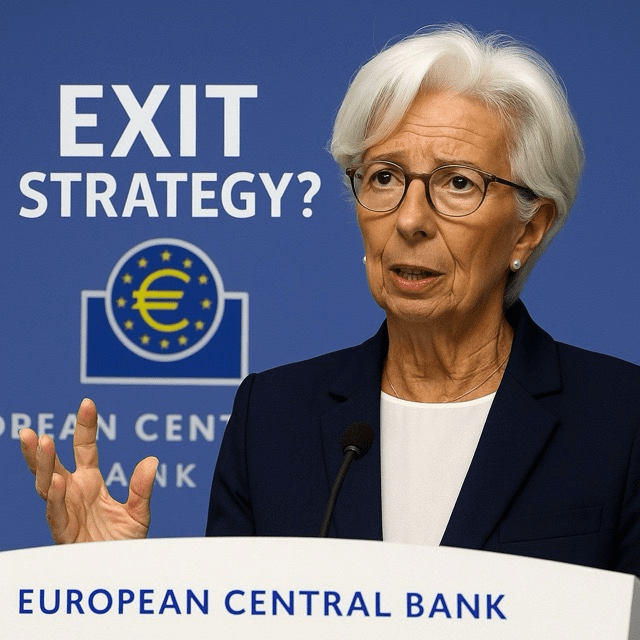
Frankfurt | 31 May 2025 — Christine Lagarde, president of the European Central Bank since 2019, has entered confidential discussions with senior EU officials about stepping down before her eight-year term expires in 2027, according to multiple sources familiar with the matter. The talks are said to have accelerated in recent weeks as Lagarde weighs her legacy and growing internal dissent over the ECB’s post-inflation monetary strategy.
Lagarde, 69, has not commented publicly on the possibility of an early departure. But aides confirm that informal conversations have occurred with both the European Commission and the European Council, who are responsible for nominating her successor. Two senior ECB sources, speaking anonymously due to the sensitivity of the subject, say Lagarde has grown increasingly frustrated with the political infighting between eurozone governments over fiscal alignment and green investment mandates.
“She came in as a consensus-builder, but this is no longer a consensus era,” said one of the officials. The rumblings come at a delicate time: the ECB is navigating the tail end of a rapid rate-hiking cycle that has cooled inflation but stirred political unrest in debtor nations like Italy and France.
Internally, some Governing Council members have reportedly clashed with Lagarde over communication style and the speed of proposed rate cuts. A leaked memo from April shows at least three central bank governors urging a more data-driven, ‘less narrative’ approach. Lagarde, known for her polished delivery and macro-political instincts, has sometimes been perceived as too political by hawks who favor a technocratic tone.
Analysts say the institutional stakes are high. “If Lagarde departs early, it throws succession into uncharted waters,” said Carsten Brzeski, chief economist at ING Germany. “There is no obvious candidate who satisfies both northern fiscal conservatives and southern growth advocates.” Names floated in Brussels include ECB Vice-President Luis de Guindos, Bundesbank chief Joachim Nagel, and Bank of France governor François Villeroy de Galhau.
Lagarde’s presidency has been defined by transformation. She steered the ECB through the COVID-19 pandemic with an unprecedented €1.85 trillion bond-buying program, helped design its new symmetric inflation target, and elevated climate change to a core policy concern. While she lacked traditional central banking experience, her tenure expanded the bank’s public profile and encouraged cross-institutional coordination.
Yet critics argue that under Lagarde, the ECB became too intertwined with political messaging. “Her strength is her weakness,” said a former ECB economist. “She gave the institution a human voice, but sometimes at the cost of credibility on inflation expectations.” Market reaction to her press conferences has often been volatile—highlighting the fine line between charisma and clarity.
Should she step down, timing will be crucial. Sources suggest any transition would be planned for early 2026, allowing the next ECB head to shape post-pandemic normalization and navigate potential fallout from global trade tensions. The European Council would need months to vet nominees and secure political consensus—an increasingly complex task in a fragmented European Parliament.
In the interim, Lagarde remains committed to her duties. Speaking in Lisbon last week, she reaffirmed the ECB’s independence and called for “courage and clarity” in economic policymaking. Colleagues say she has no intention of leaving the eurozone exposed to instability. But the signal is clear: a chapter may be closing sooner than expected.
For Europe’s financial guardians, the prospect of Lagarde’s exit is both a challenge and an opportunity. As the ECB prepares for its next era, the spotlight shifts not only to who will lead—but how they will lead. The stakes, as always with the euro, are existential.



 The Tower Post