A Leap in Performance That Redefines the Limits of a Production Car
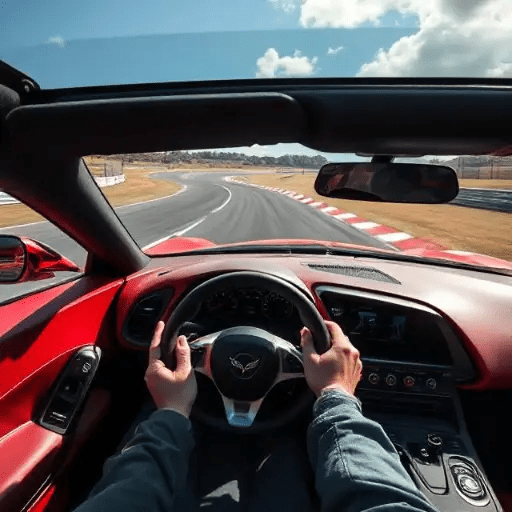
The 2025 Chevrolet Corvette ZR1 is a car that exists in a realm beyond the ordinary, where the laws of physics are bent and twisted to achieve the impossible. With its 1064-horsepower twin-turbocharged V8 engine, the ZR1 is a beast that redefines the limits of what a production car can achieve. Its acceleration is so explosive that it’s hard to find a frame of reference, but let’s try. The 2006 Corvette Z06, with its 505-hp LS7 engine, hit 60 mph in 3.6 seconds. The 2025 ZR1 is almost that quick over the next 60 mph – it runs 60 to 120 mph in 3.9 seconds. In 23.8 seconds, you’re at 200 mph.
The ZR1’s acceleration is a result of its optimized engine, which was designed from the ground up to produce as much power as possible. The LT7 engine features a new intake, strengthened pistons and connecting rods, and a whole extra port fuel-injection system complementing the direct-injection setup. The result is a car that can produce 1064 horsepower at 7000 rpm, and 828 pound-feet of torque at 6000 rpm. This is a car that can accelerate from a standstill to 60 mph in just 2.2 seconds, and reach 200 mph in under 24 seconds.
But the ZR1 is not just a car for the track. It’s a car that’s designed to be driven on the street, and its performance is usable right off the line. The ZR1’s 2.2-second 60-mph time is the best number we’ve ever seen from a rear-wheel-drive car, and matches the all-wheel-drive Porsche 911 Turbo S. The Corvette’s launch control is very clever, and very adjustable – our best results came with a 3500-rpm launch at 10 percent slip. This allows the driver to control the car’s acceleration, and launch it from a standstill with precision and control.
However, the ZR1’s historic leap in horsepower doesn’t come with commensurate gains in braking and cornering. The ZR1’s 1.13 g’s on the skidpad is a top-of-the-food-chain number, but still not quite as good as the 1.16 g’s we saw from the Z07-equipped Z06. And although the ZR1 gets upsized 15.7-inch front brake rotors, its braking performance mirrors the Z06’s: Stopping from 70 mph requires 140 feet of pavement, and 100 mph is scrubbed in 273 feet, compared with 139 feet and 274 feet for the Z06. This suggests that the ZR1’s performance is not just about raw power, but also about finesse and control.
Despite its incredible performance, the ZR1 is not without its drawbacks. Its thirst for gasoline is voracious, and its relatively small 18.5-gallon fuel tank will be the constraining factors in track-day shenanigans. We weren’t trying to set any lap records, and still the ZR1 managed barely 50 miles before demanding a pit stop. One tank that included the five-mile drive back from the gas station netted less than 4 mpg. This is a car that will need to be refueled frequently, and will require a significant amount of fuel to maintain its performance.
The ZR1 is a car that exists in a world of its own, where the laws of physics are bent and twisted to achieve the impossible. It’s a car that’s not for the faint of heart, but for those who are willing to push the limits of what’s possible. And if you’re stout enough to want a taste of that future, the ZR1 is ready right now.
Specifications:
Engine: twin-turbocharged and intercooled DOHC 32-valve V8
Displacement: 333 in 3
Power: 1064 hp @ 7000 rpm
Torque: 828 lb-ft @ 6000 rpm
Transmission: 8-speed dual-clutch automatic
Chassis: mid-engine, rear-wheel-drive
Suspension: control arms/control arms
Brakes: 15.7-in vented, cross-drilled carbon-ceramic disc (front), 15.4-in vented, cross-drilled carbon-ceramic disc (rear)
Tires: Michelin Pilot Sport Cup 2R ZP (front), Michelin Pilot Sport Cup 2R ZP (rear)
Curb weight: 3831 lb
Passenger volume: 51 ft 3
Trunk volume: 9 ft 3a
Fuel economy: 4 mpg (track), 13 mpg (street)
Price: $178,195 (base), $205,265 (as tested)




 The Tower Post