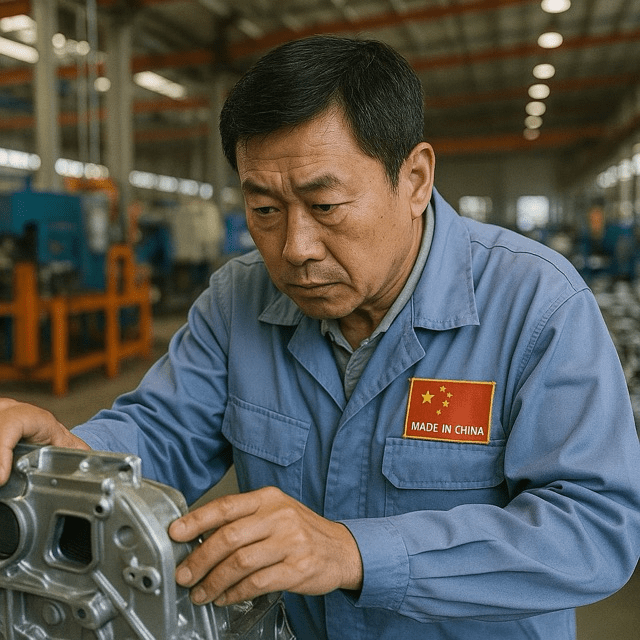
Through aggressive investment and state-backed industrial strategy, China cements its dominance in global manufacturing by 2025
Introduction
A decade ago, China unveiled “Made in China 2025,” an ambitious state-driven industrial policy designed to transform the country from the world’s factory into a global powerhouse of high-tech manufacturing. Today, that goal has largely been realized. Through massive state subsidies, targeted investments, and strategic control over key sectors, Beijing has positioned itself as a dominant force in global production—surpassing expectations and unsettling competitors.
Strategic Vision and Execution
Launched in 2015, the initiative focused on ten priority sectors including robotics, aerospace, semiconductors, electric vehicles, and advanced medical devices. The plan combined long-term industrial coordination with short-term capital deployment, using tools like preferential loans, state-owned enterprise reform, and forced technology transfers.
A Decade of Results
By mid-2025, China had become the top global supplier of electric vehicles, controlled over 65% of the solar panel and battery markets, and captured significant market share in industrial automation and telecommunications equipment. Local champions like BYD, Huawei, and CATL are now global brands, rivaling and in some cases surpassing Western competitors in innovation and scale.
State Investment Pays Off
China’s approach—blending centralized planning with selective market openness—has paid dividends. Local governments provided land, tax breaks, and direct subsidies to emerging companies. National ministries funded billions in R&D and created industrial clusters that lowered production costs and fostered innovation. These policies created ecosystems difficult for foreign firms to replicate.
Western Reactions and Pushback
The success of “Made in China 2025” has sparked unease in Washington, Brussels, and Tokyo. Western policymakers accuse Beijing of distorting global markets and violating WTO principles. Tariffs, investment screenings, and technology bans have all been employed to contain China’s rise. But despite these measures, China’s manufacturing momentum has proven difficult to slow.
Innovation vs. Imitation
Critics argue that many Chinese gains came from subsidized scaling rather than organic innovation. Yet recent breakthroughs in AI chips, quantum computing, and green hydrogen suggest a shift toward genuine technological leadership. China is no longer just making products faster and cheaper—it is now making them smarter.
Domestic Growth and Geopolitical Influence
The industrial boom has fueled job creation and income growth, especially in inland provinces. It has also strengthened Beijing’s hand geopolitically. Countries dependent on Chinese components face tough choices when aligning with Western decoupling strategies. Supply chain dominance has become both an economic asset and a geopolitical tool.
Conclusion
As 2025 unfolds, “Made in China” is no longer a slogan—it’s a reality reshaping global industry. While the long-term sustainability of its state-driven model remains debated, there is no denying that Beijing’s industrial policy has succeeded in its primary objective: securing China’s place at the center of 21st-century manufacturing.




 The Tower Post