As 2,600 judges face public vote, concerns rise over drug cartel interference and the fragility of judicial independence in a nation at war with itself
Introduction
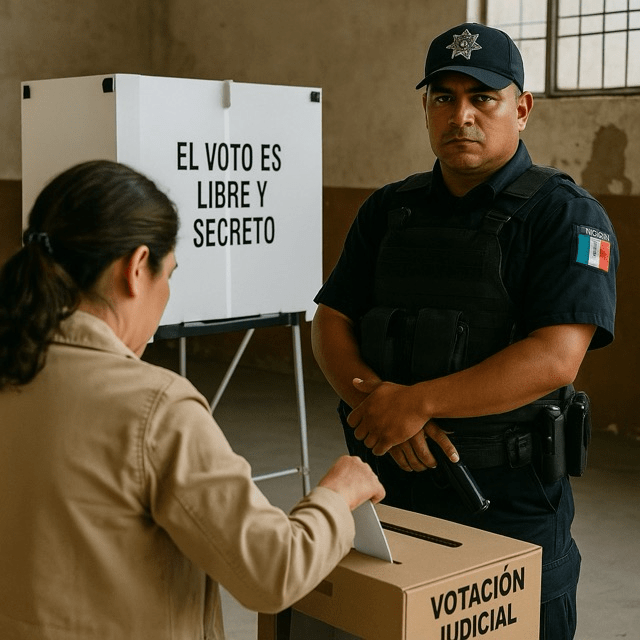
On June 2, 2025, Mexico will make history by holding a national vote to elect more than 2,600 local judges—a sweeping reform intended to democratize the country’s notoriously opaque and elite judicial system. But the landmark election has raised fresh alarm bells among political analysts, human rights groups, and international observers: what happens when voters are caught between ballots and bullets?
Democratizing Justice or Risking Corruption?
President Andrés Manuel López Obrador’s administration defends the vote as a bold move to end judicial elitism and bring legal accountability closer to ordinary citizens. “For too long, justice in Mexico has been for sale,” declared Interior Minister Luisa María Alcalde. Yet critics fear that throwing the courts into the electoral arena will expose judges to the same corrupting influences—money, fear, and political patronage—that have plagued other elected offices.
The Narco Factor
Of greatest concern is the growing reach of Mexico’s powerful drug cartels. In many regions—especially in Michoacán, Guerrero, and parts of Tamaulipas—the state has all but ceded control. Here, criminal groups are suspected not only of financing judicial campaigns but also of intimidating rival candidates and threatening voters. “We’re not seeing democracy,” says human rights lawyer Santiago Aguilar. “We’re seeing narco-populism in robes.”
Voter Intimidation and Ballot Tampering
Reports from civic watchdog groups suggest a sharp rise in pre-election violence targeting legal professionals. In the last three months alone, four judicial candidates have been assassinated. Others have withdrawn their candidacies under pressure. Meanwhile, in areas under cartel influence, entire communities are expected to abstain from voting out of fear.
Undermining Rule of Law
The broader worry is that instead of enhancing the rule of law, the election may erode it. If cartel-linked judges secure office, they could sabotage prosecutions, leak investigative files, or protect corrupt allies. “This reform risks turning justice into another cartel asset,” warns Eduardo Sánchez, a former federal prosecutor.
Reform with Weak Safeguards
Though the federal electoral institute has promised strict monitoring, resources are stretched thin. Ballot security remains uneven across Mexico’s 32 states, and there are mounting concerns over voter anonymity and candidate vetting. Civil society leaders argue that without a robust system of transparency and oversight, the election will merely replace judicial aristocracy with criminal oligarchy.
International Concern and Local Resilience
The U.S., EU, and OAS have all voiced concern, offering electoral observers and aid for civic education. Meanwhile, grassroots organizations in Mexico are fighting back, launching public information campaigns and offering support for vulnerable judicial candidates.
Conclusion
Mexico’s experiment in judicial democracy is unprecedented and potentially transformative. But unless the vote is shielded from narco-influence and grounded in institutional safeguards, it risks compounding the very injustice it seeks to cure. For now, the ballot box stands in a dangerous crossfire between reform and repression.




 The Tower Post