Macron’s Struggles and the Rise of Populism Could Shift the Balance of Power in Brussels
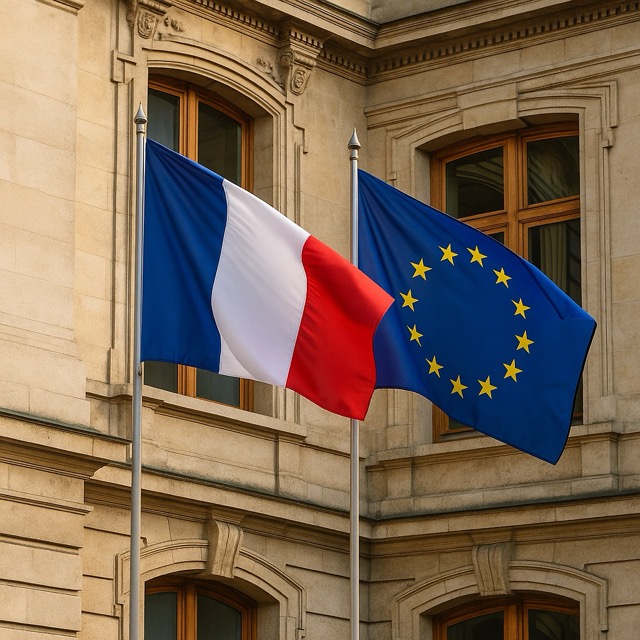
As France grapples with internal political turmoil, the implications extend far beyond its borders. The nation’s current political landscape, characterized by declining support for President Emmanuel Macron and the rising influence of far-right forces, is beginning to shake the very foundations of the European Union.
A Key Pillar of the EU Under Pressure
France, one of the EU’s founding members and its second-largest economy, has historically played a crucial role in shaping the bloc’s policies. However, Macron’s centrist Renaissance party has recently suffered a significant drop in popularity, challenged both by the far-right National Rally (RN) led by Marine Le Pen and the left-wing coalition NUPES. With Macron’s government losing its absolute majority in parliament, its ability to enact reform has weakened significantly.
Rise of Populist Sentiments
Public dissatisfaction over issues such as immigration, inflation, pension reforms, and the erosion of national identity has fueled support for populist parties. The RN, in particular, has gained traction with its anti-EU rhetoric and promises of restoring French sovereignty. This shift in sentiment threatens to undermine Macron’s pro-European agenda and could embolden other Eurosceptic movements across the continent.
Implications for EU Cohesion and Policy
If France drifts further toward political polarization or if a future government aligns more closely with anti-EU ideologies, key EU initiatives could stall. France has traditionally collaborated with Germany to drive integration, set fiscal rules, and lead diplomatic efforts. A divided or disengaged France could weaken this Franco-German engine, destabilizing the EU’s ability to respond to crises or advance policies on climate, defense, and digital transformation.
Impact on EU Institutions and Enlargement
France’s internal divisions could also influence appointments to top EU roles, budget negotiations, and expansion talks with countries like Ukraine and the Western Balkans. A more nationalistic France may oppose deeper integration or delay reforms aimed at enlarging or centralizing the EU. This may lead to fragmentation or a multi-speed Europe, where integration proceeds at different paces among member states.
Conclusion
The political future of France is not just a domestic issue—it is a matter of European stability and direction. As the EU faces external challenges from Russia, China, and a potential second Trump presidency in the U.S., internal unity is more important than ever. Whether France continues to champion EU integration or turns inward will significantly shape the European project in the years to come.

 The Tower Post