Top Hedge Fund Strategist Reassures Markets Amid Rising Fiscal Concerns
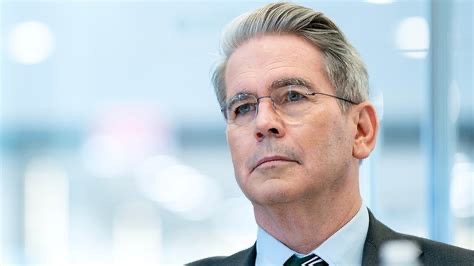
In a strong statement aimed at calming investor nerves, Scott Bessent, renowned hedge fund manager and former chief investment officer for George Soros, declared that the United States “will never default on its debt.” His remarks, made during a financial summit in New York, come at a time when debates over America’s growing fiscal imbalance and political brinkmanship have reignited concerns about the stability of the global financial system.
Confidence in U.S. Creditworthiness
Bessent emphasized that the U.S. dollar remains the world’s reserve currency and that U.S. Treasuries are still viewed as the safest asset globally. “The United States has unmatched economic resources, deep capital markets, and sovereign monetary authority,” Bessent stated. “It has every tool necessary to honor its obligations.”
His comments were directed at fears that partisan gridlock in Washington—particularly around debt ceiling negotiations—could lead to payment delays or technical defaults. In the past, these political standoffs have caused market volatility, but the government has always ultimately met its debt commitments.
Global Repercussions of a Default
Bessent warned, however, that even the perception of default could have catastrophic consequences. A real U.S. default would ripple across global bond markets, spark a credit crunch, and erode trust in the international monetary system. “The damage would be incalculable,” he said, “and that is precisely why it will never happen.”
He urged policymakers to avoid weaponizing the debt ceiling and instead focus on long-term fiscal reforms. His message was clear: confidence in U.S. debt is a pillar of global stability, and even political gamesmanship threatens that foundation.
Market Response and Broader Implications
Markets responded positively to Bessent’s remarks. Bond yields stabilized, and the U.S. dollar gained strength against major currencies following his speech. Analysts noted that his reputation for financial foresight lends weight to his assurances, especially in periods of uncertainty.
Bessent also used the platform to advocate for disciplined government spending and broader tax reform. While reaffirming that the U.S. has the capacity to avoid default, he warned that structural deficits could eventually constrain economic growth if not addressed.
Conclusion
Scott Bessent’s emphatic declaration serves as both a reassurance and a warning. While the United States is unlikely to default on its debt, the path to sustained economic credibility depends on responsible leadership and proactive policy. For investors, his words reinforced faith in American creditworthiness—but also highlighted the need for vigilance in an era of fiscal and geopolitical uncertainty.




 The Tower Post