Accelerating Big Data Workloads with Purpose-Built Processors
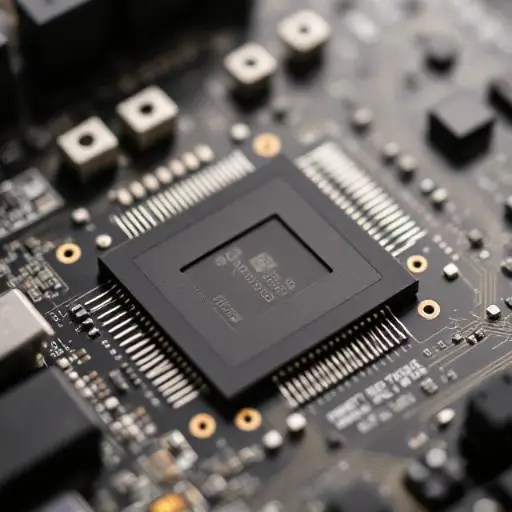
Tel Aviv-based startup Speedata has secured a significant $44 million Series B funding round, bringing its total capital raised to $114 million. The investment, led by existing investors Walden Catalyst Ventures, 83North, Koch Disruptive Technologies, Pitango First, and Viola Ventures, as well as strategic investors Lip-Bu Tan and Eyal Waldman, will fuel the development of Speedata’s analytics processing unit (APU).
According to Speedata’s CEO, Adi Gelvan, the APU is designed to tackle the bottlenecks of analytics at the computing level, unlike graphics processing units (GPUs), which were initially designed for graphics and later adapted for AI and data-related tasks. “For decades, data analytics have relied on standard processing units, and more recently, companies like Nvidia have invested in pushing GPUs for analytics workloads,” Gelvan explained in an interview with TechCrunch. “But these are either general-purpose processors or processors designed for other workloads, not chips built from the ground up for data analytics. Our APU is purpose-built for data processing and can replace racks of servers, delivering dramatically better performance.”
Speedata’s APU currently targets Apache Spark workloads but aims to support every major data analytics platform in the future. The startup has already achieved significant milestones, including finalizing the design and manufacturing of its first APU in late 2024. Gelvan said that the company has a number of large companies testing its APU, although it declined to name them. The official product launch is set for the Databricks’ Data & AI Summit in the second week of June.
In a specific case, Speedata’s APU completed a pharmaceutical workload in 19 minutes, a 280x speed improvement over the 90 hours it took using a non-specialized processing unit. The startup’s technology has the potential to transform the data analytics industry, with Gelvan stating, “We aim at becoming the standard processor for data processing—just as GPUs became the default for AI training, we want APUs to be the default for data analytics across every database and analytics platform.”
Speedata’s founders, who were the first researchers to develop Coarse-Grained Reconfigurable Architecture (CGRA) technology, collaborated with ASIC design experts to address a fundamental problem: data analytics were being performed by general-purpose processors, which could lead to significant performance issues as workloads grew. “We saw this as an opportunity to put our decades of research in silicon into transforming how the industry processes data,” Gelvan said.
With its APU, Speedata is poised to revolutionize the data analytics landscape, enabling faster and more efficient processing of complex workloads. As the company prepares to launch its product, it is already gaining traction with large companies and investors, setting the stage for a significant impact in the industry.




 The Tower Post