Beijing Vows Retaliatory Measures Amid Renewed Tariffs and Export Restrictions

In a significant development that could reignite global trade tensions, China has publicly accused the United States of seriously violating the trade truce agreed upon in recent years. The accusation comes in response to a new wave of tariffs and export controls imposed by Washington on Chinese technology and manufacturing sectors.
Background to the Trade Truce
The trade truce, initiated under the Trump administration and tentatively sustained during the Biden presidency, was aimed at curbing the tit-for-tat tariff war that had disrupted global markets. It included commitments by China to purchase more American goods and services, and by the US to reduce punitive tariffs in exchange for fairer trade practices. However, with geopolitical strains intensifying, the fragile truce appears to be unraveling.
China’s Accusations and Response
China’s Ministry of Commerce issued a statement condemning the latest US actions, claiming they “seriously violate the consensus reached by both parties and undermine the spirit of cooperation.” Beijing has vowed to take “strong and necessary countermeasures” to safeguard its national interests, though specifics remain undisclosed. The statement emphasized that China’s patience should not be mistaken for weakness.
Escalating Measures and Economic Ramifications
Recent US actions include extending bans on semiconductor exports, tightening restrictions on Chinese firms accessing American technologies, and imposing new tariffs on key Chinese imports. These steps are seen by analysts as a strategic move to limit China’s advancement in critical tech sectors such as AI, quantum computing, and green energy.
China’s potential retaliation could include higher tariffs on American agricultural products, increased scrutiny of US companies operating in China, and efforts to diversify away from the US dollar in trade settlements. The growing antagonism risks a broader decoupling of the world’s two largest economies.
Global Reactions and Market Impact
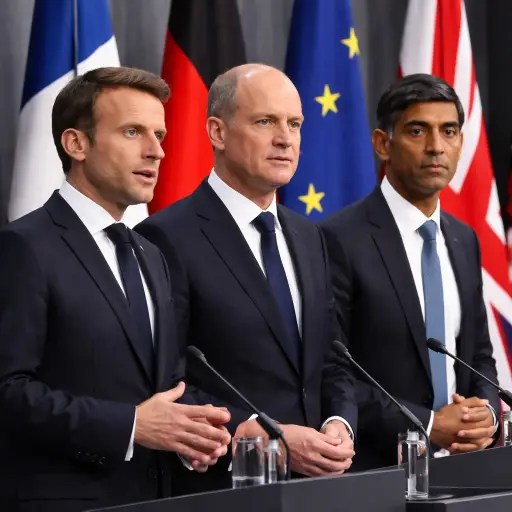
Global markets have reacted with volatility to the renewed tension, with investors concerned about supply chain disruptions, increased costs, and regulatory uncertainty. European and Asian partners have called for dialogue, urging both powers to resolve differences through negotiation rather than confrontation.
The IMF and World Bank have also warned that escalating US-China trade disputes could hinder global recovery from recent economic slowdowns, exacerbating inflationary pressures and undermining investor confidence.
Conclusion
The breakdown of the US-China trade truce signals a new and uncertain chapter in international commerce. With both nations adopting more assertive postures, the global economy stands at a crossroads. Whether diplomacy or economic nationalism prevails will have profound consequences not just for Washington and Beijing, but for the entire world.

 The Tower Post