Controversy Erupts Over Reallocation of Religious Tax Funds in Italy
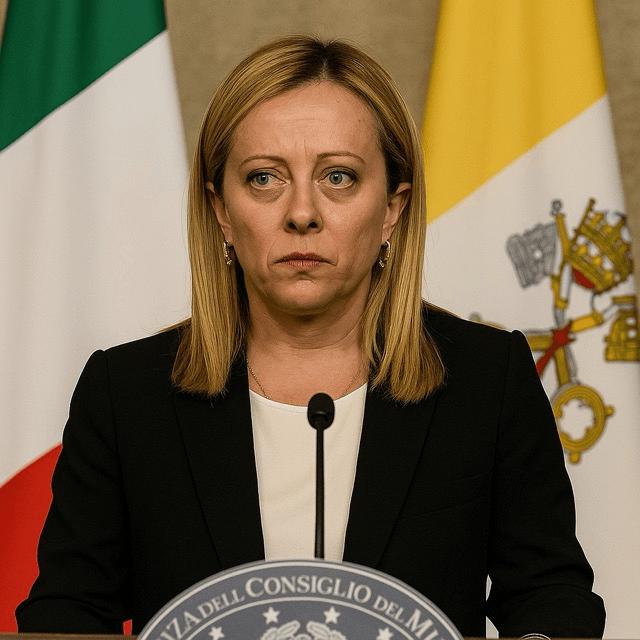
A political and religious storm has erupted in Italy after allegations surfaced that the government led by Prime Minister Giorgia Meloni has breached longstanding agreements with the Catholic Church concerning the allocation of the “8 per mille” funds. These funds, which represent a portion of taxpayers’ income tax voluntarily directed toward religious institutions or social causes, have traditionally been governed by formal Concordat agreements between the State and the Church.
The controversy centers on the recent budgetary decisions that reportedly redirected a significant portion of the Church’s share of the 8 per mille to other governmental priorities, including state-run social services and disaster relief—areas not explicitly outlined in the original agreements. Critics argue this move undermines the constitutional and bilateral principles established between the Italian Republic and the Holy See.
The Italian Bishops’ Conference (CEI) issued a strong statement expressing “profound concern” over what it described as a unilateral and unjustifiable decision. According to the CEI, the redistribution of funds could have a direct negative impact on charitable programs run by the Church, including soup kitchens, refugee support, and healthcare initiatives that serve Italy’s most vulnerable populations.
Legal experts warn that such actions may constitute a violation of the Concordat and could open the door to legal disputes in the Constitutional Court or the European Court of Human Rights. “The 8 per mille is not simply a budgetary item; it is a matter of institutional integrity and religious freedom,” said constitutional law professor Elena Ferri of the University of Bologna.
From the government’s perspective, officials have framed the reallocation as a necessary response to fiscal pressures and unforeseen emergencies. A spokesperson from the Ministry of Economy and Finance stated that “while the agreements with religious institutions are respected in principle, the State retains the flexibility to act in the public interest during times of crisis.”
Opposition parties, including members of the Democratic Party and the Five Star Movement, have seized on the issue to accuse the Meloni administration of eroding constitutional safeguards and using emergency measures as a pretext for overreach. “This is not fiscal reform—it is institutional betrayal,” said MP Laura Boldrini during a heated parliamentary session.
The controversy has sparked a wider debate about the role of religion in public policy, the transparency of fund allocation, and the future of church-state relations in a rapidly changing Italy. Many observers view the situation as a critical test for Meloni’s leadership and her balancing act between secular governance and her political base, which includes conservative Catholic voters.
As public trust wavers and religious institutions demand clarity, it remains to be seen whether the government will revise its stance or face legal repercussions. For now, the reallocation of the 8 per mille has stirred more than just accounting ledgers—it has reignited fundamental questions about ethics, governance, and the spiritual fabric of the nation.



 The Tower Post