European Officials Brace for High-Stakes Bargaining as Former President Signals Strategic Leverage
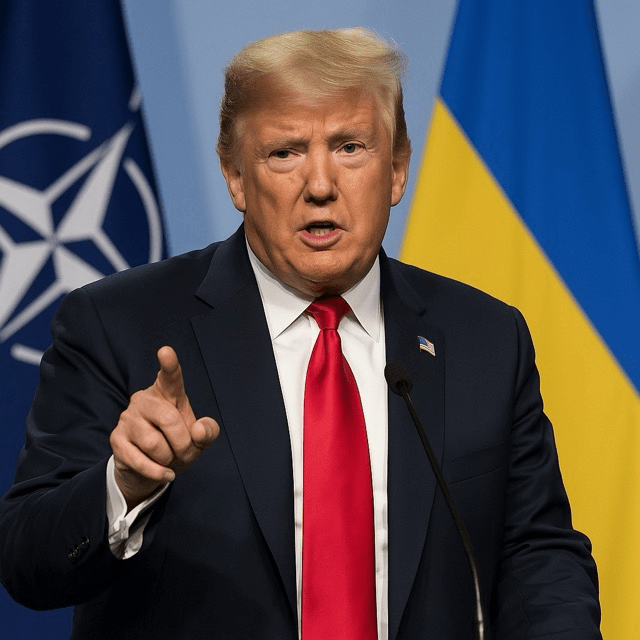
As former U.S. President Donald Trump reemerges on the global stage with a packed agenda of five weeks of international meetings and campaign stops, European officials are sounding alarms about his unpredictable yet calculated strategy. Many fear that Trump, known for his transactional style of diplomacy, will interlink three of the most sensitive geopolitical issues—support for Ukraine, NATO commitments, and international trade—creating a high-stakes game of leverage and negotiation.
Trump’s public skepticism about continued U.S. support for Ukraine has already rattled European allies. While the Biden administration reaffirmed its unwavering commitment to Kyiv, Trump has hinted that his return to power could bring a drastically different approach. Some European diplomats worry that Trump might propose reducing U.S. support unless European countries increase their own financial and military contributions, a tactic that would place immense pressure on EU nations already grappling with inflation and rising defense spending.
Simultaneously, NATO officials are bracing for renewed scrutiny. Trump previously criticized the alliance as outdated and ineffective, and repeatedly demanded that member states meet their 2% GDP spending target on defense. As NATO approaches its next summit, European leaders are concerned that Trump could once again question the alliance’s value or use the platform to renegotiate American military presence in Europe, possibly conditioning it on trade concessions or other strategic benefits.
Trade is the third piece of the puzzle. With tariffs and trade imbalances returning to Trump’s talking points, European economic officials are preparing for a scenario in which the former president uses economic levers to pressure both allies and rivals. In previous years, Trump introduced tariffs on steel and aluminum imports from Europe, triggering a mini trade war. There are fears that such measures could return, particularly if he sees them as bargaining chips to extract political or military alignment.
The triple-threat scenario—blending Ukraine, NATO, and trade into a single geopolitical calculus—poses a unique challenge for Europe. It forces the EU to prepare for multidimensional diplomacy where concessions in one area might be demanded in exchange for stability in another. Some analysts argue that Trump’s approach, while aggressive, could also accelerate overdue reforms within NATO and the EU’s foreign policy framework. But the uncertainty and volatility that come with his tactics make cohesive European action difficult to achieve.
As Trump’s international engagements unfold over the coming weeks, European capitals will be watching closely. Whether through direct statements, leaked conversations, or strategic visits, Trump’s maneuvering is likely to shape not only transatlantic relations but also the broader balance of power in a rapidly evolving world.
In this precarious moment, European leaders are confronted not only with Trump’s policies but with his method—a calculated chaos that may once again redefine the global order.

 The Tower Post