Berlin’s Ambitious Move Aims to Boost Investment and Revitalize Industrial Competitiveness
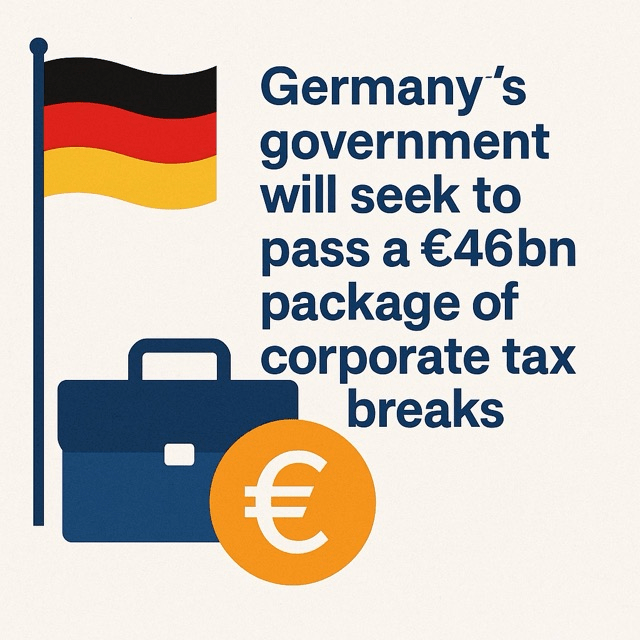
Germany’s federal government has announced plans to introduce a sweeping €46 billion package of corporate tax breaks aimed at stimulating economic growth, encouraging investment, and bolstering the country’s global competitiveness. The proposal, which will be presented to the Bundestag later this month, is seen as one of the most ambitious fiscal policy shifts in recent German history.
Finance Minister Christian Lindner described the plan as a “strategic investment in Germany’s industrial future.” The package includes a range of incentives such as reductions in corporate income tax, accelerated depreciation schedules for machinery and infrastructure, and targeted relief for small and medium-sized enterprises (SMEs). It also features green investment bonuses for companies transitioning to sustainable technologies.
The move comes amid mounting concerns over sluggish GDP growth, rising energy costs, and a decline in foreign direct investment. Germany, traditionally known as Europe’s economic engine, has recently faced criticism for lagging behind in digitization and for its cautious approach to post-pandemic stimulus compared to other leading economies.
“The time for hesitation is over,” said Lindner. “We need to empower our companies to lead—not just survive—in the global marketplace.”
Business leaders have largely welcomed the initiative. The Federation of German Industries (BDI) praised the package as a “long-overdue step to reignite entrepreneurial confidence.” However, some economists have warned that the tax cuts could widen Germany’s budget deficit unless paired with corresponding spending reforms or increased revenue elsewhere.
Chancellor Olaf Scholz, backing the plan, emphasized that the package is aligned with the EU’s fiscal framework and green transition goals. “This is not just a tax cut—it is an investment in resilience and innovation,” Scholz said during a press conference in Berlin.
Political opposition, however, is mounting. Green Party leaders within the coalition are reportedly pressing for tighter oversight to ensure the funds support environmental progress rather than corporate windfalls. Meanwhile, the Left Party and segments of the Social Democrats have expressed skepticism, arguing that the funds would be better spent directly on infrastructure, education, or healthcare.
The tax plan is expected to face intense parliamentary scrutiny, with debates likely to focus on the balance between short-term stimulus and long-term fiscal responsibility. Lawmakers will also evaluate how the measures will affect Germany’s compliance with EU stability rules and its leadership role within the Eurozone.
Despite the debate, there is growing consensus that Germany needs to act decisively to counteract economic headwinds. If approved, the €46 billion tax package could reshape the landscape of German industry and send a powerful signal to investors worldwide.
As Berlin prepares for crucial legislative sessions, all eyes are on how this landmark initiative will be received—not only domestically, but also across the European Union and global financial markets.



 The Tower Post