An In-depth Look at the Most Powerful Weather Phenomena Impacting the Continent
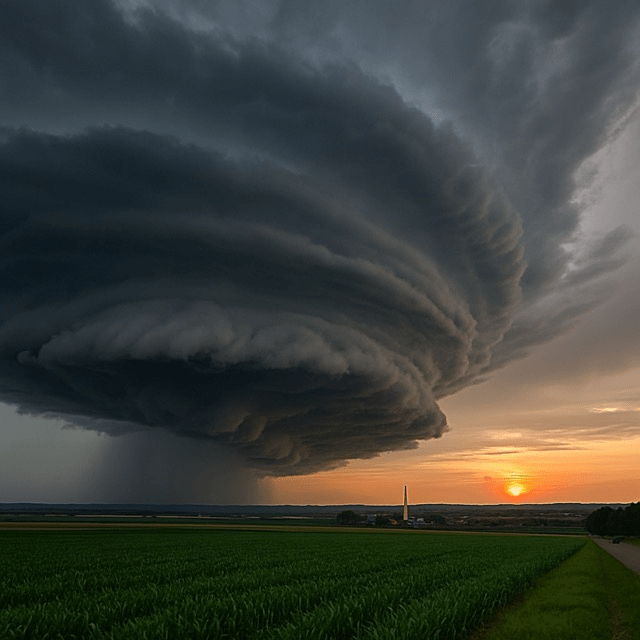
Supercell thunderstorms are among the most powerful and dangerous meteorological phenomena. Characterized by their rotating updrafts, known as mesocyclones, supercells can produce severe weather conditions, including large hail, destructive winds, torrential rain, and even tornadoes. Although these storms are more commonly associated with the Great Plains of the United States, Europe is by no means immune to their effects.
In recent decades, climatologists have observed a noticeable increase in the frequency and intensity of supercell storms across various parts of Europe. Countries such as Italy, France, Germany, and Austria have experienced notable supercell events, especially during the late spring and summer months. These storms often develop under specific atmospheric conditions, such as high instability, sufficient moisture, and strong wind shear—conditions that are becoming more common due to climate change.
A notable example occurred in July 2022, when a supercell storm swept across northern Italy, causing extensive damage and widespread power outages. The storm produced hailstones the size of tennis balls and wind gusts exceeding 130 km/h, leading to the uprooting of trees and the destruction of infrastructure. Meteorologists used advanced radar and satellite technology to track the storm’s development and issue timely warnings, highlighting the importance of modern forecasting techniques.
European researchers have also emphasized the role of orography in supercell formation. The complex terrain of the Alps and the Apennines, for instance, can enhance storm development by forcing air to rise, thereby intensifying the convective process. Additionally, the Mediterranean Sea provides a crucial source of warm, moist air that fuels storm systems as they move inland.
The increase in supercell activity across Europe is not only a meteorological concern but also a societal one. Urban areas with high population densities are particularly vulnerable to the destructive power of these storms. Consequently, governments and local authorities are investing in improved early warning systems, public awareness campaigns, and urban planning strategies aimed at reducing vulnerability to severe weather.
In conclusion, while supercell thunderstorms remain relatively rare in Europe compared to North America, their potential impact should not be underestimated. The combination of changing climatic conditions and growing urbanization underscores the need for continuous research, preparedness, and international collaboration in tackling the challenges posed by these formidable weather systems.

 The Tower Post