Geopolitical Shifts, Economic Realities, and the Prospect of Permanent Closure
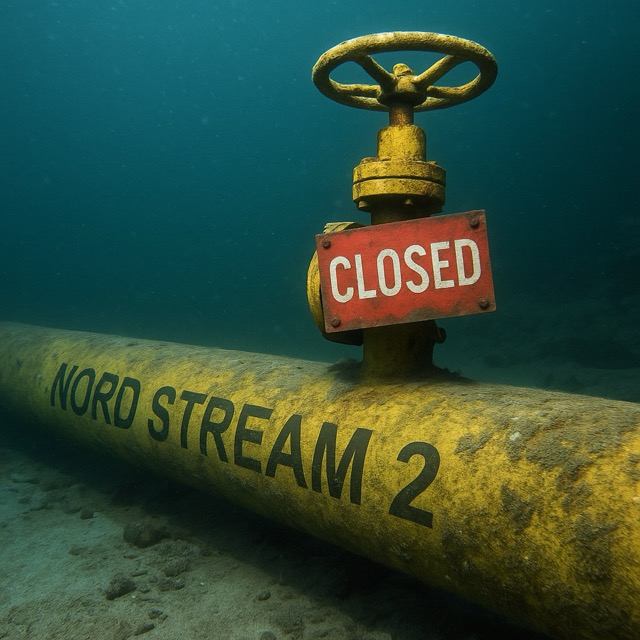
The Nord Stream 2 pipeline project, envisioned as a direct gas link between Russia and Germany through the Baltic Sea, has been one of the most contentious energy initiatives in recent European history. Announced in 2015 and completed in September 2021, the 1,230-kilometer conduit was designed to double the capacity of the existing Nord Stream 1 pipeline, facilitating an additional 55 billion cubic meters of natural gas per year to German and broader European markets. Proponents argued that it would secure stable, affordable energy for Germany, boost economic ties with Russia, and provide transit reliability by bypassing traditional overland routes through Ukraine. Critics countered that it would increase Europe’s dependency on Russian energy, undermine Ukraine’s transit revenues, and give Moscow political leverage over EU policy. By 2022, Nord Stream 2 had not yet been certified for operation when Russia’s full-scale invasion of Ukraine triggered a cascade of political, regulatory, and security decisions that have cast doubt on the pipeline’s future.
Following the invasion in February 2022, the German government suspended approval proceedings for Nord Stream 2, citing the need to reevaluate the country’s energy policy in light of Russia’s aggression. The Biden administration in Washington, which had previously imposed sanctions on entities involved in the pipeline’s construction, welcomed Germany’s decision, viewing it as a critical step to limit Russia’s geopolitical influence. The European Union also distanced itself from the project, with several member states lodging formal objections and advocating for sanctions. By March 2022, Gazprom, the Russian state-owned energy giant behind Nord Stream 2, announced that it would not proceed with gas deliveries until regulatory hurdles were resolved. Yet the geopolitical landscape had already shifted decisively against the pipeline.
In September 2022, a series of dramatic events sealed what many observers considered the pipeline’s fate. Underwater explosions tore through Nord Stream 1 and Nord Stream 2 conduits at multiple points in the Danish and Swedish economic zones. Investigations by Scandinavian authorities confirmed that the damage was caused by deliberate sabotage, although the perpetrators remain unidentified to this day. The immediate consequence was the release of millions of cubic meters of natural gas into the Baltic Sea, prompting environmental concerns and deepening the sense that Nord Stream 2 would never be operational. Russian officials accused Western governments of orchestrating the sabotage, while European leaders condemned the attacks as destabilizing acts of aggression.
Since the 2022 explosions, technical assessments have concluded that extensive repair work would be required to restore Nord Stream 2’s integrity. Such repairs would involve subsea engineering at depths exceeding 80 meters, replacement of damaged pipe segments, and rigorous safety validation—all under conditions of heightened geopolitical tension. The cost estimates for this undertaking run into the hundreds of millions of euros. Moreover, Germany’s Bundesnetzagentur (Federal Network Agency) has indicated that any resumption of certification would require a comprehensive review of security implications, environmental impact, and alignment with the EU’s RePowerEU strategy, which aims to eliminate dependence on Russian fossil fuels by 2027. In short, even if technically feasible, the political will to renovate Nord Stream 2 has evaporated.
Economically, the global energy market has adapted to the pipeline’s cancellation. In 2022 and 2023, Germany and other European importers scrambled to secure liquefied natural gas (LNG) from alternative suppliers, including the United States, Qatar, and Norway. Investments in LNG terminals along the North Sea and Baltic coasts accelerated, while gas storage facilities were expanded to buffer seasonal demand swings. Wind and solar capacity additions, coupled with energy-efficiency measures, have also helped to reduce Europe’s natural gas requirements. By mid‑2025, EU gas imports from Russia had fallen below 10 billion cubic meters annually—less than 10 percent of pre‑2022 levels. Analysts now agree that even if Nord Stream 2 were repaired, there would be minimal demand for its output, as Europe’s energy diversification is well underway.
Politically, the pipeline’s demise has had significant ramifications. Ukraine, which historically earned transit fees from overland pipelines, has welcomed the shift as it undercuts Russia’s leverage and reinforces Kyiv’s security interests. In Brussels, the European Commission has touted Nord Stream 2’s failure as validation of its energy security policies and a catalyst for accelerated renewables deployment. Meanwhile, Russia has pivoted to redirect gas flows through the TurkStream pipeline to Turkey and further into southern Europe, although its volumes have yet to match what Nord Stream 2 would have delivered. President Vladimir Putin has, at various moments, hinted at potential “alternatives” or “compensatory measures,” but the Kremlin’s access to European markets remains constrained by overarching sanctions and the emergent geopolitical divide.
Legal and contractual complications further muddy the pipeline’s future. Gazprom financed Nord Stream 2 through a series of loans from European energy companies such as Wintershall Dea and Uniper. In the wake of the suspension, these stakeholders have sought arbitration to recover debts and claim damages, arguing that Russia’s actions and the subsequent suspension violated contractual obligations. Germany’s decision to freeze certification was based on clear legal grounds—namely, that Nord Stream 2 could not meet EU requirements for unbundling, third‑party access, and environmental standards. Even if Gazprom—or a restructured entity—attempted to salvage the pipeline, it would face years of litigation, regulatory barriers, and uncertainty over transshipment rights through Danish and Swedish waters.
From a strategic standpoint, some voices in Moscow have floated the prospect of repurposing Nord Stream 2 for non‑gas uses, such as laying fiber‑optic cables or hydrogen transport in a hydrogen‑enabled future. However, these ideas remain speculative and face daunting technical and regulatory hurdles. Converting a high‑pressure natural gas pipeline to carry hydrogen requires extensive materials testing, new compressor stations, and retrofitting of ports and terminals. The EU’s hydrogen strategy envisions robust hydrogen corridors by the 2030s, but incremental pilot projects are more likely than full‑scale repurposing of Nord Stream 2. Moreover, any such project would require broad multilateral support, which is currently absent given the pipeline’s symbolic role in Russia‑Europe energy friction.
In conclusion, as of mid‑2025, Nord Stream 2 can be considered functionally dead. The confluence of deliberate sabotage, geopolitical realignments, legal entanglements, and shifting market dynamics makes its resurrection highly improbable. While some technical advocates argue that a future change in political circumstances might reopen discussions, the reality is that Europe has moved on. Energy infrastructures that once seemed indispensable have been supplanted by diversified supply chains, renewable investments, and a renewed focus on domestic energy resilience. Nord Stream 2’s legacy will likely be as a cautionary tale of how geopolitics and national security can override economic rationales—an enduring reminder that in today’s interconnected world, energy projects can never be divorced from the currents of international relations.
 The Tower Post