A Comparative Analysis of Merz, Macron, and Meloni During Diplomatic Engagements
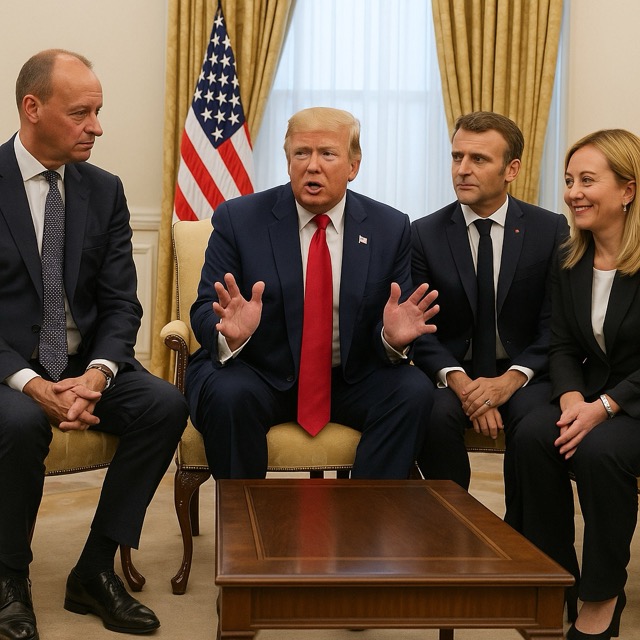
In May 2025, Friedrich Merz, leader of Germany’s Christian Democratic Union (CDU), made his much-anticipated visit to Washington, D.C., marking his first high-profile trip to the United States since assuming party leadership. Although former President Donald Trump has been out of office for over two years, his continued influence within the Republican Party made a meeting between Merz and Trump a focal point for political analysts observing transatlantic relations. In the same period, Emmanuel Macron of France and Giorgia Meloni of Italy had previously engaged with Trump during his presidency, providing a unique opportunity to compare how each European leader navigated the complex dynamics of body language in meetings with the brash, larger-than-life personality of Trump.
Body language plays a critical role in diplomatic settings, often conveying unspoken messages and underlying power dynamics. When Merkel met Trump in 2018, her measured calm projected stability, but Macron’s famously unflappable posture during his 2019 meeting exuded confidence and a willingness to challenge Trump’s assumptions. Similarly, Meloni’s first encounter with Trump in late 2023 was marked by her direct gaze and assertive gestures, signaling Italy’s desire to assert its interests on the global stage. These encounters set the stage for observing Merz’s distinct style and how it differed from his peers when engaging with Trump in 2025.
Friedrich Merz, known for his corporate background and polished, businesslike demeanor, employed a posture that combined confidence with caution. During his meeting with Trump at Mar-a-Lago, Merz stood upright, shoulders squared, and maintained steady eye contact, reflecting both respect and strategic assertiveness. His handshake, firm yet measured, lasted approximately three seconds, indicating a balance between offering warmth and asserting strength. In photos, Merz was often captured with a slight, controlled smile, suggesting diplomatic amiability. In contrast, Macron’s 2019 handshake with Trump was more theatrical: Macron leaned slightly forward, gripping Trump’s hand with visible energy, then released quickly, displaying both charm and impatience.
Giorgia Meloni’s body language during her first meeting with Trump was marked by a blend of deference and audacity. At the outset, Meloni positioned herself slightly to Trump’s right, a subtle cue of alignment with American leadership. However, as the conversation progressed, Meloni’s hands emerged from her lap, gesturing emphatically when discussing Italy’s interests. Her eyebrows lifted when listening, indicating active engagement. Photos from their 2023 meeting show Meloni tilting her head toward Trump as he spoke, signaling attentiveness, while simultaneously keeping a straight posture that underscored her unwillingness to be overshadowed.
Comparing torso orientation offers further insight. Macron often angled his body slightly toward the camera when seated beside Trump, a strategic move to project openness to multiple audiences. By contrast, Merz’s torso faced directly toward Trump throughout their meeting, implying undivided attention and a focused bilateral rapport. Meloni’s torso, while initially oriented toward Trump, occasionally pivoted toward Italian officials present in the room, underscoring her commitment to domestic expectations and signaling that her primary accountability lay with Rome. Such subtle ‘torso shifts’ convey a leader’s priorities and strategic communication intent.
Eye contact patterns also varied markedly among the three leaders. Macron, who prides himself on oratorical flair, maintained direct eye contact with Trump for roughly 60% of their interaction, occasionally breaking gaze to scan the room, reminding observers of his broader diplomatic vision. Merz, in comparison, held Trump’s gaze for nearly 75% of the encounter, an indication of his more targeted, transactional approach aimed at securing specific policy discussions on trade and security cooperation. Meloni’s eye contact was dynamic: she looked at Trump intently during critical points but shifted her gaze to the interpreter or aides when acknowledging technical details, showcasing both focus and collaborative intent.
Hand gestures provide another layer of nonverbal communication. Macron’s hands moved fluidly, palms occasionally upturned to signal openness or spread wide when making emphatic points. Merz, influenced by his background in finance, used conservative gestures: small, deliberate movements with one hand resting near his lapel or gesturing horizontally when discussing equality in European-American relations. Such restrained gestures projected calm authority. Meloni, on the other hand, employed pronounced movements—pointing with index fingers or framing topics by circling her hands. Her gesture repertoire conveyed passion and urgency, reflecting Italy’s desire to capture attention and secure favorable outcomes.
Facial expressions reveal underlying attitudes. Macron’s occasional smirk during exchanges with Trump was widely interpreted as a mix of amusement and skepticism, encapsulating his belief in France’s autonomy in global affairs. Merz’s expressions remained consistent: a mild smile when appropriate, slight nods to acknowledge points, and minimal eyebrow furrowing, suggesting a guarded but professional demeanor. Meloni’s face displayed a broader emotional range—eyes widened when Trump praised Italy, lips pressed thin when topics turned tense, and nods that were brisk and deliberate, signifying her readiness to reinforce key points forcefully. These facial cues shaped the narrative of each leader’s meeting.
Proxemics—the use of personal space—also varied. Macron often permitted Trump to step slightly outside closer proximity before gently repositioning himself to re-establish balance, a subtle exercise of boundary-setting. Merz, in contrast, allowed Trump to maintain an inch or two of dominance in proximity while ensuring they remained at an arm’s length distance that was optimal for both respect and autonomy. Meloni’s approach was assertive: she occasionally leaned forward into Trump’s personal space when making strong appeals for support, signaling resolve, and compelling mutual respect. This strategic use of space emphasized her negotiation tenacity.
Taken together, the body language of Merz, Macron, and Meloni in their respective meetings with Trump highlights distinct leadership styles shaped by national priorities and personal temperaments. Macron’s blend of theatricality and diplomacy, Merz’s businesslike precision, and Meloni’s passionate assertiveness each had unique impacts on how Trump perceived and interacted with them. For observers mapping the future of European-American relations, these nonverbal cues offer valuable clues about each leader’s strategy and priorities—whether it be Macron’s emphasis on cultural dialogue, Merz’s focus on economic cooperation, or Meloni’s drive to secure political backing for Italy.


 The Tower Post