High-Level Dialogue Marks First Steps Toward Normalizing Strategic Ties
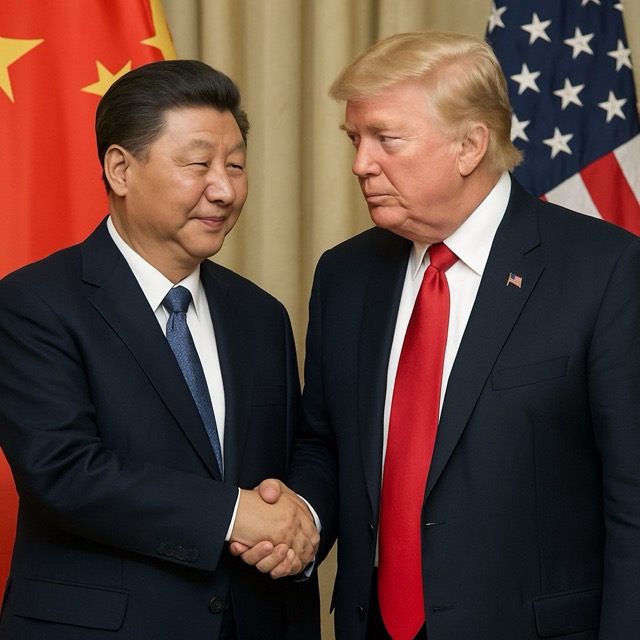
In May 2025, Chinese President Xi Jinping held a landmark conversation with former U.S. President Donald Trump, a development that analysts believe could pave the way for a recalibration of China-U.S. relations. Though Trump has been out of office since January 2021, his continued sway over Republican circles and substantial political capital make him a significant interlocutor. The call between Xi and Trump represents Beijing’s willingness to engage with diverse U.S. actors to explore potential avenues for easing tensions that have characterized bilateral ties in recent years.
The two leaders reportedly discussed a range of strategic issues, including trade imbalances, technology sanctions, and geopolitical flashpoints such as Taiwan and the South China Sea. Sources close to the Chinese delegation highlighted Xi’s interest in stabilizing economic channels disrupted by tariffs and export controls enacted during the previous U.S. administration. For Trump, the dialogue offered an opportunity to reaffirm his credentials as a power broker in U.S. foreign policy discussions and to signal to Republican lawmakers that a constructive approach toward China remains viable.
At the heart of the conversation was the question of mutual benefit. Xi emphasized Beijing’s interest in returning to a “phase one plus” agreement that would see the United States reduce remaining tariff barriers in exchange for China purchasing additional agricultural and energy commodities from American producers. This proposal echoes aspects of the 2020 phase one deal initiated during Trump’s presidency, though it stops short of addressing more contentious issues like intellectual property enforcement. Xi framed the dialogue as part of a broader strategy to shield the global economy from prolonged trade disruptions.
Trump, for his part, reiterated concerns about China’s industrial policies and the perceived threat these pose to U.S. innovation. He underscored the importance of maintaining pressure on Beijing to curb state subsidies for “national champion” firms in sectors such as semiconductors and renewable energy. However, according to observers within the U.S. delegation, Trump also expressed willingness to lift certain sanctions on Chinese technology firms if Beijing agreed to more transparent export licensing for dual-use technologies. Such concessions, if formalized, could alleviate supply-chain bottlenecks affecting U.S. tech companies.
Beyond economic matters, the Xi-Trump call touched on strategic stability and security cooperation. China’s leadership reportedly sought reassurances that the United States would not militarily intervene in Taiwan if the island’s policymakers refrained from pursuing formal independence. In return, Xi is said to have offered more visible commitments to uphold the status quo in the Taiwan Strait, emphasizing cross-strait dialogue between Beijing and Taipei. Trump, who has historically straddled pragmatic and hawkish positions, appeared open to a tacit understanding that could reduce the risk of military escalation, prompting relief among some senior Pentagon officials.
The communication channel between Xi and Trump also covered global health and climate issues. Xi proposed a bilateral task force focused on pandemic preparedness, citing the need to avoid repeat scenarios akin to the COVID-19 pandemic. Trump, who has remained publicly critical of the World Health Organization’s handling of the crisis, expressed conditional support for a joint framework that would enhance vaccine distribution in developing countries while maintaining robust oversight of Chinese research collaborations. On climate change, Xi reaffirmed China’s commitment to achieving carbon neutrality by 2060, suggesting that cooperation on green technologies could be mutually advantageous.
Experts note that the Xi-Trump exchange may signal Beijing’s broader strategy of diversifying its diplomatic engagements. By reaching out to influential figures outside the current U.S. administration, Xi demonstrates Beijing’s capacity to “hedge” against shifts in Washington’s political landscape. This approach could limit the impact of potential hardline measures from President Biden’s administration, which remains skeptical of China’s long-term strategic intentions. Moreover, engaging with Trump allows China to drive a wedge between Republican elites and Democratic policymakers, potentially complicating U.S. consensus on China policy in Congress.
Despite its symbolic value, the Xi-Trump call faces substantial obstacles on the path toward normalization. Skeptics argue that without concrete multilateral agreements, such high-level exchanges risk serving only as public relations gestures. In Washington, voices from both parties remain deeply divided over issues like human rights in Xinjiang, the status of Hong Kong, and China’s military modernization. Any attempt to roll back tariffs or ease technology restrictions would require bipartisan support in Congress, an uncertain prospect amid the upcoming 2026 midterm elections. Still, the willingness of two powerful figures to engage directly has injected cautious optimism into diplomatic circles.
As China-U.S. relations navigate a complex web of economic competition, strategic rivalry, and global responsibilities, the Xi-Trump dialogue represents a noteworthy pivot toward dialogue. Whether this conversation will lead to substantive policy shifts or fade as a diplomatic footnote will depend on follow-up from both capitals. For now, the call underscores the reality that even amid great-power competition, personal diplomacy retains the power to open doors that official channels alone may struggle to unlock.



 The Tower Post