
Why the United States Remains the Cornerstone of Western Identity, Security, and Influence

The concept of “the West” has long served as a powerful framework for understanding alliances, values, and political systems shared by North America and much of Europe. At the heart of this construct lies an often-overlooked truth: the modern West, as we know it, would not exist without the United States.
Since the end of World War II, the United States has played a pivotal role in shaping what the world understands as the Western order. From rebuilding Europe through the Marshall Plan to leading NATO, the U.S. has acted not only as a security guarantor but also as a cultural and ideological anchor. While Europe offers its intellectual traditions and historical depth, the United States has provided the resources, military capabilities, and global reach to bind the West together.
In geopolitical terms, America’s unmatched defense budget, network of alliances, and technological influence make it indispensable. NATO would be hollow without U.S. leadership. The deterrence of Russian aggression, the counterbalancing of Chinese influence, and the enforcement of global norms often hinge on Washington’s initiative.
Culturally, too, the U.S. exports not only media and consumer products but also democratic ideals and values. Though often critiqued for its imperfections, American democracy has served as a model—however flawed—for many aspiring nations. Western liberalism, free markets, and rule of law owe much of their global prominence to American advocacy and practice.
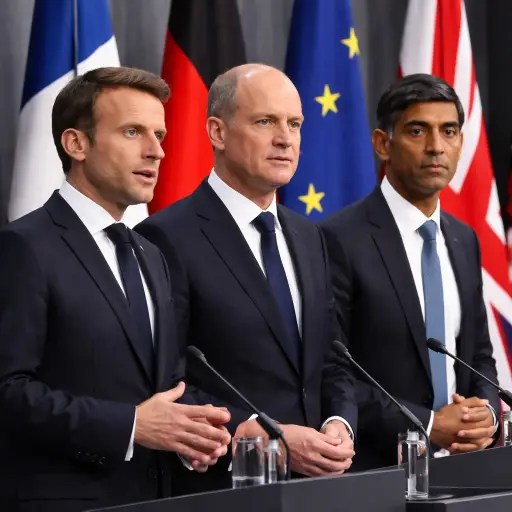
That said, cracks are beginning to show. European calls for “strategic autonomy” signal a growing discomfort with dependence on Washington. Events such as the U.S. withdrawal from Afghanistan, wavering NATO commitments, and internal political turmoil have spurred debates about the sustainability of U.S. leadership. Yet, even amid skepticism, no European nation or collective entity has emerged with the capacity to replace America’s central role.
Without the United States, the cohesion of the West risks unraveling. Fragmented security frameworks, diluted global influence, and weakened defense postures could become the norm. While Europe continues to integrate and assert its interests, it does so with the implicit understanding that American support remains its strategic backbone.
Ultimately, the West is not just a geographic or cultural label—it is a political and strategic construct. And at its core, it is held together by American power, ideals, and presence. Until another power rises to offer the same combination of influence, reach, and commitment, the West without the United States will remain a theoretical proposition—not a viable reality.
 The Tower Post