Pentagon authorizes large-scale troop movement to safeguard federal personnel and property amid escalating tensions
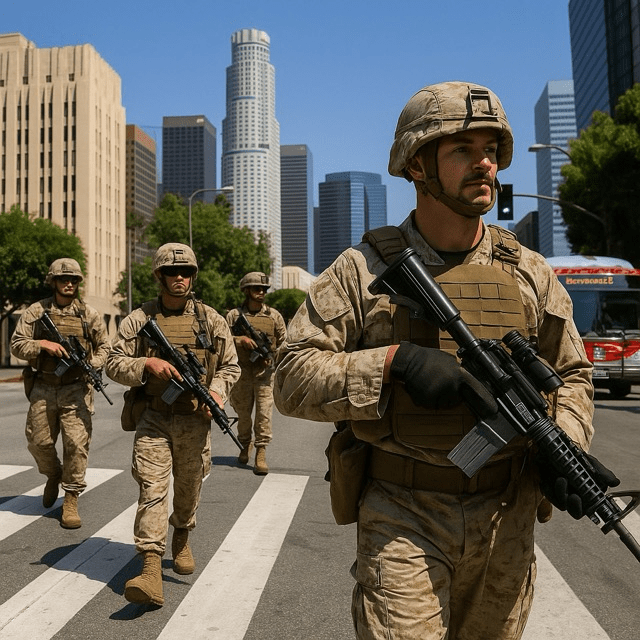
In an unprecedented move, the U.S. Department of Defense has approved the deployment of 700 U.S. Marines to Los Angeles, citing the urgent need to protect federal personnel and government property. The decision comes amid a wave of civil unrest, increasing threats to federal infrastructure, and mounting political pressure for stronger federal intervention in major urban centers.
Pentagon officials confirmed that the deployment was requested by the Department of Homeland Security following intelligence reports indicating potential threats to federal buildings, courthouses, and staff in downtown Los Angeles. The Marines, drawn from the 1st Marine Division based at Camp Pendleton, are expected to operate in a support capacity to federal law enforcement agencies including the FBI, U.S. Marshals Service, and the Department of Homeland Security’s Federal Protective Service.
Defense Secretary issued a statement assuring the public that the Marines’ mission is not to police civilians but to serve in a defensive posture around specific federal installations. “This deployment is about protecting the institutions of government from targeted threats. These are not crowd control troops—they are here to ensure federal continuity,” the statement emphasized.
Still, the deployment has sparked widespread debate among civil rights groups, local officials, and community activists who worry that the presence of active-duty military personnel could escalate tensions further. Critics argue that such measures risk militarizing civic spaces and could potentially infringe upon constitutional rights. A spokesperson for the ACLU described the move as “a dangerous overreach that sets a troubling precedent for civil-military relations in domestic affairs.”
Local law enforcement agencies have been briefed on the Marines’ roles and responsibilities. Coordination meetings between federal and city leaders are ongoing to ensure clarity of jurisdiction and avoid operational confusion. While the Marines will not be directly involved in arresting or confronting protesters, they will support perimeter security, intelligence gathering, and logistical operations.
The situation in Los Angeles has been tense for weeks, with mass protests, intermittent rioting, and frequent clashes between demonstrators and police forces. Federal courthouses and IRS offices have been subject to vandalism, prompting the urgent need for heightened security. Government analysts fear that further disruptions could impact the functioning of critical services and the safety of public employees.
Community leaders have called for calm and have requested transparency regarding the Marines’ rules of engagement and duration of deployment. “We need protection, but we also need assurances that our neighborhoods won’t become militarized zones,” said a city council member during an emergency briefing at City Hall.
As of now, the Marines have been stationed at secure staging areas on the outskirts of the city and are being gradually deployed to high-risk sites. Military transport convoys and helicopters were seen entering the downtown area early this morning, under tight security and media blackout.
The full implications of this deployment remain to be seen. For now, it marks a pivotal moment in the evolving relationship between the federal government and American cities facing domestic instability. Whether the presence of the Marines will calm the unrest or exacerbate tensions will depend largely on how the situation is managed in the coming days.

 The Tower Post