Economic Shock Therapy Yields Unexpected Disinflation in May 2025
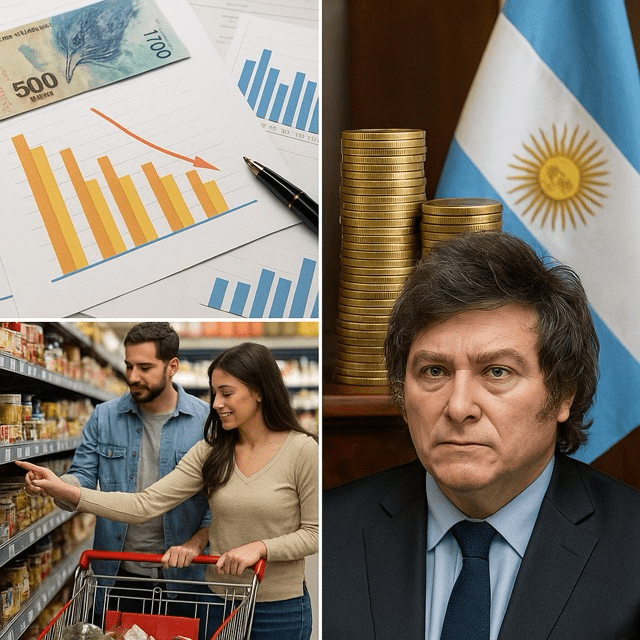
In a watershed moment for Argentina’s beleaguered economy, President Javier Milei announced that the country’s monthly inflation rate fell to 1.5% in May 2025. According to the National Institute of Statistics and Censuses (INDEC), this marks the first time monthly inflation has dipped below 2% since July 2020, when the nation grappled with the early stages of the COVID-19 pandemic. The surprising figure represents a dramatic turnaround from the hyperinflationary peak of 25.5% recorded in December 2023, shortly after Milei assumed office, and underscores both the promise and peril of his radical economic reforms.
Since taking office in December 2023, Milei—a libertarian economist turned outsider politician—has implemented a series of shock-therapy measures aimed at taming inflation and restoring fiscal discipline. Key among these were the abolition of the long-standing fixed exchange rate, the removal of currency controls, and the negotiation of a $20 billion loan package with the International Monetary Fund (IMF). Critics warned that lifting currency restrictions would unleash further price pressures and erode public confidence. Instead, the administration has managed to contain the immediate devaluation impact, as evidenced by the 1.5% monthly inflation rate, a result that some analysts did not forecast until late 2026.
Behind the headline number lies a complex mix of factors. The government’s stringent fiscal austerity measures—cutting subsidies, trimming public sector payrolls, and slashing discretionary spending—have narrowed the budget deficit to its lowest level in over a decade. At the same time, the central bank has pursued aggressive interest rate hikes, pushing borrowing costs into double digits to anchor inflation expectations. Although these policies have stabilized the currency and price levels, they have also weighed on economic growth, which the IMF forecasts will slow to 4.8% in 2025 following a robust 5.5% expansion.
The disinflationary trend extends beyond headline items. Core inflation, which excludes volatile food and energy prices, decelerated to 1.8% in May, down from 2.4% in April. Notably, the price of a basic food basket—a vital indicator for low-income households—fell by 0.4% on the month, signaling relief for Argentines battling surging living costs. Still, challenges persist: exporters face a stronger peso, complicating trade balances, and consumer confidence remains fragile amid high unemployment and suppressed wages.
In Buenos Aires, shop owner María González described the mood in the marketplace as “cautiously optimistic.” After months of erratic price hikes, stable pricing has enabled small vendors to plan inventories more reliably. “We’re finally able to order stock without fearing that prices will double overnight,” she said. Yet González and other entrepreneurs warn that stability could prove fleeting if government revenues falter or political support wanes ahead of the October midterm elections.
Opposition leaders have seized on these concerns to attack Milei’s political capital, arguing that his policies favor financial markets over everyday Argentines. Labor unions, still reeling from public-sector layoffs, have threatened protests unless wage adjustments keep pace with inflation targets. Meanwhile, consumer advocacy groups are calling for safeguards to prevent predatory pricing in critical sectors such as utilities and transportation.
International observers, however, have lauded the disinflationary outcome. The IMF’s resident representative in Buenos Aires commended Argentina for “defying expectations” and emphasized the need to “stay the course” on structural reforms to cement gains. Credit rating agencies have likewise improved Argentina’s sovereign outlook, with Moody’s upgrading the country’s rating for the first time since 2018. Still, analysts caution that rebuilding foreign exchange reserves and restoring investor confidence will require sustained fiscal discipline and transparent governance.
Looking ahead, the Milei administration faces a delicate balancing act. In the short term, maintaining loose monetary conditions risks a relapse into rapid price increases, while aggressive tightening could stifle the fragile economic recovery. The government’s next challenge will be to translate monthly disinflation into lower annual inflation, which still stands at a punishing 43.5% year-on-year. Market forecasts predict a decline to 28.6% by year-end, but underscore that a single monthly reading does not guarantee a sustained trend.
For now, Argentina’s economic narrative has shifted from crisis to cautious commendation. Milei’s gamble on radical reform appears to have paid off in the immediate term, but the broader test will be whether these achievements can withstand political headwinds, global commodity shocks, and the lingering scars of decades-long economic mismanagement. As President Milei remarked in his televised address, “Today we celebrate progress—but tomorrow, the real work continues.”



 The Tower Post