A Preemptive Attack That Killed Top Iranian Military Leaders and Targeted Nuclear Infrastructure
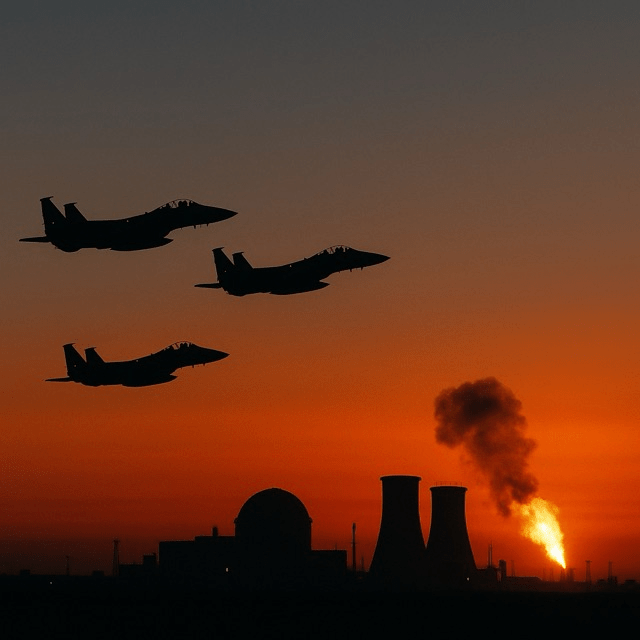
In the early hours of June 13, 2025, Israel initiated a large-scale military operation—codenamed “Operation Rising Lion”—consisting of intense airstrikes on Iranian territory. Over 200 Israeli aircraft and covert assets conducted coordinated strikes targeting over 100 strategic locations, including Iran’s nuclear facilities at Natanz and military command centers in Tehran and other cities.
The strikes were explicitly aimed at dismantling Iran’s uranium enrichment infrastructure, ballistic missile capabilities, and eliminating high-ranking military personnel. Among those reported killed were Major General Hossein Salami, commander of the Islamic Revolutionary Guard Corps (IRGC); Major General Mohammad Bagheri, Iran’s chief of military staff; IRGC figures Gholam Ali Rashid and Amir Ali Hajizadeh; and leading nuclear scientists.
Israeli Prime Minister Benjamin Netanyahu defended the operation as a preemptive strike, stating that Iran’s nuclear advancements posed an imminent threat. He warned that the strikes would persist “for as many days as it takes” to neutralize that danger.
Iran’s authorities responded by declaring the airstrikes a “declaration of war,” reporting at least 78 fatalities and 329 injuries, encompassing both military and civilian casualties. In retaliation, Iran launched over 100 drones toward Israeli territory, most intercepted by the Israeli Defense Forces.
The offensive occurred just days before planned nuclear negotiations and ahead of renewed talks in Oman, disrupting diplomatic efforts. The United States distanced itself from the strikes, with State Department officials and Secretary Marco Rubio clarifying the U.S. was not involved. Meanwhile, former President Trump praised the strikes and urged Iran to “make a deal” soon to avoid even harsher consequences.
Global reactions were swift and varied. The United Nations, IAEA, and multiple world leaders called for maximum restraint, warning of a potential regional escalation. Countries across Europe, the Gulf, and Asia voiced concern over the legality of targeting nuclear facilities and senior military figures.
In Tehran, civil aviation operations were suspended at Imam Khomeini airport, internet connectivity was heavily restricted, and an air defense alert was issued. Israel also imposed heightened domestic security measures, including airspace closures and rapid military mobilization.
Economically, the strikes triggered an immediate surge in global oil prices and prompted a downturn in major equity markets. Transport stocks declined as airlines rerouted or cancelled flights over the region.
Looking ahead, analysts warn that the attack may derail diplomatic negotiations and accelerate Iran’s nuclear ambitions. Tehran has vowed “harsh retaliation,” potentially through proxies like Hezbollah and Houthi forces, raising fears of a wider regional war.




 The Tower Post