Berlin Seeks to Prioritize Security in the Next Multiannual Financial Framework
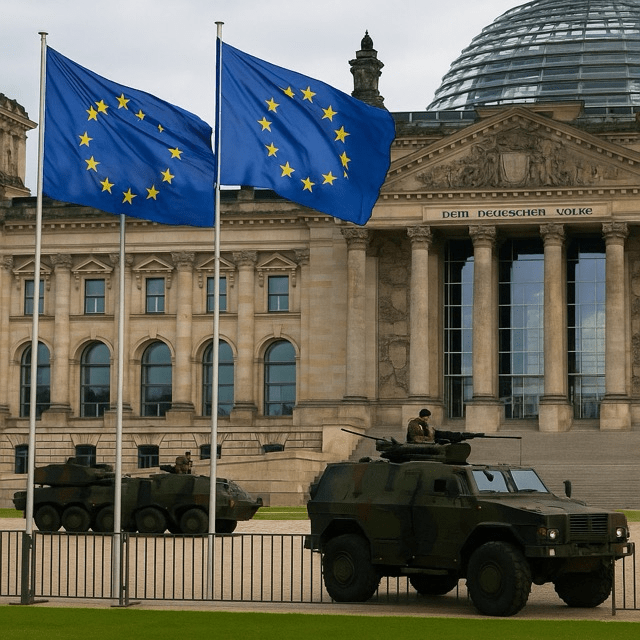
As the European Union prepares negotiations for its next Multiannual Financial Framework (MFF) covering 2028–2034, Germany has emerged as a leading voice advocating for a significant shift in budgetary priorities toward defence and security. Chancellor Olaf Scholz and Finance Minister Christian Lindner have both underscored the need for the EU to bolster its collective capabilities in an era of rising geopolitical tensions, citing Russia’s war in Ukraine, strategic competition with China, and the resurgence of instability on Europe’s periphery.
Under the current MFF, defence spending receives only a modest slice of the EU’s roughly €1.2 trillion budget, primarily channeled through research programmes like Horizon Europe and localized security grants. Germany is now proposing a dedicated “European Defence Fund 2.0” with an initial envelope of €50 billion to finance joint procurement, research into next-generation technologies—such as hypersonic missiles, cyber‑defence systems, and autonomous platforms—and interoperability exercises.
Berlin’s stance represents a departure from traditional EU priorities that have favored cohesion, agriculture, and structural funds aimed at reducing regional disparities. While France and several Eastern European members, particularly Poland and the Baltic states, have signaled support for strengthening defence, other major players—most notably Spain and Italy—remain cautious, fearing that defence allocations could cannibalize existing programmes that underpin economic and social cohesion.
Germany’s coalition government argues that an EU budget must evolve to reflect the contemporary security environment. “The EU can no longer treat defence as a fringe item,” Chancellor Scholz declared at a recent Bundestag session. “We need an integrated approach that combines diplomacy, economic resilience, and military capabilities financed at the European level.” This logic is echoed by proponents of Permanent Structured Cooperation (PESCO), who view the next MFF as an opportunity to inject fresh capital into defence projects stalled by funding gaps.
Critically, Germany is advocating for novel revenue streams to fund this defence emphasis, beyond traditional contributions from national treasuries. Brussels officials are exploring options such as dedicating a share of EU Emissions Trading System revenues, a digital services levy, or a euro‑denominated solidarity bond to the defence fund. Such mechanisms would alleviate pressure on member states’ domestic budgets and reinforce the EU’s role as a global security actor.
However, the proposal faces several hurdles. First, unanimity is required to approve the MFF, giving any one member state veto power. Countries with pacifist traditions or significant reliance on agricultural subsidies may block or demand offsets. Second, institutional complexities—such as clarifying the European Commission’s role in defence procurement and aligning EU budget rules with security objectives—will require extensive treaty discussions or at least intergovernmental agreements.
Economic considerations also loom large. The EU is still managing the aftermath of pandemic-era debt, and many members have yet to bring deficits below the Stability and Growth Pact threshold of 3% of GDP. Some finance ministers worry that additional defence spending could exacerbate borrowing costs or distract from pressing priorities like green transition and digital transformation.
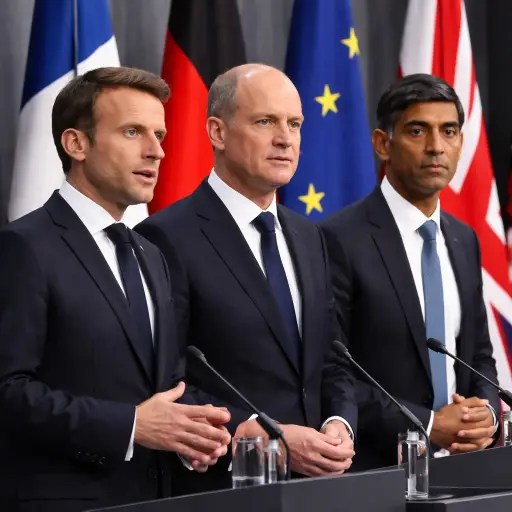
Despite these challenges, Germany has begun building a coalition of willing partners. France’s President Emmanuel Macron, who has long championed greater EU strategic autonomy, has expressed openness to a reinforced European Defence Fund. Similarly, the Visegrád Group states have called for enhanced border security and rapid reaction forces, aligning them with Berlin’s vision. Spain, for its part, is negotiating to safeguard portions of its cohesion funds while considering conditional support for targeted defence initiatives.
As the MFF drafting process unfolds, the coming months will test the EU’s ability to reconcile divergent national interests with a collective security imperative. For Germany, the stakes are high: failure to secure a defence-centric budget would, in their view, undermine Europe’s deterrence posture and embolden adversaries. Success, however, could mark a transformative step toward a more resilient and strategically coherent Union.
In sum, Germany’s push to make defence a central pillar of the next EU budget reflects a broader recognition that hard power complements soft power in safeguarding European values and interests. Whether this ambition translates into tangible budgetary commitments will shape the EU’s role on the world stage for decades to come.
 The Tower Post