How Shrinking Birthrates and Rising Longevity Threaten the World’s Oldest Society
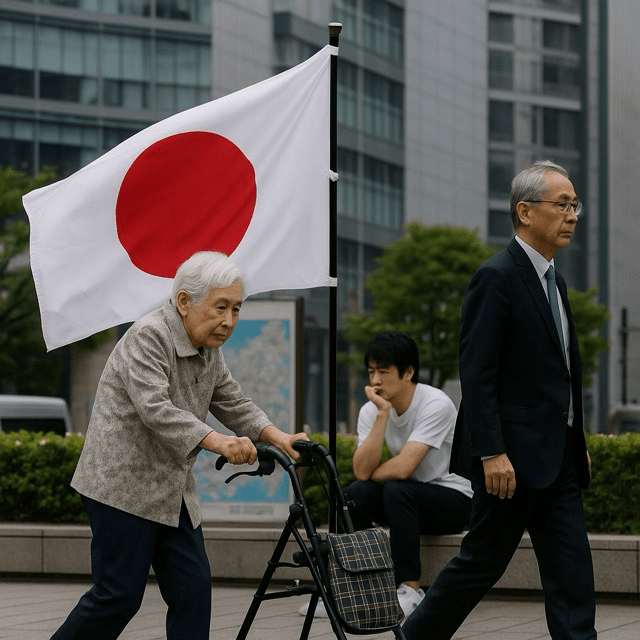
Japan stands at the epicenter of a demographic crisis unmatched by any other major economy. With one of the world’s highest life expectancies coupled with a record-low fertility rate, the nation’s population peaked in 2010 at 128 million and has since declined by over six million. This demographic time bomb—marked by a rapidly aging population and a shrinking workforce—poses profound challenges to Japan’s economy, social services, and national identity.
At the heart of the crisis lies the fertility rate, which fell to 1.25 births per woman in 2024, well below the replacement threshold of 2.1. Factors include economic pressures, the high cost of raising children in dense urban centers, and shifting social norms around marriage and work. Despite government incentives—such as childcare subsidies, parental leave expansions, and cash grants—many young couples postpone or forego having children, citing career demands and housing constraints.
The flip side of low fertility is unprecedented longevity. As of 2025, nearly 30% of Japan’s population is aged 65 or older, up from 17% in 2000. Centenarians number over 100,000, prompting pride in the nation’s healthcare system but swelling demands on pension funds and elder care services. Municipalities in regions like Akita and Shimane have seen school closures due to dwindling youth cohorts, while rural villages confront “ghost towns” and shuttered businesses as young people migrate to cities.
Economically, the narrowing working-age population has strained productivity and growth. Japan’s GDP growth averaged just 1.0% annually between 2015 and 2024, compared to 2.3% in the United States. Labor shortages in manufacturing, retail, and healthcare sectors drive up wages and inflationary pressures. To mitigate this, companies increasingly automate processes through robotics and artificial intelligence, making Japan a global leader in factory robotics. Yet technology alone cannot fully offset the sheer scale of workforce contraction.
Policy responses have ranged from bolstering female labor participation to cautious immigration reforms. Women’s workforce participation rose to 72% in 2024, the highest on record, helped by corporate childcare facilities and flexible work policies. Still, gender wage gaps and cultural expectations limit the extent to which women can balance career and family. In 2022, the government introduced a points-based visa system to attract skilled foreign workers but capped total immigration at modest levels—reflecting societal ambivalence toward large-scale population influx.
Rural revitalization schemes form another pillar of the national strategy. The “Regional Future” initiative provides tax breaks and grants for retirees and teleworkers to relocate to underpopulated prefectures, aiming to redistribute human capital and sustain local economies. Success stories emerge in areas like Tottori and Hokkaido, where revitalized tourism and specialty agriculture generate new opportunities, yet scaling such models nationally remains a steep climb.
Healthcare systems are also adapting. Long-term care insurance, introduced in 2000, provides coverage for elder services but faces funding shortfalls as the ratio of contributors to beneficiaries shrinks. Providers experiment with technologies like remote monitoring, robotic caregivers, and AI-driven diagnostics to reduce labor needs and maintain quality of care. However, ethical questions arise around human dignity and the digital divide among elderly populations.
Looking beyond immediate remedies, some experts advocate for reimagining social contracts. Proposals include a universal basic income to support families and reduce economic burdens, restructured pension schemes to reflect longer lifespans, and dynamic work models that embrace lifelong learning and multi-career pathways. Such systemic shifts, however, require political consensus in a fragmented parliamentary landscape.
Culturally, Japan’s demographic trends are reshaping identity. Millennials and Gen Z express new conceptions of family and community, favoring urban co-living arrangements and digital social networks. Popular media increasingly explores themes of solitude and aging societies, reflecting collective anxiety and creative introspection.
As Japan stands on the brink of demographic transformation, its experience offers lessons for other nations facing similar trajectories. The interplay of economic policy, cultural adaptation, and technological innovation will determine whether Japan defuses its demographic time bomb or succumbs to social and fiscal stress. In the words of demographer Masato Tamura, “Japan’s choices today will resonate for generations and chart a course for aging societies worldwide.”




 The Tower Post