Alliance Cohesion Tested Amid Russia’s War, China’s Rise, and Internal Divides
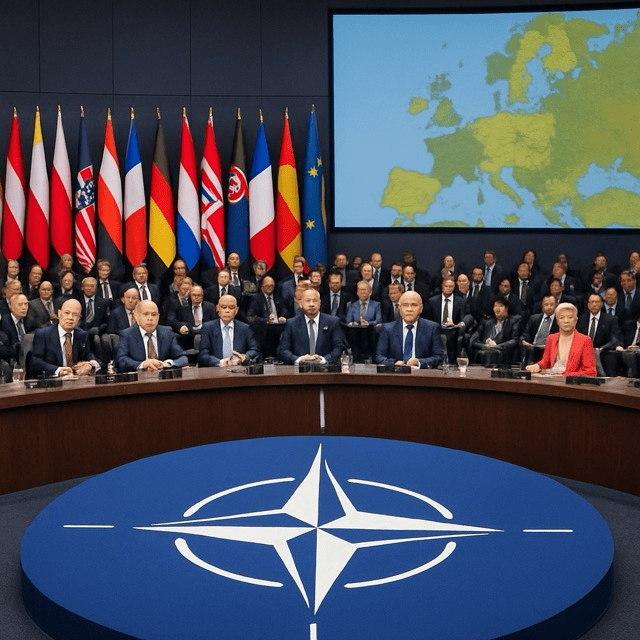
As the North Atlantic Treaty Organization convenes its leaders in the spring of 2025, the alliance faces what many observers describe as a “moment of truth.” Now in its eighth decade, NATO must grapple with simultaneous challenges: an unending war in Ukraine, a rising China that seeks global influence, and internal strains over burden-sharing and strategic priorities. The decisions made at this pivotal summit will shape NATO’s relevance and effectiveness for years to come.
The invasion of Ukraine by Russia in February 2022 reignited NATO’s core mission of collective defense. Since then, member states have poured military aid into Kyiv, established robust deterrence measures along the eastern flank, and increased defense spending to meet the 2% of GDP guideline. Yet the war’s protracted nature has exposed divisions. Eastern members demand heavier armaments and a clear path to victory, while some Western capitals argue for caution to avoid escalation with Moscow. As NATO deliberates on fresh assistance packages, the alliance must reconcile these differing risk tolerances.
Simultaneously, China’s strategic and military capabilities have emerged as a growing concern. From deepening ties with Russia to expanding naval deployments in the Mediterranean and indo-Pacific partnerships with countries like India and Japan, Beijing’s footprint now extends into traditional Euro‑Atlantic spheres. NATO’s 2024 strategy update formally recognized China as a systemic challenge, calling for enhanced maritime security, cyber resilience, and supply‑chain fortification. However, aligning 32 member states on a unified China approach—balancing deterrence with dialogue—remains a diplomatic tightrope.
Internally, burden‑sharing debates persist, despite progress. Ten years ago, only three NATO members met the 2% defense spending benchmark. Today, 21 do, and several have pledged further increases. Nonetheless, disparities in capabilities—particularly in advanced technologies such as cyber‑defense, space assets, and long‑range missiles—are stark. Smaller allies lament that despite fulfilling budgetary targets, their contributions are sidelined, whereas larger economies drive agenda‑setting. The summit’s task is not only to close funding gaps but to ensure equitable decision‑making that respects contributions of all sizes.
Another test for NATO’s cohesion is the path to membership for countries aspiring to join, notably Ukraine, Georgia, and Bosnia‑Herzegovina. While Article 10 of the Washington Treaty promises open doors, practical realities—ongoing conflicts, needed reforms, and potential Russian backlash—complicate immediate accession. Providing tangible support and a credible membership roadmap without prematurely extending Article 5 guarantees is a diplomatic puzzle that the alliance must solve to uphold both strategic interests and democratic principles.
Beyond defense, NATO seeks to strengthen resilience against hybrid threats—disinformation, electoral interference, and economic coercion. The alliance’s new Hybrid Center of Excellence and enhanced intelligence-sharing platforms aim to bolster member states’ capacities. Yet coordinating legal frameworks and privacy standards across diverse jurisdictions slows progress. The summit must energize these efforts, ensuring that all members can swiftly identify and counter hybrid aggression.
Lastly, NATO’s leadership structure and decision-making processes are under scrutiny. While consensus remains the bedrock of unity, it can also lead to lowest-common-denominator outcomes. Discussions are underway about streamlining political consultations and granting the Secretary General greater flexibility to direct rapid responses. However, any shift toward qualified majority voting risks alienating members wary of losing sovereignty.
In sum, NATO’s summit in 2025 confronts an alliance at a crossroads. Its ability to adapt to Russia’s aggression, counterbalance China’s ascent, and maintain internal solidarity will determine whether NATO remains the linchpin of Euro-Atlantic security. As Secretary General Jens Stoltenberg asserted ahead of the meeting, “Our unity and resolve will be tested—and our answer must be unequivocal.” The world will be watching whether NATO’s leaders rise to this moment of truth or falter in the face of unprecedented complexity.


 The Tower Post