Prime Minister Seeks to Repair Trust Amid Political Turmoil
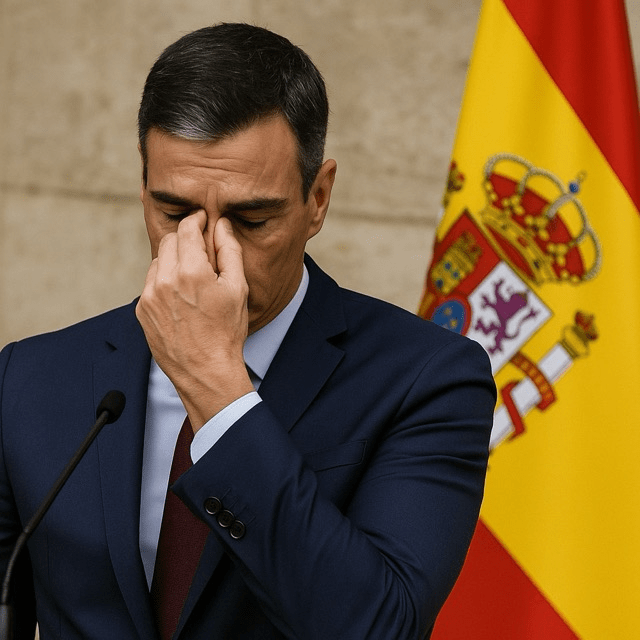
On June 14, 2025, Spain’s Prime Minister Pedro Sánchez appeared before the Congress of Deputies to deliver a formal apology for the involvement of one of his closest aides in a high-profile corruption scandal. The aide, Deputy Director of Communications María López, is accused of accepting bribes from a construction firm in exchange for awarding lucrative government contracts. The allegations, first reported by investigative journalists in April, have sent shockwaves through Sánchez’s administration and threatened to undermine public confidence in the government’s integrity.
Sánchez, speaking in a solemn tone, acknowledged the severity of the situation. “I regret deeply that someone in my inner circle has betrayed the trust of the Spanish people,” he said. “I take full political responsibility and commit to ensuring transparency and accountability at every level of government.” Despite his apology, opposition parties have criticized the prime minister for failing to act sooner, calling for an independent inquiry and the resignation of additional officials who may have been complicit.
María López was placed on administrative leave last month pending the outcome of a judicial investigation. Prosecutors allege that she received cash payments and luxury gifts totaling €250,000 between 2022 and 2024. The indicted construction firm, Obras y Servicios S.A., has also denied wrongdoing, insisting that all contracts were awarded following standard procedures. Nevertheless, the court has frozen the firm’s assets and taken the unprecedented step of seizing relevant government documents to trace the flow of funds.
Public reaction has been mixed. In Madrid, demonstrators rallied outside Sánchez’s PSOE headquarters, demanding greater accountability and systemic reforms to combat corruption. Meanwhile, supporters of Sánchez argue that his swift acknowledgment and willingness to confront the issue demonstrate responsible leadership. Polling conducted this week indicates that Sánchez’s approval ratings have dropped by 8 percentage points since the scandal broke, but a majority of respondents still express confidence in his ability to govern.
The scandal comes at a critical time for Spain, as the government prepares to negotiate the next tranche of European Union recovery funds, pivotal for post-pandemic economic growth. EU officials have stressed the importance of upholding the rule of law and warned that mismanagement of funds could jeopardize future allocations. Sánchez has pledged to strengthen oversight mechanisms, including the establishment of an independent anti-corruption commission and mandatory asset disclosures for senior officials.
Economists warn that political instability could dampen investment and slow recovery efforts. Spain’s economy grew by 4.1% in 2024, buoyed by tourism and renewable energy projects, but remains susceptible to external shocks. Opposition leaders from the conservative Partido Popular and centrist Ciudadanos have seized on the scandal to question the government’s competence, calling for early elections if further evidence of wrongdoing emerges.
Looking ahead, Sánchez faces a daunting task: restoring trust while maintaining his administration’s reform agenda, which includes labor market overhauls and green transition initiatives. Political analysts suggest that the prime minister must balance decisive action against corrupt practices with political pragmatism to avoid fracturing his coalition. As the judicial probe progresses, Spain watches to see whether Sánchez’s apology marks the beginning of meaningful change or merely a temporary balm on deeper wounds of political disillusionment.


 The Tower Post