Assessing Israel’s clandestine campaign and the broader Middle Eastern appetite for Iran’s political transformation
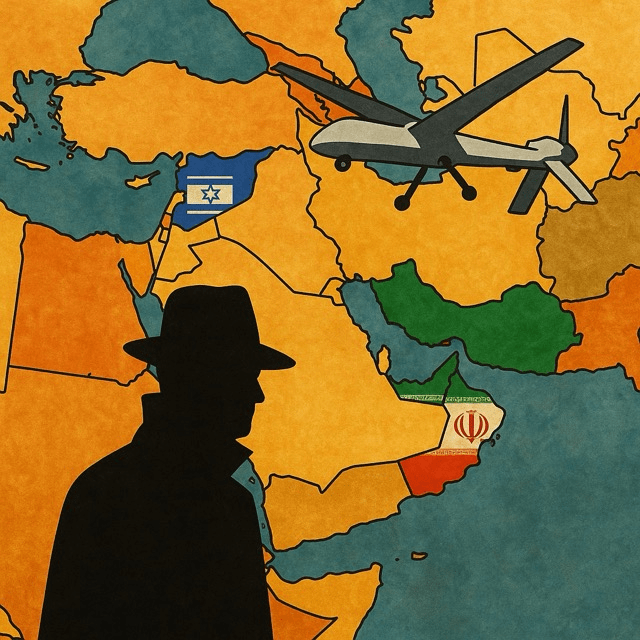
In the complex geopolitical chessboard of the Middle East, Israel’s covert pursuit of Iran’s Supreme Leader, Ayatollah Ali Khamenei, represents a strategic gambit with profound regional implications. For decades, tensions between the two nations have simmered beneath the surface—occasionally erupting into open conflict and proxy battles that traverse borders and ideologies. Today, new intelligence suggests an intensification of directed operations aimed at destabilizing Iran’s theocratic regime from within, targeting Khamenei himself as both a symbolic and operational linchpin. The unprecedented alignment of various Middle Eastern actors, who quietly endorse this audacious endeavor, underscores a shifting paradigm: one where regime change in Tehran is no longer a fringe aspiration but a shared objective among erstwhile adversaries.
Historical animosities between Israel and Iran trace back to the Islamic Revolution of 1979, when the establishment of the Islamic Republic supplanted Tehran’s previous pro-Western monarchy. The ideological chasm widened further with Iran’s support for Hezbollah in Lebanon and Hamas in Gaza—groups that have engaged in numerous skirmishes with Israeli forces. Over the past two decades, Iran’s nuclear ambitions and ballistic missile programs have heightened Israel’s sense of existential threat. Jerusalem’s strategic doctrine has thus evolved to include preemptive and covert measures alongside conventional deterrence, culminating in a comprehensive intelligence apparatus dedicated to neutralizing perceived threats before they materialize on the battlefield.
Recent satellite imagery and intercepted communications reveal that Israeli intelligence has deployed specialized units to monitor Khamenei’s movements and disrupt his inner circle’s operations. These units—reportedly part of an expanded Mossad initiative—have sought to isolate the Supreme Leader by targeting key advisors, communications networks, and financial conduits that sustain his grip on power. While direct action against Khamenei remains extremely delicate, even minor disruptions can erode the centralized authority that underpins the regime. Jerusalem’s calculus hinges on the premise that a weakened leadership core could catalyze internal dissent, thereby laying the groundwork for a more malleable successor or a broader transformation in governance.
Meanwhile, voices across the Arab world—from Gulf monarchies to Gulf Cooperation Council (GCC) member states—have taken an increasingly pragmatic stance toward Israel’s security concerns. Although official diplomatic ties vary in strength, a tacit consensus has emerged: Iran’s regional interventions and support for proxy militias pose a far greater threat to Middle Eastern stability than Jerusalem’s intelligence operations. Gulf capitals have thus provided discreet logistical support, intelligence sharing, and diplomatic cover, all while avoiding public endorsement. This covert cooperation reflects a convergence of interests that transcends traditional sectarian divides, uniting Sunni-led states and Israel in their shared apprehension of Iranian hegemony.
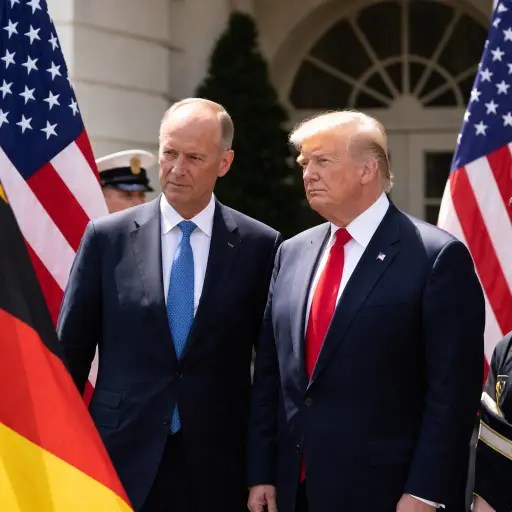
The United States, long the principal security guarantor for both Israel and its Arab partners, finds itself navigating a delicate balance. Washington publicly advocates for strategic patience and diplomatic engagement with Tehran, particularly concerning nuclear negotiations. Yet, behind closed doors, U.S. intelligence agencies have reportedly facilitated information exchanges that bolster Israel’s targeted efforts. The Biden administration’s nuanced position highlights the complexity of alliance politics: supporting Israel’s right to defense while managing broader international commitments under the Joint Comprehensive Plan of Action (JCPOA) framework. This duality underscores the inherent tensions within Western policy towards Iran.
As Israel’s campaign advances, the potential for unintended consequences looms large. A direct attempt on Khamenei’s life could provoke a severe retaliatory response, risking full-scale conflict that engulfs the region. Additionally, an abrupt power vacuum in Tehran might fracture into competing factions, some of which could be even more radical than the current leadership. Regional backers of regime change must therefore weigh their enthusiasm against the fallout of a destabilized Iran. Analysts caution that a sustainable outcome would require coordinated international planning to manage post-Khamenei governance and mitigate humanitarian crises.
Ultimately, Israel’s pursuit of Ayatollah Khamenei symbolizes a broader shift in Middle Eastern geopolitics—one where clandestine warfare and realpolitik alliances redefine traditional hostilities. The cross-regional backing for regime change marks a historic turning point, suggesting that the unthinkable has become a shared aspiration among states once locked in bitter rivalry. As events unfold, the international community must remain vigilant, balancing the quest for security with the imperative to avoid a catastrophic power struggle in the heart of the Islamic world.


 The Tower Post