Elon Musk’s move to provide uncensored internet access amid Iranian unrest
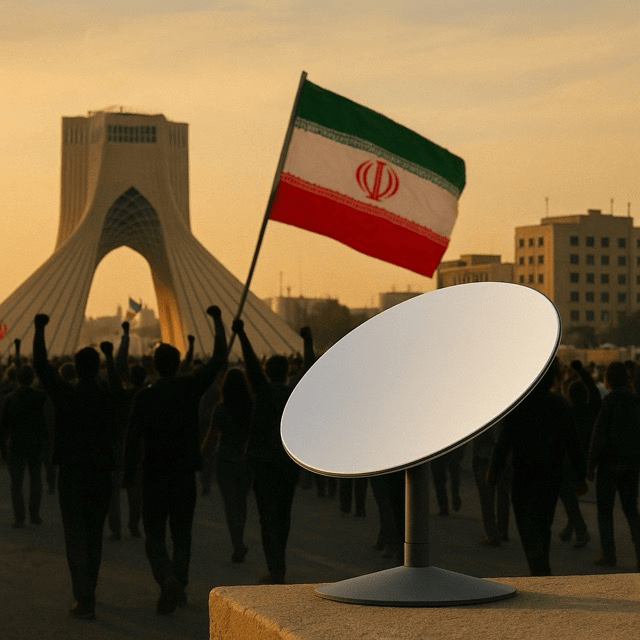
In June 2025, Elon Musk’s SpaceX took the unprecedented step of opening up its Starlink satellite internet service to users in Iran, a move hailed by activists and rights groups as a watershed moment for information freedom. As widespread protests against the government’s crackdown on dissent intensified, traditional internet and cellular networks faced repeated throttling and shutdowns at the hands of state authorities. By enabling direct satellite-based connectivity, Starlink offers Iranians a lifeline to unfiltered news, social media, and external perspectives that were previously out of reach.
Starlink’s low-earth orbit satellite constellation provides high-speed, low-latency internet that bypasses terrestrial infrastructure. For Iranian users installing approved Starlink terminals, this means the ability to upload and download data even when the regime severs fiber cables or blocks access to critical online platforms. Human rights organizations have documented a “blackout playbook” by Iranian security forces—beginning with targeted throttling of opposition websites, followed by region-wide communication blackouts. Starlink effectively undercuts these tactics by delivering connectivity from space.
The decision to lift restrictions in Iran reflects Musk’s long-standing advocacy for open communication as a fundamental human right. In recent months, he publicly criticized state-enforced censorship, tweeting that “access to information empowers citizens and holds authorities accountable.” SpaceX’s regulatory filings with the U.S. Federal Communications Commission (FCC) were amended to include Iran within its approved service zones, sidestepping national telecom operators controlled by the government. Although this approach carries legal and political complexities, SpaceX prioritized humanitarian impact over bureaucratic obstacles.
Operationally, deploying Starlink in Iran presents logistical challenges. The Iranian government has attempted to seize or disable satellite dishes in past incidents, branding them as tools of foreign interference. To counter this, SpaceX partnered with non-governmental organizations to distribute terminals discreetly, providing installation guidance and encrypted authentication processes to avoid detection. Community hubs—with power backups and satellite visibility—have sprouted in urban centers like Tehran and Isfahan, where activists can gather to share updates and coordinate peaceful demonstrations.
Access to Starlink has already reshaped the information landscape. Independent journalists within Iran report that video streams of protests, police movements, and public speeches are now broadcast in real-time to global audiences. Citizen-led fact-checking groups use satellite connectivity to verify rumors and debunk state propaganda. As a result, international media outlets receive first-hand footage that challenges official government narratives. This transparency has increased diplomatic pressure on Iran, with lawmakers in the European Union and United States calling for accountability and restraint.
Critics warn, however, that Starlink’s presence could escalate tensions. Iran’s Supreme National Security Council has accused Musk of violating international law by “interfering in domestic affairs.” Military spokespeople have threatened to develop jamming technology targeting Starlink frequencies, potentially risking broader satellite service disruptions. In response, SpaceX engineers have begun testing anti-jamming protocols and frequency-hopping encryption to maintain service integrity. The evolving contest between satellite connectivity and ground-based censorship resembles a high-tech stalemate.
Beyond protest coverage, Starlink enables crucial humanitarian communications. Medical teams in remote provinces use the service to coordinate care, transmit critical diagnostics, and consult specialists abroad. Students access online courses that were blocked during previous internet shutdowns. Families separated by travel restrictions can video-call loved ones in the diaspora. By unleashing these capabilities, Musk’s initiative demonstrates how robust connectivity underpins societal resilience, especially under repressive conditions.
The broader implications of this move extend to geopolitics and corporate responsibility. For SpaceX, Iran represents a testing ground for Starlink’s resilience against state censorship. Lessons learned here could inform service expansion in other authoritarian contexts—such as Myanmar or Belarus—where internet freedoms are similarly under threat. Meanwhile, governments worldwide must grapple with the dual-use nature of satellite internet: a tool for both citizen empowerment and potential security vulnerabilities. The debate over decoupling commercial innovation from geopolitical risk has never been more acute.
In conclusion, Elon Musk’s decision to open Starlink in Iran amid a climate of protest underscores the transformative power of space-based internet. By providing Iranians with uninterrupted access to global information flows, Starlink has become a digital beacon against censorship. While technical and political hurdles remain, the initiative embodies a vision of connectivity as a universal right. As the world watches Iran’s struggle for freedom and accountability, the success of Starlink could redefine how societies under blockade or blackout maintain their voice and agency.



 The Tower Post