From Stage Winner to Trans Advocate
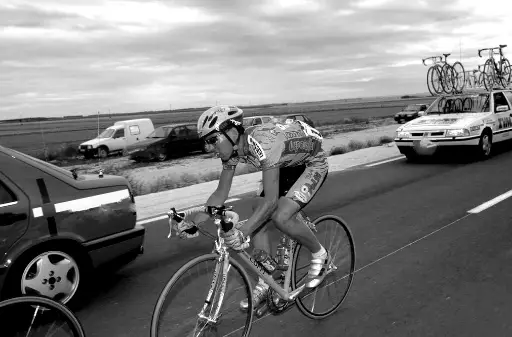
Pippa York, a former Tour de France stage winner and British national champion, has spoken publicly for the first time about her transition from a male to a female identity. In her new book, “The Escape,” written in collaboration with David Walsh, York unflinchingly documents the long and painful process towards transition and the isolation, fear, and loneliness that accompanied it.
Growing up in Glasgow’s Gorbals, a working-class neighborhood in the 1970s, York, then known as Robert Millar, felt different from the age of five. However, the lack of an LGBTQ+ community in the area made it difficult for her to find support or role models. “If I saw David Bowie on Top of the Pops, I thought: ‘Oh, that’s interesting,’ but he wasn’t a role model,” York recalls. “It didn’t make me think I could be whatever I wanted.” The absence of a supportive community left York feeling isolated and ashamed of her identity.
Cycling offered York an escape from her difficulties, and she quickly became a serious road cyclist. She was drawn to the freedom, speed, and danger of the sport, which allowed her to temporarily forget about her struggles. However, the sport also presented its own challenges, particularly in terms of her identity. “You realise the others are going to beat you up,” York says. “Then there’s the fear of being outed and the shame of not fully fitting into the group that you’re meant to be part of.” York’s experiences in the European peloton, where she competed from 1980 to 1995, were marked by verbal intimidation and homophobia.
York’s transition was a long and difficult process, marked by depression, isolation, and uncertainty. She sought professional help at the age of 45 and underwent major surgeries, followed by long recoveries. “It became: ‘What kind of woman am I going to be?’” York says. “It was stuff I had to learn. I learned that as an adult, all the small social clues. I had to learn them very quickly so I didn’t appear vulnerable.” York’s journey to self-discovery was fraught with challenges, including coping with the loss of her male identity and navigating the complexities of femininity.
Now a respected voice in the cycling media and an advocate for trans athletes, York is critical of the British Cycling federation’s approach to trans inclusion. She claims that the federation has a “real problem with the whole LGBTQ+ spectrum” and points to the controversy surrounding trans athlete Emily Bridges. “They say they don’t have a problem, but they do,” York says. The federation’s handling of the situation, which ultimately led to Bridges being excluded from the national team, has left York feeling frustrated and disappointed.
York’s legacy as a cyclist is still not fully acknowledged, with the official programme and BBC coverage of the 2023 world championships deadnaming her. However, she remains hopeful that by the time 2027 comes around, her identity will be properly recognized. “If you are going to mention my previous existence, you’re going to have to mention who I am now,” York says. “I haven’t disappeared, and I haven’t died. I am not a refugee from who I was before.” York’s determination to be recognized as herself is a testament to her strength and resilience, and serves as a powerful reminder of the importance of inclusivity and acceptance in all aspects of life.



 The Tower Post