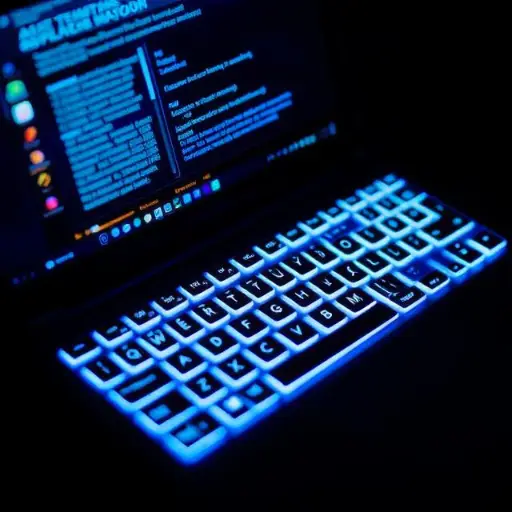
How Innovations in Input Devices and AI Writing Tools Are Empowering Users of All Abilities

In an increasingly digital world, the tools we use to communicate and create are evolving at a remarkable pace. At the forefront of this transformation are adaptive keyboards and writing technologies—innovations that are not only enhancing efficiency and creativity but also breaking down barriers for people with a wide range of physical and cognitive needs.
Adaptive keyboards, once considered niche products, have become essential devices for many. Unlike standard keyboards, these specialized tools are designed with features that accommodate users who may struggle with conventional layouts. Ergonomic designs, for example, offer split or contoured shapes that reduce strain on hands and wrists, making typing more comfortable for extended periods. For those with limited dexterity or visual impairments, expanded keyboards with larger keys and high-contrast lettering provide critical accessibility. Mini keyboards, with their compact layouts, help users with restricted range of motion, while one-handed keyboards allow individuals with hemiplegia or amputations to type efficiently using a single hand.
Software-based solutions have also made significant strides. On-screen keyboards, which can be operated with a mouse, touchscreen, or even eye-tracking technology, are opening up new possibilities for individuals with severe motor disabilities. Customizable keys and programmable shortcuts are further streamlining the typing process, reducing cognitive load and increasing productivity. Enhanced visibility features, such as large-print keys, and software aids like sticky keys and filter keys, are making it easier for users with visual or motor challenges to interact with their devices.
Perhaps the most transformative aspect of these technologies is their high degree of personalization. Users can adjust key sensitivity, change layouts, and even swap out hardware components to suit their evolving needs. These adaptive features are not only vital for children with special needs, enabling them to participate fully in educational settings, but are also empowering adults in the workplace and at home. In many cases, they help organizations comply with accessibility standards such as the Americans with Disabilities Act (ADA).
Innovative designs are continually pushing the boundaries of what adaptive keyboards can do. Devices like the Maltron One-Handed Keyboard, with its bowl-shaped layout, cluster keys within easy reach for single-handed use. The TIPY Keyboard, featuring a flat, fan-shaped design and a built-in joystick mouse, overlays multiple functions on central keys to minimize hand movement. Meanwhile, the Matias Half-QWERTY keyboard allows one hand to type both sides of the traditional QWERTY layout through mirrored key assignments and modifiers. These examples underscore the potential for adaptive keyboards to be radically reimagined to meet unique user requirements.
The advances are not limited to hardware. Writing technologies have also seen dramatic improvements. AI-powered writing assistants such as Grammarly and ChatGPT offer real-time suggestions, grammar corrections, and style enhancements. These tools help writers of all skill levels maintain consistency, generate ideas, and boost productivity. Collaborative online platforms now enable real-time co-authoring, feedback, and version control, making writing a more social and accessible process. Immersive storytelling tools, leveraging virtual reality and adaptive input devices, are allowing users to create and experience narratives in entirely new ways.
Security and personalization are becoming increasingly important as these technologies advance. Modern adaptive keyboards now incorporate biometric authentication, such as fingerprint or facial recognition, to safeguard user data and ensure privacy. At the same time, they are learning from user habits, offering individualized shortcuts, and providing real-time feedback to improve typing skills.
As adaptive keyboards and writing technologies continue to evolve, they promise a future in which digital tools adjust seamlessly to the needs of every user. These innovations are not only making technology more inclusive but are also empowering individuals to express themselves and participate fully in the digital age. The result is a more accessible, creative, and equitable world—one keystroke at a time.