The former MI6 chief warns any collapse of the clerical state is unlikely to usher in a liberal, pro‑Western order
Introduction
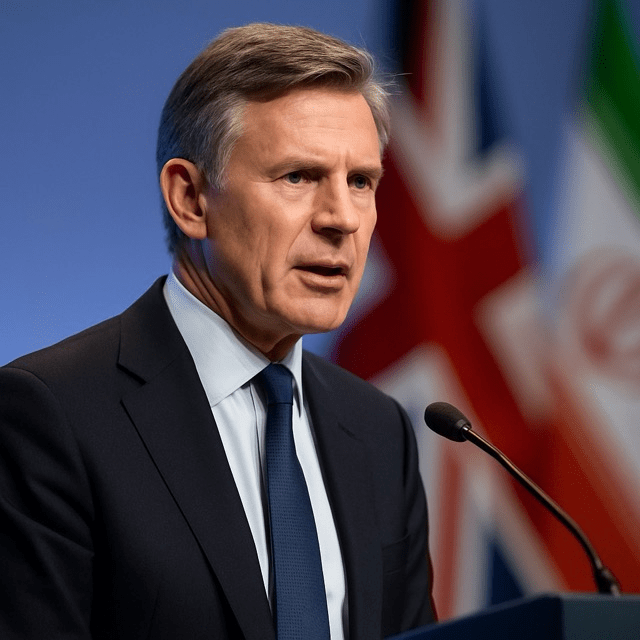
When Sir John Sawers, chief of the British Secret Intelligence Service (MI6) from 2009 to 2014, cautioned that “if Iran’s Islamic regime falls, the alternative will not be a liberal pro‑Western government,” he punctured a popular Western assumption about regime change. Speaking at the Munich Security Forum in early 2025, Sawers argued that Washington, London and Brussels have been lulled by the memory of Cold War–era democratic transitions in Eastern Europe and have misread the deeper currents of Iranian …
Sawers’s Intelligence Credentials
Sir John’s assessment carries weight not only because of his five years at the helm of MI6 but also due to previous roles as the UK’s permanent representative to the United Nations and political director in the Foreign Office during the 2003 Iraq War. He entered semi‑public life after retiring, offering a rare blend of open commentary underpinned by still‑fresh classified experience. In other words, he is neither an ivory‑tower academic nor a partisan polemicist; his warning about Iran arises from the kind…
Why a Liberal Outcome Is Unlikely
Sawers pointed to four structural impediments. First, the Islamic Revolutionary Guard Corps (IRGC) controls multibillion‑dollar conglomerates and commands elite divisions such as the Quds Force; its officers have groomed civilian protégés inside ministries and media. Second, opposition inside Iran remains diffuse: urban middle‑class protesters chant “Woman, Life, Freedom,” while provincial demonstrators focus on bread‑and‑butter prices; no unified leadership platform has emerged. Third, regional rivalries—…
The Shadow of 1979 and the Ghost of 2011
Western audiences often reach for analogies – the fall of the Shah in 1979, the Arab‑Spring ouster of dictators in 2011. Sawers warned that such precedents can mislead. The Shah’s monarchy collapsed into an organised Islamist opposition, not a liberal republic; Egypt’s Tahrir Square yielded first the Muslim Brotherhood, then a military restoration. Iran today, he said, is more like Egypt than Poland: powerful security organs await the vacuum, citizens lack an independent army, and expatriate leaders have …
Who Might Fill the Gap?
Sawers listed three plausible successors: (1) a hard‑line clerical faction allied to the IRGC, preserving most ideological tenets while discarding unpopular faces; (2) a military‑led caretaker council, echoing Pakistan’s 1999 model, promising order and economic competence; (3) a nationalist technocracy, neither overtly Islamist nor democratic, prioritising sovereignty and sanctions relief over social freedoms. None of these options fits the Western ideal of a pluralist, pro‑NATO ally; each retains some an…
Implications for Western Policy
If liberal democracy is not imminent, what should Western capitals do? Sawers urged a pivot from maximalist goals (toppling the regime) to incremental gains: support labour unions, secure internet access, amplify Persian‑language media, and prepare contingency aid for neighbours should refugees flow. Above all, he argued, negotiators must factor the IRGC into any nuclear or regional agreements—even if morally distasteful—because that institution is positioned to survive a political collapse and will oth…
Critiques of the Sawers Thesis
Iranian diaspora activists bristled at what they perceived as defeatism. Reza Pahlavi, the exiled crown prince, retorted that “fatalism has always been the friend of tyrants.” Women’s‑rights icon Masih Alinejad added that declaring a liberal future impossible risks becoming a self‑fulfilling prophecy. Sawers defended his remarks by distinguishing aspiration from analysis: “I admire the courage of Iran’s women, but strategy starts with reality, not hope.” The debate underscores the gulf between intelligen…
Sawers in Context of British Intelligence Tradition
Historically, MI6 chiefs have spoken sparingly in public. Sawers’s measured interventions follow the precedent set by Sir Richard Dearlove’s warnings about the complexities of Iraq or Sir Alex Younger’s speeches on data espionage. In all cases, the goal is the same: to inject classified nuance into public debates that risk becoming one‑dimensional. Sawers’s Iran comments serve that function by reminding policymakers that the overthrow of an authoritarian regime can yield illiberal continuity.
Conclusion
Sir John Sawers’s assertion does not celebrate the endurance of Iran’s theocracy; rather, it calls for sober planning. A post‑Islamic Republic could well be shaped by the very forces—nationalism, militarism, Shia populism—that gave the current regime its longevity. Western governments, he implies, must craft policy for a spectrum of scenarios, not merely the optimistic one. Strategy built on wishful thinking invites the surprise of unintended outcomes; strategy anchored in realistic appraisal can still co…


 The Tower Post