Analyzing Tehran’s Potential Shift to Non-State Violent Actions Amid Geopolitical Pressures
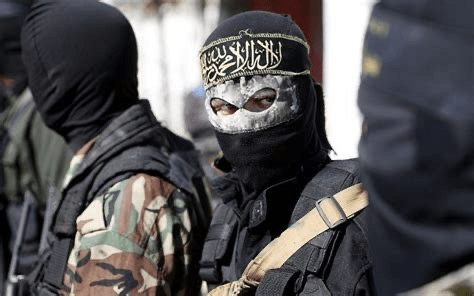
Amid escalating economic sanctions and diplomatic isolation, speculation has intensified that Iran may recalibrate its foreign policy tactics toward sponsoring or directly orchestrating terrorist acts. On June 18, 2025, statements by hard-line members of the Islamic Revolutionary Guard Corps (IRGC) hinted at more aggressive measures to counter perceived Western encirclement. This article explores the factors driving Tehran to consider a turn to non-state violence, the potential targets and methods, and the broader implications for regional stability and global counterterrorism efforts.
**Sanctions and Strategic Desperation**
International sanctions, particularly on Iran’s oil and financial sectors, have severely strained the country’s economy. With domestic unrest simmering over inflation and unemployment, hard-liners argue that asymmetric operations abroad could project strength at home and force Western powers to reconsider sanctions relief. IRGC commanders have publicly lamented that “economic warfare” demands an equally forceful response. While Tehran has historically supported proxy groups such as Hezbollah in Lebanon and the Houthis in Yemen, intelligence assessments suggest a possible expansion to more direct actions carried out by specialized terror cells.
**Evolution of Proxy Warfare**
For decades, Iran’s foreign operations have leveraged non-state actors to maintain plausible deniability. Yet, recent shifts in regional alliances—such as deeper security coordination between Israel, Saudi Arabia, and the United Arab Emirates—coupled with the Abraham Accords, have eroded some traditional avenues. As a result, Iran may resort to smaller, highly deniable terrorist cells embedded in Europe and North America. Cyberterrorism, involving sabotage of critical infrastructure, might complement kinetic operations, signaling a multi-domain approach to asymmetric warfare.
**Potential Targets and Tactics**
Experts warn that diplomatic missions, energy installations, and Jewish or Israeli communal centers in major Western cities could be high on Tehran’s target list, designed to maximize political impact and media attention. Recent intelligence leaks reveal training camps near the Iran-Iraq border dedicated to urban guerrilla tactics and bomb-making. Additionally, drone-swarmed attacks on offshore oil rigs in the Persian Gulf represent another plausible scenario—disrupting global energy markets while maintaining plausible deniability.
**International Responses and Countermeasures**
Western intelligence services and regional allies have already increased vigilance. The United States has tightened port security and upgraded intelligence-sharing protocols with European partners. NATO has debated designating certain Iranian entities explicitly as terrorist organizations. Meanwhile, the European Union is considering sanctions on IRGC-affiliated shipping companies suspected of transporting dual-use materials for terror logistics. However, critics caution that overt counterterrorism measures risk provoking Tehran further, creating a cycle of escalation.
**Diplomatic Channels and De-escalation Prospects**
Despite the harrowing scenarios, back-channel diplomacy remains active. Swiss and Qatari intermediaries facilitate limited talks on prisoner exchanges and sanctions relief. Iranian pragmatists advocate for a return to the 2015 nuclear framework—offering a de-escalatory pathway if Western powers agree to phased sanction relief. Such an agreement could undercut the hard-liners’ argument for terrorism as a strategic tool, anchoring Iran back to conventional diplomacy.
**Conclusion: Balancing Coercion and Containment**
Whether Iran genuinely pivots toward intentional terrorist actions remains uncertain. The regime’s internal rift between hard-liners and moderates will shape the final decision. Nonetheless, the global community must prepare for both possibilities: reinforcing defense and counterterrorism cooperation while keeping diplomatic channels open. At this critical juncture, strategic patience—coupled with coordinated deterrence—may prove the most effective means to prevent a dangerous escalation into state-sponsored terrorism.

 The Tower Post