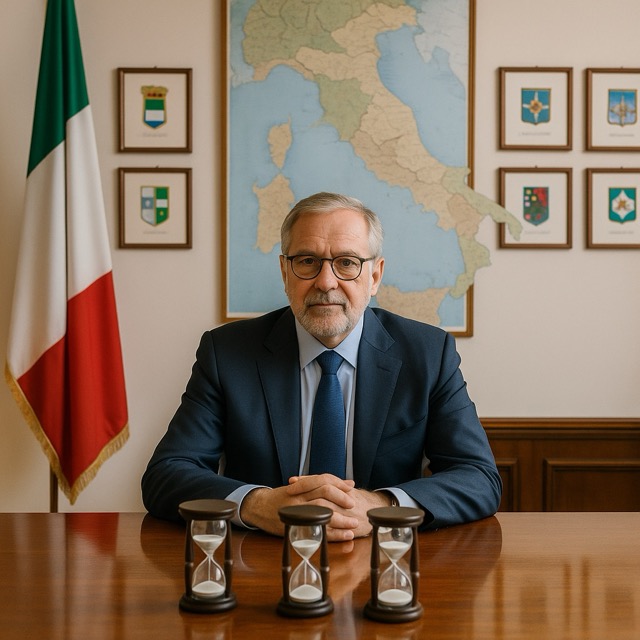
Despite the Constitutional Court’s Rebuke, Rome Pushes Forward to Empower Regional Leadership
In a bold move that has reignited debates over democratic safeguards and regional autonomy, Italy’s ruling coalition advanced legislation on June 17, 2025, to allow regional governors to serve up to three consecutive five-year terms. Currently limited to two terms under regional statutes aligned with national frameworks, governors would—if the bill passes—enjoy extended mandates aimed at promoting policy continuity and long-term planning. However, the Constitutional Court issued a negative advisory opinion on June 10, warning that such a change risks upsetting the balance of power and undermining the spirit of electoral renewal guaranteed by the Italian Constitution.
Proponents of the reform argue that giving regional executives a third term will enhance stability and enable governors to see complex infrastructure and social programs to completion. “Five years is too short to deliver transformative projects,” said Deputy Minister for Regional Development Giulia Romano. “Our regions need experienced leadership that can plan beyond an eight-year horizon.” Supporters also point to comparative examples in other European countries where multi-term governors have overseen successful economic growth and improved public services.
Critics, however, fear the measure tilts the political playing field in favor of incumbents, reducing competitive checks on authority. The Constitutional Court’s advisory opinion underscored that an extended tenure might erode the principles of rotation and democratic accountability enshrined in Articles 51 and 97 of the Constitution. “Limiting executive power is fundamental to preventing the concentration of influence,” the Court cautioned, recommending that any significant alteration of term limits be subject to a popular referendum rather than parliamentary statute alone.
Beyond constitutional concerns, the debate reflects deeper regional divides. Northern governors, particularly in wealthier regions such as Lombardy and Veneto, have championed the change, suggesting that their proven track record in managing budgets and attracting investment warrants greater continuity. Conversely, in the Mezzogiorno—Italy’s southern regions—opposition parties and civil society groups warn that extended terms may entrench political networks and hamper efforts to combat corruption and clientelism.
Parliamentary discussions have already produced heated exchanges in the Senate’s Constitutional Affairs Committee. Senator Marco Bellini of the Democratic Party criticized the majority’s haste, stating, “We are rewriting fundamental democratic norms without sufficient public consultation.” In response, League party leader Alessia Moretti argued that previous administrations stalled critical reforms, leaving regional administrations in limbo and unable to deliver essential services.
Public opinion remains divided. A recent poll by the Institute for Political Studies found that 47% of Italians support the third-term proposal, citing frustration with short policy cycles, while 39% oppose it, expressing fear of power consolidation and reduced electoral choice. Younger voters, those under 35, showed the highest resistance, with 52% against the measure—reflecting broader concerns about political stagnation and the need for generational renewal in public office.
If approved by both houses of Parliament, the legislation will proceed to the President’s desk. Constitutional experts predict that the negative non-binding opinion of the Court may spur a legal challenge within months of enactment. Should the reform survive, Italy would become one of the few European democracies with a three-term limit for regional executives, joining countries such as Spain, where certain autonomous communities allow similar extensions.
As the countdown to the final vote begins, Italy faces a critical choice: uphold strict limits to safeguard democratic renewal or embrace extended mandates in pursuit of administrative continuity. Whatever the outcome, the debate highlights the enduring tension between institutional stability and the core democratic value of periodic leadership change—a tension at the heart of Italy’s political evolution.




 The Tower Post