Allegations of Iran’s Supreme Leader Seeking Refuge Amidst Domestic Unrest, Backed by Religious and Military Elites
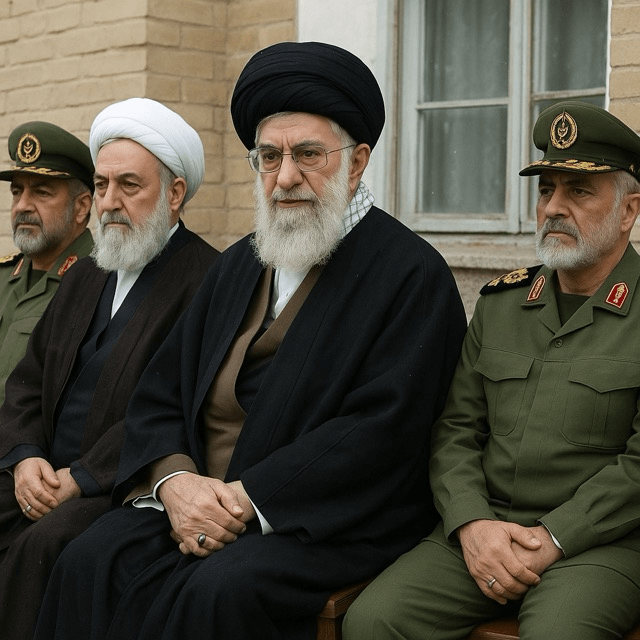
The rumor mill in global political circles ignited in early June 2025 with unverified reports claiming that Ayatollah Ali Khamenei, Iran’s Supreme Leader, has sought asylum in Russia alongside key figures from Iran’s religious and military hierarchy. According to these accounts—originating primarily from dissident outlets and amplified on social media—the Supreme Leader, feeling the pressure of mounting protests and factional disputes within Tehran, decamped to Moscow for sanctuary. While official Kremlin spokespeople have neither confirmed nor denied the allegations, the narrative has captured international attention and prompted widespread speculation about a potential realignment in the Middle East power structure.
The context for these rumors lies in the increasingly fraught domestic environment in Iran. Since late 2024, the country has witnessed a resurgence of protests over economic hardship, political repression, and demands for social freedoms. Security forces have cracked down harshly, and power struggles among Iran’s conservative, hard‑line, and reformist factions have deepened. In this climate, whispers of Khamenei’s potential incapacitation or willingness to transfer authority have grown louder, stoked by rumors of infighting among the Islamic Revolutionary Guard Corps (IRGC) leadership and senior clerics.
Sources sympathetic to the exile narrative claim that Khamenei traveled to Russia aboard a private military cargo plane marked with diplomatic plates, accompanied by high-ranking IRGC generals and the Head of the Assembly of Experts, tasked with guiding succession. These individuals allegedly include Major General Hossein Salami and Ayatollah Mohammad Yazdi—figures whose loyalty is considered uncompromising. Supporters of the story argue that Russia, under President Vladimir Putin, welcomed this cohort as part of a strategic bid to strengthen ties with Tehran’s hard‑line faction and to secure access to Iran’s advanced missile and drone technologies.
In Moscow, Khamenei is said to be housed in a secluded government compound, where he continues to receive counsel and issue directives via secure communication channels. Russian military and intelligence services purportedly offer protection, while senior clerical advisers hold daily strategy sessions. Video footage—widely circulated but unverifiable—shows an elderly man resembling Khamenei surrounded by armed guards and clerics in black turbans strolling through a heavily guarded courtyard.
Critics dismiss these tales as politically motivated fabrications aimed at undermining Iran’s stability and sowing distrust among its leadership. The Iranian government has branded the reports “baseless propaganda,” with Foreign Ministry spokespersons labeling them as “childish rumors spread by our enemies.” Tehran’s official media has released photos of Khamenei presiding over a high‑level meeting at his Tehran office on June 10, 2025, seeking to refute suggestions of his absence or incapacitation.
Nonetheless, the persistence of these rumors has fueled anxiety among Iran’s regional neighbors. In the Persian Gulf, Saudi Arabia and the United Arab Emirates have monitored the situation warily, concerned that any leadership vacuum could embolden proxy groups in Iraq, Lebanon, and Yemen. For Western capitals, the specter of a Khamenei‑Putin alliance in exile raises fears of a clandestine axis operating beyond international scrutiny, coordinating actions from Russian soil.
Analysts caution that even unsubstantiated, the narrative exerts a psychological impact. It undermines perceived cohesion within Iran’s ruling elite and could embolden opposition movements. It also compels foreign governments to reassess their intelligence and diplomatic postures, weighing the possibility of an unprecedented shift in the locus of Iran’s decision‑making apparatus.
Ultimately, the truth behind Khamenei’s alleged exile remains elusive. Absent indisputable evidence, it is impossible to confirm whether Iran’s Supreme Leader is genuinely in Moscow or whether these accounts are a sophisticated disinformation campaign. What is clear, however, is that the rumors have reverberated across international capitals, highlighting vulnerabilities in Iran’s political structure and the enduring potency of strategic rumors in global geopolitics.

 The Tower Post