“I hope that my people rise up and my country becomes free.”

Introduction
When Nobel Peace Prize laureate Shirin Ebadi uttered the words, “I hope that my people rise up and my country becomes free,” she distilled two decades of unbroken resistance into a single sentence. From the moment the Tehran‐born human‑rights lawyer accepted her Nobel medal in Oslo in 2003—becoming the first Muslim woman ever to do so—Ebadi has fused legal advocacy with an unflinching moral call: Iran must belong to its citizens, not to its coercive institutions. Today, in June 2025, her appeal reverberates far beyond expatriate meeting halls and social‑media feeds; it animates labor strikes in Mashhad, student sit‑ins in Shiraz and diaspora fundraising in Toronto.
Ebadi’s Journey from Bench to Exile
A presiding judge in Iran’s pre‑revolutionary judiciary, Ebadi was demoted to clerk after 1979 because female judges were deemed “un‑Islamic.” Rather than quit the law, she reclaimed it, opening a practice that defended dissidents, minority Baháʼís and families of murdered intellectuals. Her investigations into the so‑called “Chain Murders” of the late 1990s marked her as a target. By 2009, death threats and asset seizures forced her into exile, first to Paris and then to London, where she continues to coordinate the Defenders of Human Rights Center (DHRC).
The Mahsa Amini Turning Point
The 2022 custodial killing of 22‑year‑old Mahsa Amini for an improperly worn hijab incinerated Iran’s fear barrier. Ebadi, addressing a United Nations Security Council Arria‑formula session that November, warned that “a regime prepared to kill its daughters has forfeited all legitimacy.” The subsequent chant—“Woman, Life, Freedom”—invested Ebadi’s long‑standing non‑violent credo with a gendered urgency that resonated across ethnic and class lines.
From Protest to Sustained Resistance
Contrary to official claims that the unrest “ended” in early 2023, waves of industrial action have continued: petrochemical technicians in Khuzestan, teachers in Kermanshah and, most recently, the nationwide truck‑drivers’ strike of June 2025. Ebadi endorsed the walkout, noting that “when the roads are unsafe and wages are worthless, stopping work becomes the only language left”—a reminder that economic and civil rights are inseparable.
International Echoes and Diplomatic Calculus
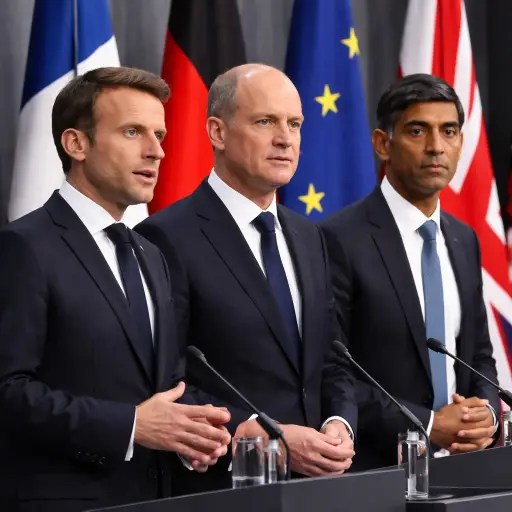
Yet Ebadi’s call for her people to “rise up” is not a plea for bloodshed. She invokes the Czech and South African transitions as blueprints: sustained civic pressure married to shrewd international leverage. In April 2025 she urged Washington and Brussels to tie any revived nuclear talks to demonstrable human‑rights benchmarks, arguing that “deals that enrich the state without emancipating the citizenry merely fortify the cage.”
Opposition in the Diaspora
Ebadi’s stature allows her to mediate between Iran’s fractious exile factions—monarchists rallying behind Reza Pahlavi, republicans backing the Mahsa Charter and socialist‑leaning labor councils. While she declines to endorse any single blueprint, she insists on two non‑negotiables: the dismantling of theocracy and the primacy of women’s rights in any future constitution.
A Legal Roadmap for the Day After
In a recent open letter to UNICEF, Ebadi blasted the agency’s silence over juvenile executions in Iran, framing children’s rights as both a moral imperative and a constitutional litmus test. She proposes an interim “Truth and Justice Commission,” staffed by Iranian jurists in exile and international observers, to document crimes and recommend restorative—not only retributive—justice.
Potential Pitfalls
Her hope, however, is tempered by realism. She warns that regime collapse without institutional planning could unleash violent score‑settling or military tutelage. The Islamic Revolutionary Guard Corps (IRGC), she notes, possesses both resources and incentives to reinvent itself as a Praetorian broker unless civil society pre‑empts it with an alternative authority.
Conclusion
Shirin Ebadi’s declaration is neither a romantic slogan nor a cry of despair. It is a strategic invitation: to Iranians inside the country to persist in acts of everyday defiance, and to the global community to align its diplomacy with the universal rights Iran’s citizens claim. The Nobel medal draped around her in 2003 did not freeze her in time; instead, it conferred a platform that she wields to amplify the most subversive idea in the Islamic Republic’s lexicon—citizenship. To hope, she reminds us, is to plan. And to plan is to act.

 The Tower Post