A New Chapter in EU-China Relations as Brussels Withholds Premier Economic Dialogue
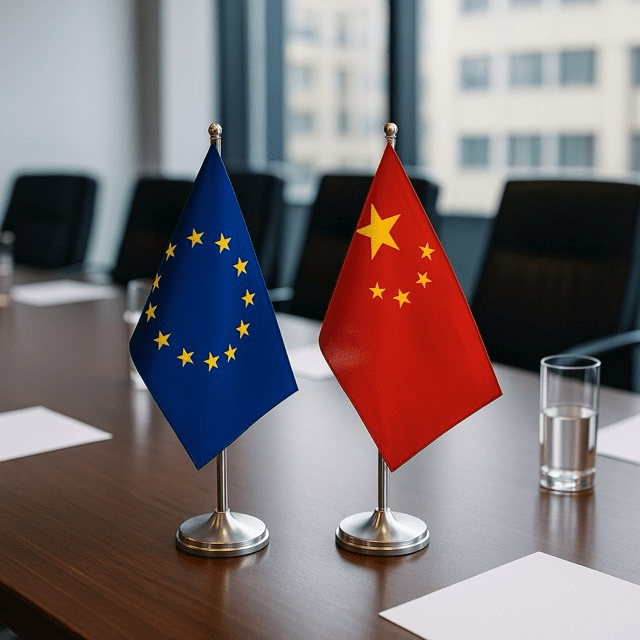
In a striking departure from years of high-level engagement, the European Union announced on June 20, 2025, that it will not convene its annual flagship economic summit with Chinese leaders. The meeting, traditionally a key platform for negotiating trade terms, investment frameworks, and regulatory cooperation, has been shelved amid deepening concerns over market access, human rights, and security issues. Brussels’ decision signals a recalibration of EU-China relations, reflecting mounting frustrations over what member states perceive as Beijing’s disregard for reciprocal economic commitments.
The summit’s cancellation follows months of internal debate within the European Commission and among the bloc’s 27 member states. Several capitals, notably Warsaw, Paris, and Stockholm, had pushed for a tougher stance, citing China’s imposition of trade barriers on European industries, forced technology transfers, and aggressive state subsidies that distort competition. “We cannot ignore the asymmetry in market openness,” said Trade Commissioner Elena Koch, “nor can we sideline the growing geopolitical risks entwined with economic cooperation.”
EU businesses have expressed mixed reactions. Major exporters in the automotive and aerospace sectors lament the missed opportunity to press for tariff reductions and regulatory alignment. Conversely, small and medium-sized enterprises, particularly in strategic sectors such as semiconductors and critical materials, welcomed Brussels’ resolve to address unfair practices. An alliance of European tech firms released a statement supporting the move, arguing that it “underscores the necessity of a level playing field before any high-level economic dialogue can proceed.”
The backdrop to the EU’s decision includes recent disputes over China’s tightened controls on European NGOs operating in Xinjiang and Hong Kong, as well as Beijing’s reluctance to ratify the EU-China Comprehensive Agreement on Investment (CAI), originally agreed upon in principle in late 2020. European leaders have also been alarmed by revelations of Chinese investments in critical infrastructure, from port facilities to 5G networks, which raise security and data privacy concerns.
Diplomats in Brussels stress that the cancellation is not a complete breakdown in communication. Rather, the EU plans to pursue sectoral and bilateral consultations, decoupled from the grand summit framework. “We will continue engaging on climate, health, and digital matters where interests align,” said a senior Commission official. “But we will no longer gloss over systemic issues for the sake of ceremony.”
China’s foreign ministry swiftly responded, decrying the EU’s move as “politicization of economic cooperation” and warning of potential retaliatory measures. State media highlighted the benefits of the Belt and Road Initiative (BRI) for European infrastructure projects, accusing Brussels of succumbing to external pressures that jeopardize mutual prosperity. Insiders in Beijing suggest that China may delay regulatory approvals for European firms or leverage state-owned enterprises to bypass EU suppliers.
Analysts caution that the standoff could have broader implications. With the U.S. already pressuring its allies to reduce dependency on Chinese technology, the EU’s stance may accelerate efforts to diversify supply chains, including forging closer ties with Japan, India, and Southeast Asian nations. The emerging Indo-Pacific strategy, endorsed by Brussels in early 2025, reflects a shift toward a multi-vector engagement approach balancing economic interests with strategic autonomy.
Parliamentary debates in Strasbourg have underscored the complexity of the issue. Proponents of engagement argue that isolating China risks losing influence over key global standards and environmental commitments. Critics counter that continued concessions without enforceable safeguards embolden Beijing’s coercive tactics. The European Parliament’s recent resolution on “economic security and resilience” calls for concrete reciprocity measures, including sanctions against discriminatory practices.
As the EU and China navigate this delicate impasse, the absence of the flagship summit leaves both sides charting new courses. Brussels must demonstrate that its tougher posture yields tangible improvements in market access and human rights, while Beijing faces the challenge of integrating European partners into its economic vision amid growing international scrutiny. The coming months will test whether pragmatic cooperation can outlast strategic competition in one of the world’s most consequential bilateral relationships.

 The Tower Post