Experts Warn of Potential Harm to Children’s Development and Privacy
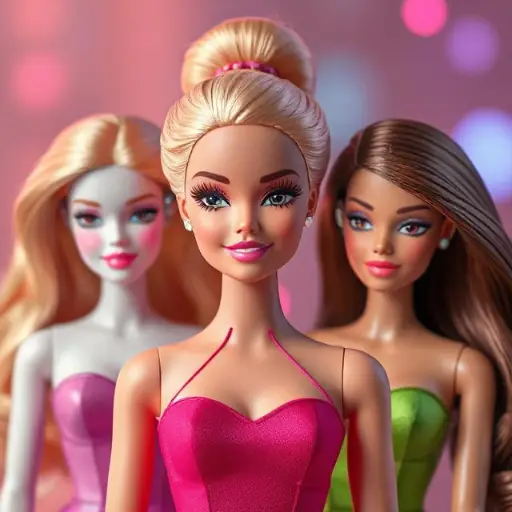
Toy company Mattel has announced a strategic collaboration with OpenAI to create AI-powered toys, but digital rights advocates are sounding the alarm. The partnership has sparked concerns about the potential harm to children’s development and privacy.
According to Mattel, the AI technology will be used to create age-appropriate play experiences that prioritize innovation, privacy, and safety. However, advocacy groups are urging caution, citing the risks of AI-powered toys on young developing minds. “Children do not have the cognitive capacity to distinguish fully between reality and play,” said Robert Weissman, co-president of Public Citizen. “Endowing toys with human-seeming voices that are able to engage in human-like conversations risks inflicting real damage on children.”
Researchers from universities including Harvard and Carnegie Mellon have warned about the negative social effects of AI on children, including a tendency to attribute human-like properties to AI. A 14-year-old boy, Sewell Seltzer III, took his own life after repeatedly talking to chatbots from Character.AI, which allows users to create their own AI characters. His mother described how he became obsessed with an AI representing an adult character from Game of Thrones that purported to be in a real romantic relationship with him.
Mattel has faced criticism in the past for its handling of children’s data. In 2015, the company launched Hello Barbie, a Wi-Fi connected doll that asked personal questions about children and their families, sending the audio to a third-party company that used AI to generate a response. The move was met with protests from digital rights advocates, who argued that it was a form of child surveillance. Mattel pulled the toy from shelves in 2017.
The company’s latest partnership with OpenAI has been met with similar criticism. “Apparently, Mattel learned nothing from the failure of its creepy surveillance doll Hello Barbie a decade ago and is now escalating its threats to children’s privacy, safety and well-being,” said Josh Golin, executive director of Fairplay. “Children’s creativity thrives when their toys and play are powered by their own imagination, not AI.”
Mattel has stated that it will only integrate new technologies into its products in a safe, thoughtful, and responsible way. However, experts are skeptical about the company’s ability to keep children safe. “It’s up to parents to make decisions about whether they’ll expose their children to AI-powered toys,” said a spokesperson for Mattel. “Ultimately, it’s a decision that should be made with caution and careful consideration.”
The partnership between Mattel and OpenAI raises questions about the readiness and polish of AI technology to be used on children. While AI may be inevitable in our lives, experts argue that it’s not yet ready to be used on our children.




 The Tower Post