The Golden Trump Card program blends political symbolism, grassroots fervor, and fundraising strategy as it galvanizes supporters ahead of 2024.
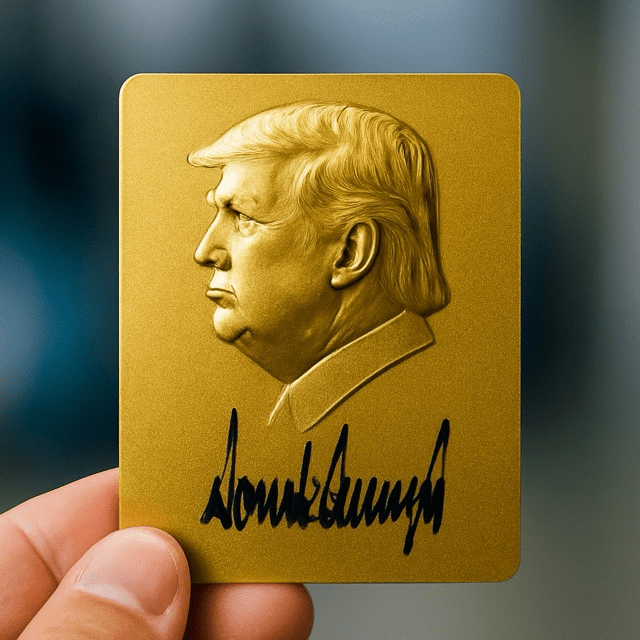
In a development that has caught the attention of both political analysts and media outlets, more than 70,000 people have signed up for the newly launched Golden Trump Card—an exclusive loyalty item being promoted to supporters of former President Donald J. Trump. Positioned as a blend of collectible memorabilia and grassroots identification, the card is fast becoming a symbol of allegiance within pro-Trump circles.
The initiative, unveiled as part of a larger campaign apparatus heading into the 2024 presidential election, offers participants a personalized, gold-colored card bearing Trump’s signature and emblem. Though it holds no official monetary or membership function, its symbolic value has been widely embraced by supporters as a statement of political identity.
The Golden Trump Card is not merely a novelty; it is a strategic fundraising tool. Each card is obtained through a donation to Trump-aligned political action committees, with messaging that emphasizes patriotism, loyalty, and the idea of restoring America’s greatness. These themes continue to resonate deeply with the base, many of whom view the card as a badge of honor and an expression of political defiance.
Social media platforms have been flooded with images of proud recipients displaying their new cards, often accompanied by messages pledging unwavering support. Several prominent conservative influencers have promoted the card, boosting its visibility and fueling sign-ups well beyond initial projections. According to insiders, the initial campaign goal was 50,000 enrollees—a target surpassed in less than two weeks.
Political experts view the card’s popularity as a reflection of Trump’s enduring influence in American conservative politics. Despite ongoing legal battles and a polarized national atmosphere, Trump remains the de facto leader of the Republican Party. His direct-to-supporter initiatives—whether through rallies, merchandise, or digital communication—have consistently demonstrated the strength of his grassroots machinery.
Critics, however, argue that the card exemplifies political branding at its most transactional. “It’s a loyalty scheme dressed in patriotism,” remarked one political analyst. “But it’s effective—and that’s what matters in modern campaigning.” Others express concern that such efforts deepen ideological divisions and commercialize political identity.
Nevertheless, the momentum shows no signs of slowing. Organizers behind the Golden Trump Card have hinted at upcoming expansions to the initiative, including tiered versions and limited-edition designs for higher-tier donors. There is also speculation that the card may offer early access to campaign events or digital content in the months ahead.
For supporters, however, the card’s significance goes beyond perks. It represents a shared belief in Trump’s vision and a communal identity built around slogans like “Make America Great Again” and “America First.” In a fragmented political landscape, such unifying symbols have proven remarkably potent.
As 2024 draws closer, the Golden Trump Card stands not just as a physical object but as a strategic emblem of the former president’s bid to return to power—one supporter at a time.



 The Tower Post