As Israel embraces heightened military gambles, Iran’s long-standing strategic ambiguity crumbles under pressure.
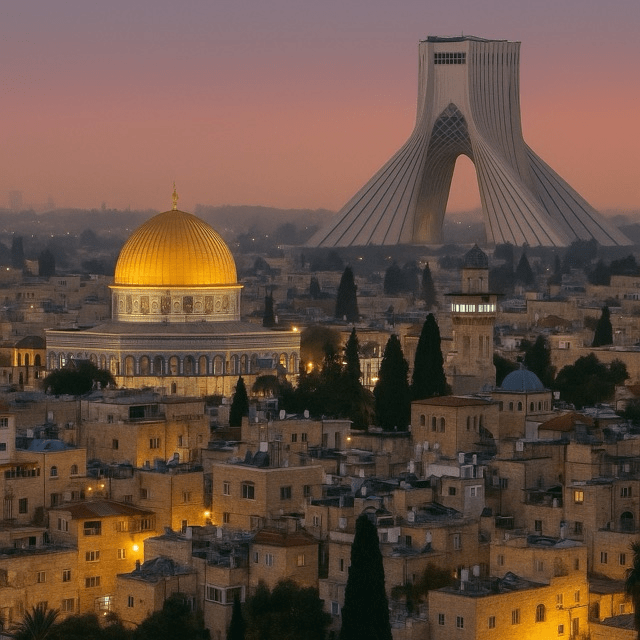
For over four decades, the Islamic Republic of Iran relied on a fragile but effective strategic doctrine often described as “no war, no peace.” Rooted in calculated ambiguity, the doctrine allowed Tehran to project influence through regional proxies, avoid direct confrontation with major powers, and maintain internal cohesion amid sanctions and isolation. But in 2025, that equilibrium appears broken—shattered by a combination of hubris, miscalculation, and an increasingly audacious Israel.
What began as calibrated provocations and deterrence messaging between Israel and Iran has erupted into something far more dangerous. A recent escalation—sparked by deep-penetration airstrikes on Iranian defense facilities and IRGC command centers—has tilted the region toward open conflict. Unlike past episodes where Tehran could rely on strategic patience or diplomatic diffusion, the latest cycle has exposed a weakness: Iran’s overconfidence in deterrence has outlived its utility.
Tehran misread both the regional and international mood. For years, its reliance on proxy warfare in Lebanon, Syria, Iraq, and Yemen served as an effective deterrent against direct retaliation. But as Iranian influence grew, so too did its hubris. Israeli leaders, facing a changing security calculus and emboldened by technological superiority and new regional partnerships, have increasingly shed old constraints.
Israel’s growing appetite for strategic risk has been evident in a series of increasingly brazen operations, including sabotage missions deep inside Iranian territory and high-value target eliminations. The 2024 assassination of a senior IRGC general near Shiraz marked a turning point. It signaled a new era in Israeli strategy—one defined not by containment, but disruption.
Iran’s response has been largely reactive, often caught between demonstrating strength and avoiding a full-scale war. But the loss of deterrence credibility has eroded Iran’s negotiating position, internally and abroad. Within Iran, hardliners demand escalation, while moderates warn of isolation and long-term economic collapse. The Supreme Leader’s balancing act is growing more precarious by the day.
Regionally, Gulf states are watching with quiet anxiety. While they have long feared Iran’s influence, they are equally wary of a destabilizing conflict that could engulf energy corridors and ignite sectarian divides. The U.S., historically the de facto security guarantor in the region, has remained ambivalent—caught in its own strategic recalibrations.
What remains is a rapidly evolving battlefield—militarily, diplomatically, and ideologically. The demise of the “no war, no peace” doctrine means Tehran must now forge a new strategic identity. Whether it leans toward full confrontation or a redefined containment approach will depend largely on leadership choices and external pressures.
As for Israel, the gamble is clear: seize the initiative, dismantle threats before they metastasize, and reshape deterrence on its own terms. But in doing so, it risks dragging the region into a conflict neither side fully controls.
In the end, it wasn’t just bombs and drones that ended Iran’s doctrine—it was overconfidence and a misreading of a rival that was no longer playing by the old rules.


 The Tower Post