As global allies grow silent, Israel stands isolated—echoes of a dangerous historical precedent grow louder.
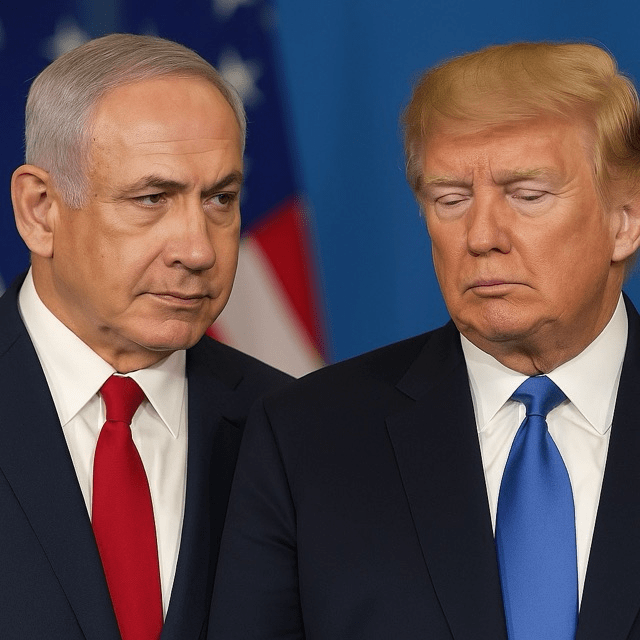
In a dramatic shift that has sent shockwaves through diplomatic and strategic circles, Israeli Prime Minister Benjamin Netanyahu has publicly distanced himself from former U.S. President Donald Trump and deepened his confrontational stance toward Iran’s Supreme Leader, Ali Khamenei. The move comes amid rising tensions in the Middle East, continued Israeli airstrikes on Iranian-linked targets, and an increasingly silent international community.
Netanyahu’s break from Trump marks a notable pivot. While the two leaders shared a strong alliance during Trump’s presidency, including the recognition of Jerusalem as Israel’s capital and withdrawal from the Iran nuclear deal, recent developments have seen the Israeli Prime Minister chart a more unilateral path. Sources close to the Israeli government say Netanyahu no longer sees Trump—or his potential return to office—as a reliable strategic partner. “Israel must act on its own terms,” a senior Likud off…
This shift coincides with Israel’s intensified military actions across the region, including strikes in Syria, Iraq, and potentially within Iranian territory. The Israeli Defense Forces (IDF) have adopted an aggressive posture, targeting arms shipments and Revolutionary Guard installations. Netanyahu has openly declared Khamenei “an existential threat to the Jewish state,” vowing that “Iran will not acquire the means to destroy Israel while I am Prime Minister.”
What is perhaps most alarming to Israeli leadership is the global response—or lack thereof. Western allies have largely confined themselves to statements of “deep concern,” while major institutions like the United Nations have called for “restraint on all sides.” For many in Israel, this growing indifference recalls the darkest chapter in Jewish history: the global silence during Hitler’s rise and the Holocaust.
“This is not just a geopolitical turning point,” said one Israeli historian. “We’re seeing moral abandonment. Once again, the Jewish people are being left to fend for themselves while the world looks away.”
Political analysts suggest that Netanyahu’s rhetoric may be calibrated to invoke historical trauma as a way to mobilize domestic and diaspora support. Yet, the underlying anxiety is palpable. As Iran builds deeper ties with Russia and China, and as the West remains distracted by internal turmoil and economic crises, Israel’s sense of isolation is intensifying.
Critics argue that Netanyahu’s approach risks further destabilizing the region and alienating critical allies. “Turning away from diplomatic engagement and aligning military escalation with historical grievance is a dangerous mix,” said a European diplomat. “It invokes sympathy, yes—but it also invites recklessness.”
Meanwhile, Trump has not responded directly to Netanyahu’s apparent rejection but has hinted at disappointment through vague social media posts about “loyalty” and “gratitude.” The rupture is a stark indication that the political alignment which defined much of the last decade is fraying under new global realities.
As the drums of war beat louder and Netanyahu doubles down on his confrontation with Iran, the haunting parallels with past tragedies serve as a sobering reminder: when the world remains silent, history has a cruel way of repeating itself. Whether the global community will act this time—or once again avert its eyes—remains a question weighted with existential consequence.


 The Tower Post