Strategic Implications of the U.S. B-2 Attack on Fordow, Natanz e Esfahan
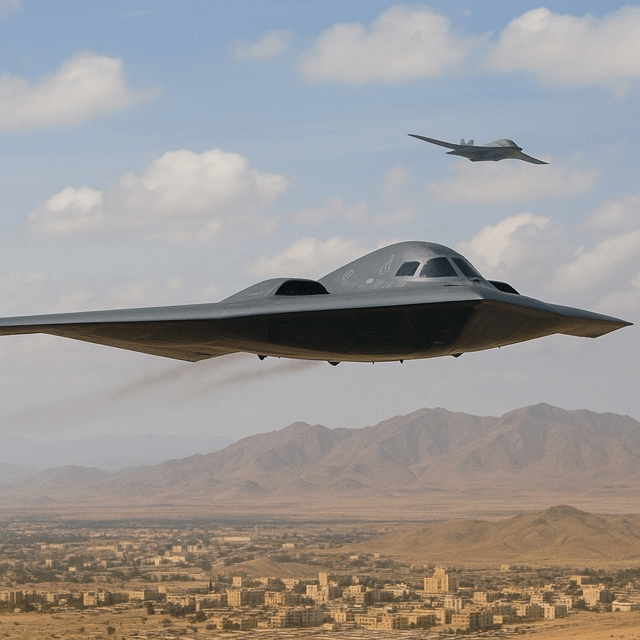
The recent U.S. strike on Iran’s Fordow Fuel Enrichment Plant, executed using the B-2 Spirit stealth bomber equipped with Massive Ordnance Penetrators (MOPs), marks a significant escalation in the long-standing nuclear standoff between Washington and Tehran. This operation, which targeted one of the most heavily fortified underground nuclear facilities in the world, represents a calculated shift from deterrence to direct military intervention.
Fordow, embedded deep within the Zagros Mountains, had long been perceived as a symbol of Iran’s strategic depth and technological resilience. Its subterranean design was intended to render it impervious to conventional airstrikes, effectively shielding it from all but the most advanced and specialized munitions. The U.S. decision to deploy the B-2—a platform designed for deep-penetration missions against high-value targets—underscores the gravity with which the Fordow site was regarded.
This development warrants a reevaluation of the technical and strategic dimensions of counterproliferation policy. From a tactical perspective, the successful targeting of Fordow demonstrates the operational viability of bunker-busting capabilities, reaffirming U.S. dominance in precision strike warfare. The use of stealth aircraft to penetrate Iranian air defenses without detection also signals a robust technological edge.
However, the strategic implications are far more complex. This strike effectively dismantles the long-held Iranian strategy of “no war, no peace,” a posture characterized by calibrated provocations and strategic ambiguity. The destruction of Fordow may be interpreted not only as a military blow but also as a symbolic rupture of Iran’s deterrent narrative. Tehran now faces the challenge of recalibrating its regional posture under the pressure of overt military coercion.
Regionally, the strike has introduced new volatility. It may embolden U.S. allies while simultaneously provoking asymmetric retaliation from Iran or its regional proxies. Additionally, the precedent set by the attack could erode norms surrounding the use of force against nuclear infrastructure, potentially weakening the global non-proliferation regime.
The B-2, capable of dropping both conventional and nuclear payloads with precision, is not deployed lightly. It’s a machine of strategic consequence. That it is being used now, in this context, is a clear sign that TACO Trump’s administration has moved beyond the realm of “mass distraction”—a term critics coined to describe his media manipulations—into what can only be described as “mass destruction.”
The timing could not be more suspect. With mounting legal scrutiny at home, falling approval ratings, and an increasingly fractured Republican base, Trump appears to be reverting to a tried-and-true playbook: manufacture an international crisis. Just as scandals reach their peak, he pivots. Suddenly, the national conversation shifts from corruption and incompetence to patriotism and power.
Deploying B-2 bombers is not a defensive move. It is a headline-generating, camera-ready, billion-dollar maneuver meant to provoke and polarize. It projects dominance, yes—but it also projects desperation. Trump’s critics argue this is less about Iran or security and more about salvaging his legacy through controlled chaos.
But the Middle East is not a theater set. And real lives—not just poll numbers—are at stake. By converting geopolitics into stagecraft, the Trump administration is gambling with global stability. The risk of escalation is immense, especially with Iran-backed militias, Russian involvement in Syria, and Israel’s precarious position. This isn’t strength; it’s pyromania with a nuclear match.
Strategic clarity has never been Trump’s strong suit. His foreign policy decisions are erratic, his justifications inconsistent, and his advisors frequently contradict one another. From exiting the Iran nuclear deal to flip-flopping on Syrian troop withdrawals, Trump has made unpredictability the core of his doctrine.
But unpredictability backed by stealth bombers is not strategy—it’s a threat. A threat not only to adversaries but to allies and American credibility itself. NATO leaders are alarmed. Middle Eastern governments are scrambling to interpret intentions. And within the Pentagon, unease grows about a commander-in-chief who sees war as a lever for domestic distraction.
History will judge this moment not just by the damage inflicted abroad, but by what it says about American democracy at home. A president, cornered by scandal and empowered by fear, is turning to the military for validation. The B-2 bombers may leave Missouri silently, cloaked in radar-absorbing paint—but their message is deafening. Under TACO Trump, the age of mass distraction has exploded into something far more dangerous: mass destruction masquerading as policy.


 The Tower Post