Why the West Must Brace for Asymmetric Fallout from Iran
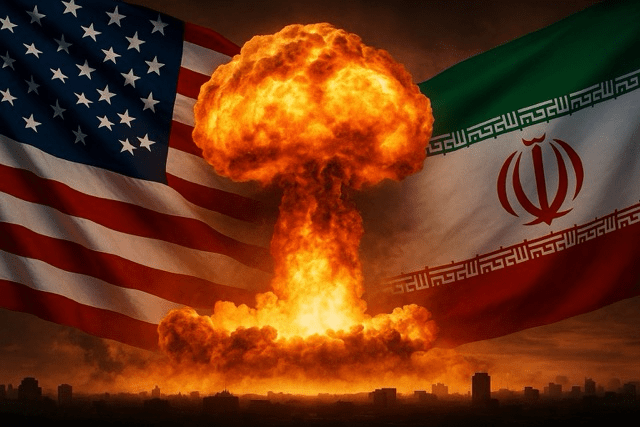
On the night of June 21, 2025, the world held its breath as a wave of precision airstrikes, reportedly launched by the United States with Israeli cooperation, hit three of Iran’s most sensitive nuclear sites—Fordow, Natanz, and Isfahan. The stated goal: a decisive blow to Iran’s uranium enrichment capability. But in the aftermath of the attack, the West may face not just the risk of military escalation in the Middle East—but a growing and more insidious threat much closer to home.
The Attack Heard Round the Region
For Washington, the strikes were intended as a preemptive message. Tehran’s nuclear program, viewed with growing concern by U.S. intelligence and Israeli defense circles, had reached what officials described as a “red-line threshold.” But the geopolitical shockwaves reverberated instantly. The Iranian regime condemned the attack as an act of war. In regional capitals—from Beirut to Baghdad, from Sanaa to Damascus—pro-Iranian militias began to mobilize.
Major powers responded with alarm. China condemned the attack as a “grave violation of international law” and warned of long-term instability. Russia, already engaged in its protracted war in Ukraine, denounced the strikes as “strategic folly,” but also hinted at readiness to mediate between Tehran and Tel Aviv. Pakistan, sharing a long and often porous border with Iran, voiced deep concern that any internal collapse in Iran could spill into its own volatile Balochistan province.
A Shadow War, Renewed
The strike has reignited fears of a broader “shadow war” between Israel and Iran playing out across third countries—and beyond the battlefield. Iran may be unlikely to respond with conventional force, but its history suggests a preference for asymmetrical retaliation. That could come via Hezbollah in Lebanon, Shiite militias in Iraq and Syria, the Houthis in Yemen, or cyberattacks aimed at Western critical infrastructure.
Indeed, many analysts now believe the most immediate threat lies not in Tehran’s missile silos—but in sleeper cells, lone actors, and transnational networks already embedded within Western societies.
The West’s Vulnerable Front
European intelligence agencies are on alert. France, Belgium, and the UK—nations with prior experience of Hezbollah-linked surveillance and plotting—have raised their internal threat levels. Analysts warn of an increased likelihood of symbolic, low-tech attacks on embassies, Jewish centers, transit hubs, or even diplomatic gatherings. The threat is particularly acute in countries with both significant Shiite diaspora communities and histories of Iranian proxy surveillance.
While no clear evidence has emerged of an imminent attack, experts agree that the coming weeks represent a critical window. “The lone wolf scenario is now more plausible than ever,” says a senior EU counterterrorism official. “We are less likely to see a 9/11-style coordinated event—but isolated, targeted violence is well within the realm of possibility.”
Differentiated Risks, Common Vulnerability
A recent strategic study assessed the relative terrorism risk across European nations following the strikes. Countries like France, the UK, and Belgium were rated at a “very high” risk due to past exposure and current threat profiles. Germany, Austria, and the Netherlands remain “high” risk due to dense urban populations and history of extremist activity. Southern European and Visegrád nations, including Italy, Spain, Poland, and Hungary, are considered at lower but non-negligible risk.
Despite these differences, the continent as a whole must adopt a unified security posture. Enhanced border screening, real-time intelligence sharing, and robust community engagement are now not just best practices—they are prerequisites for stability.
What Comes Next?
If history is a guide, Iran’s response will be measured but unpredictable. The 1992 and 1994 bombings in Buenos Aires, widely believed to have been orchestrated by Hezbollah with Iranian backing, remain stark reminders of what “asymmetric retaliation” can look like. This time, Tehran’s message may not come in the form of missiles—but in whispers, covert networks, and strategic proxies.
Western policymakers must act swiftly, not out of panic, but out of prudence. The threat of retaliatory terrorism is neither inevitable nor uncontrollable—but it does require foresight, coordination, and resilience. The next phase of this conflict may not unfold in the skies over Isfahan—but in the subways of Paris, the cafés of Brussels, or the ports of Rotterdam.
And if it does, it will not be declared—it will arrive without warning.

 The Tower Post