With Years of Investment Behind It, Beijing Now Eyes Drones as a Cornerstone of Its Future Economy
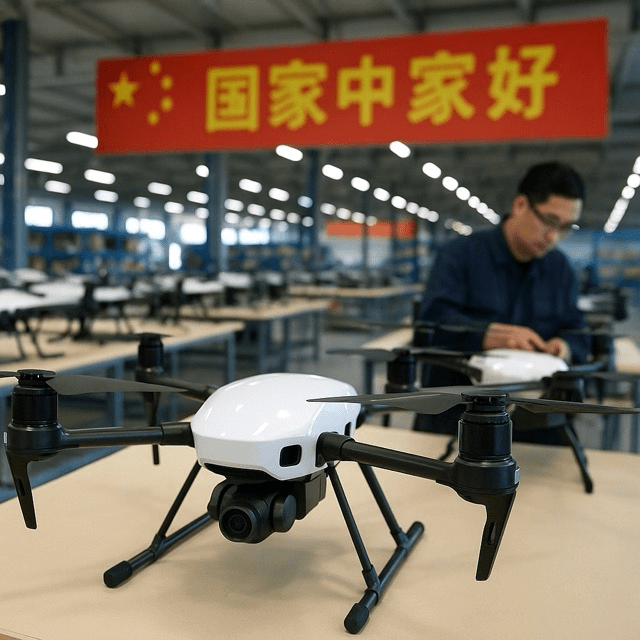
For years, the Chinese government has quietly nurtured the development of its domestic drone industry. Through a combination of targeted tax relief, generous subsidies, and the establishment of drone-focused industrial parks, Beijing has cultivated one of the most advanced and rapidly expanding drone ecosystems in the world.
Now, China is aiming to elevate drones beyond their military and recreational origins. Government ministries and provincial officials have rolled out a sweeping new initiative that positions unmanned aerial vehicles (UAVs) as a strategic pillar of future economic growth. From agriculture and logistics to emergency response and urban planning, drones are being reimagined as essential tools in both public and private sectors.
The Ministry of Industry and Information Technology recently announced new measures to streamline drone certification, promote standardized airspace corridors, and support international exports. Meanwhile, local governments are doubling down, launching pilot programs and drone-focused zones that combine innovation hubs with manufacturing centers. Shenzhen, already home to DJI—the world’s largest drone manufacturer—has become the epicenter of this movement.
China’s leadership sees drones not only as a technological advantage but as a way to solve structural issues in the domestic economy. As the property market slows and traditional manufacturing hits capacity, Beijing hopes drones will provide a new avenue for innovation, job creation, and export strength. More importantly, the sector aligns perfectly with the country’s broader ambitions in artificial intelligence, automation, and smart infrastructure.
Yet, there are challenges. Concerns about air safety, privacy, and international security implications persist. Western countries have raised alarms about data security, especially when Chinese-made drones are used in sensitive sectors abroad. Moreover, the saturation of the consumer drone market means future growth will hinge on industrial, agricultural, and governmental applications, which require more regulation and complex integration.
Despite these hurdles, China remains confident. With strong state backing, an agile tech ecosystem, and a head start in manufacturing, the country is well-positioned to lead the global drone economy. As other nations struggle to balance innovation with oversight, China is betting that drones—like EVs and solar panels before them—will become another sector where it dominates both the supply chain and the market.
In the coming years, the skies over Chinese cities and rural zones alike are expected to buzz with unmanned activity. If Beijing’s strategy pays off, drones may very well become not just a symbol of Chinese innovation—but a critical engine of its 21st-century economy.



 The Tower Post