An In-Depth Look at the Reincarnation Controversy in Tibetan Buddhism
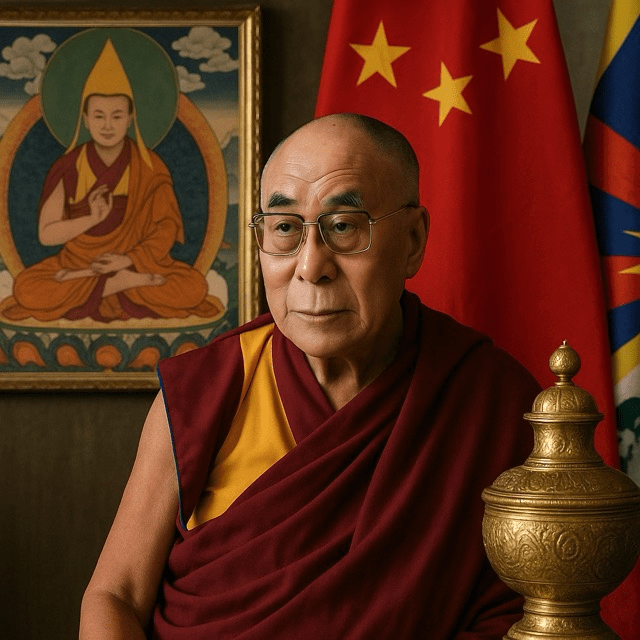
The question of who will succeed the 14th Dalai Lama is both spiritually significant and politically charged. At the heart of this issue lies a centuries-old tradition that now clashes with modern geopolitical forces, particularly the influence of the Chinese government over Tibetan religious affairs.
The Traditional Process of Reincarnation
In Tibetan Buddhism, particularly within the Gelug school, the Dalai Lama is believed to be a “tulku” – a consciously reincarnated lama who returns lifetime after lifetime to serve humanity. After the death of a Dalai Lama, high lamas and spiritual leaders begin the search for his reincarnation, relying on visions, omens, and oracles. One such figure is the Nechung Oracle, who plays a key role in guiding the search.
Monks often interpret natural phenomena and consult sacred lakes for clues. They then identify young children who exhibit unusual wisdom or behaviors and subject them to a series of tests. Among the most well-known is the object recognition test, where the child must identify items belonging to the previous Dalai Lama among decoys.
The Role of the Panchen Lama
Traditionally, the Panchen Lama helps confirm the identity of the Dalai Lama’s reincarnation, and vice versa. However, this reciprocal relationship is now under strain. The Panchen Lama recognized by the 14th Dalai Lama, Gedhun Choekyi Nyima, disappeared shortly after being named in 1995 and is widely considered a prisoner of the Chinese state. The Chinese government has since appointed its own Panchen Lama, Gyaincain Norbu, whose legitimacy is rejected by many Tibetans.
The Golden Urn Controversy
The “Golden Urn” was introduced in the 18th century by the Qing dynasty to standardize the recognition of high-ranking lamas. This method involves placing names of candidates into a golden vessel and drawing lots—a system that strips the process of its spiritual foundation. Though only used sporadically in history, the Chinese government now insists it must be employed to validate future reincarnations, including that of the Dalai Lama.
This stance has been fiercely criticized by Tibetan spiritual leaders, who view it as a political tool rather than a religious practice. The 14th Dalai Lama himself has stated that only he has the authority to decide whether he will reincarnate and under what circumstances.
The Coming Conflict
As the current Dalai Lama ages, it is almost certain that two rival Dalai Lamas will emerge: one recognized by Tibetan Buddhist authorities in exile, and another endorsed by the Chinese state. This division could deeply confuse followers and further politicize Tibetan Buddhism.
The future of the Dalai Lama’s lineage now rests not only in the hands of monks and traditions but also in the realm of global politics. What was once a purely spiritual journey has become a contested ground between faith and authority, between culture and control.
In this landscape, the spiritual legitimacy of the next Dalai Lama will depend less on rituals or urns, and more on the hearts and beliefs of the Tibetan people.

 The Tower Post