Beijing Warns Against Escalation, Calls for Diplomatic Restraint
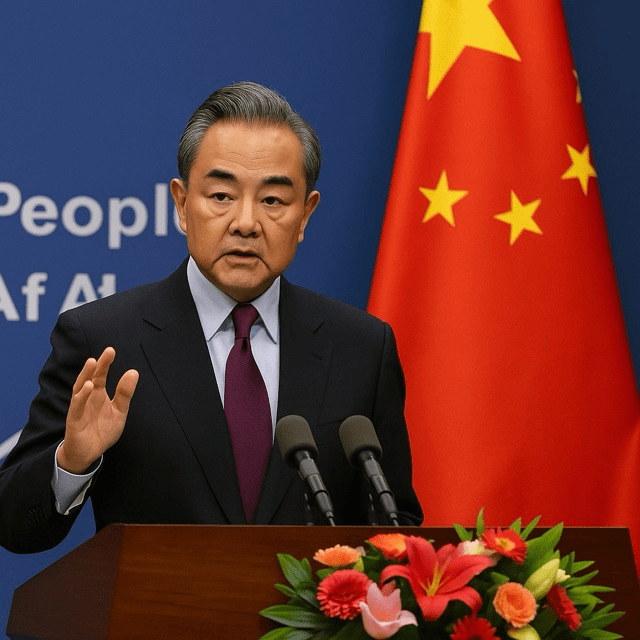
In the wake of a recent U.S. military strike on Iranian targets, China has issued a strong condemnation, calling the attack a destabilizing move that risks igniting broader conflict in the Middle East. The Chinese Ministry of Foreign Affairs released an official statement denouncing the action and urging all parties to exercise restraint and return to diplomatic dialogue.
The U.S. airstrike, which reportedly targeted Iranian military infrastructure in response to alleged threats against American assets in the region, has drawn global scrutiny. China, a key ally and economic partner of Iran, has taken a firm stance, accusing Washington of violating international norms and exacerbating regional instability.
“We firmly oppose the use of force in international relations,” said Foreign Ministry spokesperson Mao Ning. “Unilateral military actions only serve to inflame tensions and hinder the prospects for peace. China calls on the United States to cease its provocative operations and to work constructively with the international community.”
Beijing’s response underscores its growing role as a global diplomatic actor, positioning itself as a counterbalance to U.S. influence in the region. In recent years, China has strengthened its political and economic ties with Iran, particularly through energy trade and infrastructure development under the Belt and Road Initiative.
Analysts say the condemnation reflects broader geopolitical competition, as China seeks to assert its leadership in promoting multipolar diplomacy. “This is about more than Iran,” said Dr. Victor Wang, a senior analyst at the East Asia Strategic Institute. “It’s about China presenting itself as a responsible superpower while challenging American unilateralism.”
Iran, for its part, has welcomed China’s support. Iranian officials praised Beijing’s principled position and reaffirmed their commitment to peaceful cooperation with Asian partners. “China stands with justice and sovereignty,” tweeted Iranian Foreign Minister Hossein Amir-Abdollahian. “We value this strategic partnership in times of pressure.”
The international reaction to the U.S. strike has been mixed. While some Western allies defended the operation as a legitimate response to threats, others expressed concern over the risk of escalation. The United Nations has called for an urgent de-escalation to avoid further conflict.
China’s involvement adds significant diplomatic weight to the crisis. Its condemnation may also influence other regional powers and global institutions to reconsider their stances. Moreover, Beijing has hinted at the possibility of convening a new multilateral dialogue platform to defuse tensions—an initiative that may appeal to states weary of binary superpower politics.
In conclusion, China’s condemnation of the U.S. strike on Iran marks another chapter in the evolving global balance of power. As Washington and Beijing navigate competing interests, their actions will shape not only the fate of U.S.-Iran relations but also the broader architecture of international diplomacy in a world increasingly defined by multipolarity.


 The Tower Post