Despite Economic Hardship and Social Discontent, Widespread Rebellion Remains Unlikely
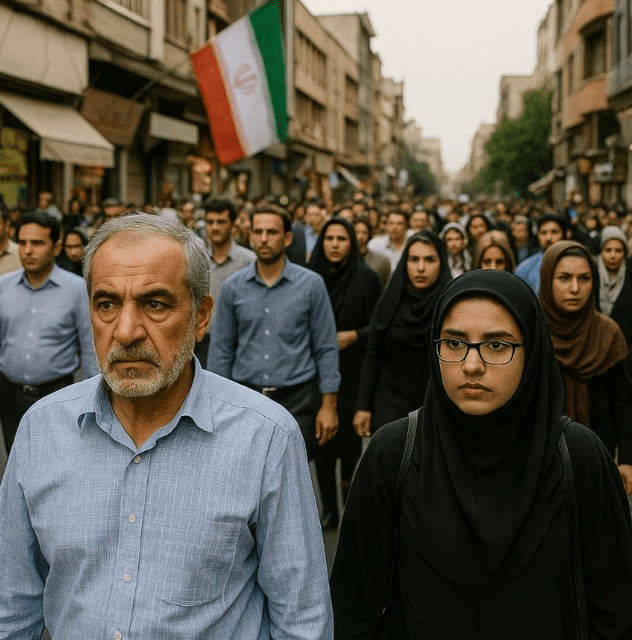
In recent months, international observers and analysts have speculated about the potential for widespread civil unrest in Iran. However, despite ongoing economic challenges, political disillusionment, and social dissatisfaction, there are currently no clear signs of a popular uprising or coordinated rebellion against the Islamic Republic’s ruling regime.
While protests and demonstrations continue to emerge sporadically—often sparked by economic grievances, lack of social freedoms, or political oppression—these events have remained largely localized and without the unifying leadership or nationwide momentum required to pose a real threat to state power.
Analysts point to the government’s tightly controlled security apparatus as a significant factor in curbing dissent. Iran’s Islamic Revolutionary Guard Corps (IRGC), along with the Basij paramilitary force, has demonstrated rapid response capabilities in suppressing unrest and intimidating potential organizers. “The state maintains a firm grip on all levers of control,” noted Dr. Arash Rahimi, a political analyst based in Istanbul. “It’s not just about physical suppression—it’s about psychological deterrence and social fragmentation.”
Furthermore, the regime continues to leverage nationalism and anti-Western sentiment to consolidate internal support. Leaders frame dissent as externally influenced and promote narratives of resistance and sovereignty. Ayatollah Ali Khamenei and his inner circle have also shown tactical flexibility in navigating crises—offering occasional economic relief packages, selective pardons, or controlled reforms to diffuse tension.
Despite the visible frustration among many segments of the population, especially among youth and women, fear of harsh reprisals and a lack of organized political alternatives have stymied mass mobilization. Moreover, economic pressures, exacerbated by international sanctions, often force individuals to prioritize personal survival over collective political action.
According to recent reports from human rights organizations, surveillance has increased across urban centers, and arrests of dissidents continue. Social media platforms are heavily monitored, and internet access is frequently throttled during moments of unrest.
That said, discontent simmers beneath the surface. Civil society actors, exiled opposition groups, and international watchdogs warn that a façade of calm does not equate to genuine stability. “Iran is a pressure cooker,” said Roya Tabrizi, a human rights advocate. “We don’t see open revolt now, but the conditions for long-term unrest are very much in place.”
In conclusion, while the Islamic Republic of Iran faces significant internal challenges, it continues to maintain its hold on power. The absence of a cohesive opposition, combined with an effective security infrastructure and propaganda machinery, ensures that—for now—an uprising remains improbable. However, the long-term trajectory of this uneasy equilibrium remains uncertain, with many eyes watching closely for any shift in public sentiment or regime posture.
 The Tower Post