Global Uncertainty Drives Volatility Across Energy and Precious Metals Markets
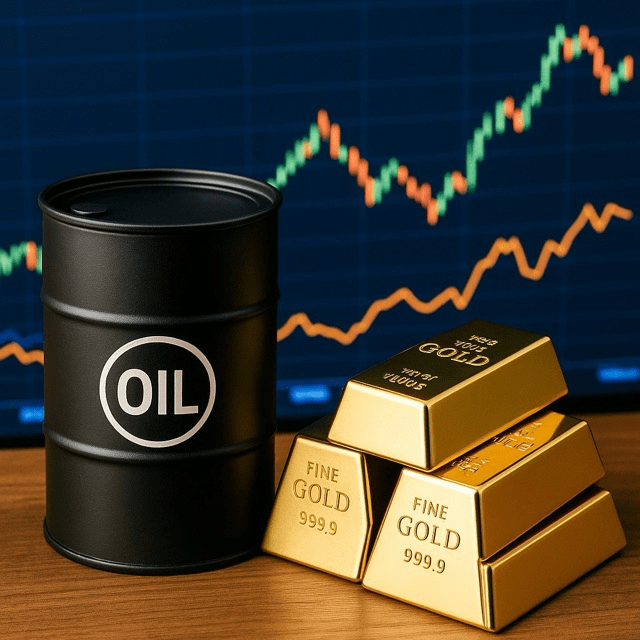
As geopolitical tensions intensify and economic signals remain mixed, analysts and investors alike are closely watching the future trajectory of oil and gold prices. These two key commodities, often viewed as barometers of global stability and inflation, are experiencing heightened volatility due to a range of converging factors.
In the case of oil, supply disruptions and geopolitical uncertainty are likely to keep prices elevated in the short term. With mounting concerns about potential conflict in the Middle East, particularly involving Iran and Western allies, the risk premium on oil is rising. Any threat to shipping routes such as the Strait of Hormuz—through which nearly 20% of global oil passes—could cause a sharp spike in crude prices.
Furthermore, OPEC+ nations, led by Saudi Arabia and Russia, are expected to maintain production discipline, limiting global output to stabilize prices. “We could see Brent crude move above $90 per barrel if diplomatic solutions fail to ease regional tensions,” says energy economist Rachel Alston. Meanwhile, seasonal demand in Asia and reduced inventory levels in the U.S. contribute additional upward pressure.
On the demand side, uncertainty surrounding global economic growth—especially in China and Europe—may temper the rally. If major economies show signs of slowing, demand expectations could weaken, balancing out some of the geopolitical-driven gains.
Gold, on the other hand, is reacting to the same instability but from a different angle. Known as a traditional safe-haven asset, gold tends to rise during times of crisis or inflationary pressure. Recent fluctuations in bond yields, coupled with central bank decisions in the U.S. and Europe, have made gold an attractive hedge against uncertainty.
“We expect gold to remain buoyant,” explains Martin Koenig, a commodities strategist. “Investors are seeking protection from volatile equity markets and currency fluctuations, especially as interest rate policy becomes more unpredictable.”
The upcoming days may also be influenced by macroeconomic indicators such as U.S. inflation reports, central bank statements, and shifts in investor sentiment. If inflation comes in hotter than expected or if major central banks delay interest rate cuts, gold could surge toward new highs.
Conversely, a calming of geopolitical fears or unexpected economic resilience could lead to a brief sell-off in both oil and gold. Market participants will therefore be watching headlines closely, with a keen eye on real-time data.
In conclusion, the outlook for both oil and gold remains highly sensitive to geopolitical developments and macroeconomic signals. Traders are advised to remain cautious, as sharp movements are possible in either direction. The only certainty is continued volatility.



 The Tower Post