A Shift in Style as Brands Navigate Economic Challenges, Global Tensions, and the Quest for Authenticity
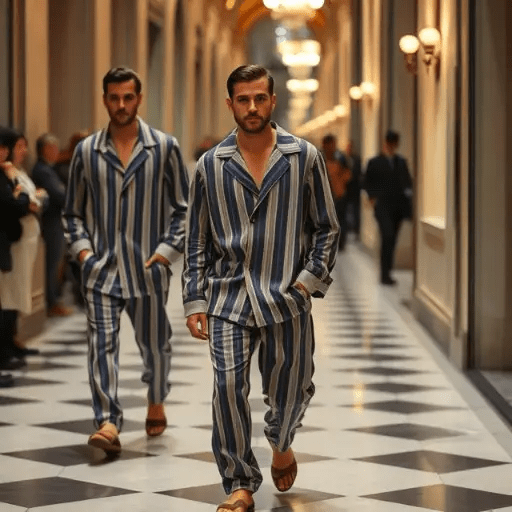
Milan’s menswear scene has undergone a significant transformation in recent seasons, with a notable decrease in the number of shows and a shift in the way designers approach fashion. The uncertainty surrounding US tariffs, economic challenges in China, and the threat of a new war in the Middle East have all contributed to a sense of unease in the industry. Amidst this backdrop, designers have been forced to reevaluate their approach to fashion, prioritizing authenticity, comfort, and sustainability over flashy designs and aggressive marketing.
The absence of several major brands, including Gucci, Fendi, and Giorgio Armani, was palpable throughout the week. However, this void also created an opportunity for other designers to shine. Zegna’s decision to present its spring/summer 2026 collection in Dubai was a notable move, aimed at catering to a specific and affluent segment of its global clientele. The brand’s focus on comfort and practicality was evident in its self-lined double layers of artfully crushed ticking-stripe silk poplin, which Alessandro Sartori described as “as if you don’t care.” Indeed, his clothes looked as though they’d already been broken down and softened around the body.
The influence of Armani’s legacy was evident throughout the week, with many designers paying tribute to his signature style. Domenico Dolce and Stefano Gabbana’s collection, for example, featured a muted color palette and deconstructed tailoring that echoed Armani’s iconic look. Similarly, Paul Smith’s collection was inspired by a jaunt from India to Morocco to Egypt, resulting in light tailoring and subtle nods to those locales. Smith’s focus on classic suiting with jolting fillips of detail or color was a masterclass in understated elegance.
Vivienne Westwood’s show, on the other hand, was a typically eccentric affair, featuring men in stubby high heels and leopard coats. The brand’s new creative director, Andreas Kronthaler, has been pushing the boundaries of traditional tailoring, and this show was no exception. Kronthaler’s vision for the brand is one of androgyny and inclusivity, with clothes that blur the lines between traditional notions of masculinity and femininity.
Miuccia Prada and Raf Simons’ collection was a stunning example of simplicity and elegance, featuring clothes that were “the opposite of aggression, power, nastiness.” Their show was an antidote to the churn of news right now, and a rejection of over-designed, overwrought, and overthought fashion. The duo’s pieces were straightforward, pared-back, and eminently wearable, a refreshing change from the complexity of modern life.
As the fashion industry continues to navigate the challenges of the modern world, it’s clear that Milan’s menswear scene is adapting to the uncertainty. While some brands may be absent, others are pushing the boundaries of style and creativity. In a world where authenticity and sustainability are increasingly important, it’s clear that the future of fashion lies in simplicity, comfort, and a rejection of the status quo.
Key Takeaways:
Milan’s menswear scene is undergoing a significant transformation, with a focus on authenticity, comfort, and sustainability.
The absence of several major brands has created opportunities for other designers to shine.
The influence of Armani’s legacy is evident throughout the week, with many designers paying tribute to his signature style.
Vivienne Westwood’s show was a typically eccentric affair, featuring men in stubby high heels and leopard coats.
Miuccia Prada and Raf Simons’ collection was a stunning example of simplicity and elegance, featuring clothes that were “the opposite of aggression, power, nastiness.”
 The Tower Post