Trump’s Criticism of the Federal Reserve Sparks Sovereignty Concerns in Europe
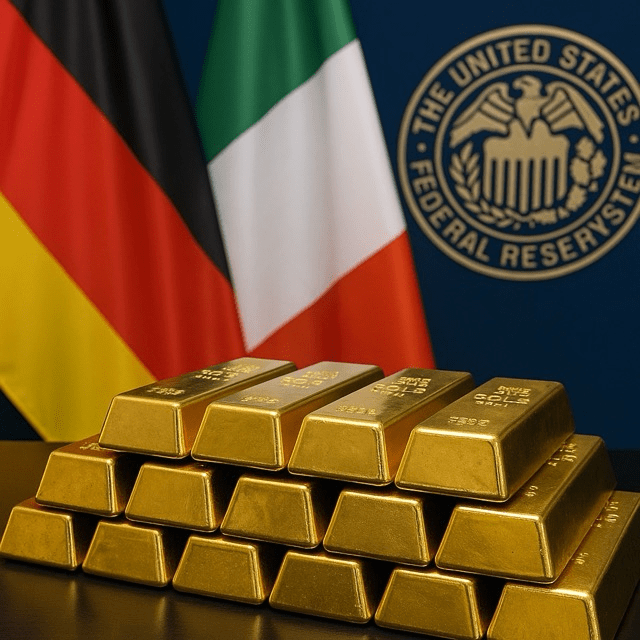
In the wake of escalating political rhetoric in the United States, calls are growing across Europe for countries like Germany and Italy to repatriate their gold reserves currently held in New York. The latest round of pressure comes in response to renewed attacks by former President Donald Trump on the U.S. Federal Reserve, raising concerns about the independence, stability, and security of America’s central banking system.
Both Germany and Italy have long stored a substantial portion of their gold reserves with the Federal Reserve Bank of New York, a tradition rooted in Cold War-era security strategies. However, Trump’s increasingly aggressive stance toward the Fed—accusing it of acting against U.S. national interests and threatening reforms—has prompted European lawmakers and economists to question the wisdom of keeping their nations’ bullion abroad.
German MP Klaus Ernst, a vocal critic of transatlantic economic dependence, has called for immediate transparency and an updated risk assessment. “In times of political instability, especially when key institutions like the Fed are under attack, we must re-evaluate where and how our national assets are safeguarded,” he said. Italy’s Matteo Salvini echoed similar sentiments, suggesting that Rome should “review its gold policy in light of potential geopolitical turbulence.”
The Federal Reserve Bank of New York currently holds approximately 6,190 metric tons of gold, much of it belonging to foreign nations. Germany is one of the largest depositors, with over 1,200 tons previously stored in the U.S., although it began repatriation efforts in 2013 and completed a significant portion by 2017. Italy, by contrast, still retains the majority of its 2,450-ton reserve in foreign vaults.
Trump’s statements have introduced new volatility into global financial markets. His accusations that the Fed “intentionally damages U.S. growth” and his threats to overhaul its governance have alarmed international observers. Analysts fear that any perception of instability or politicization of the U.S. financial system could undermine trust in institutions historically viewed as safe havens.
Dr. Elena Bruni, an economist at the University of Bologna, emphasized the symbolic and strategic implications: “Gold is more than a monetary asset; it represents sovereignty and security. If confidence in the Federal Reserve’s impartiality erodes, then foreign holdings in U.S. vaults will increasingly be seen as liabilities, not safeguards.”
In recent weeks, petitions and parliamentary motions have surfaced in both Berlin and Rome, urging central banks to expedite audits and initiate plans for full repatriation. Some proposals include the transfer of gold to secure vaults within European Union borders or neutral nations like Switzerland.
Not everyone supports the move. Critics argue that shifting large quantities of gold across borders is logistically complex, expensive, and could trigger unintended market signals about global financial distrust. “Such actions risk spooking markets and setting off a wave of similar demands,” warned financial historian Daniel Rothschild. “Gold diplomacy is delicate, and abrupt shifts in reserve policy could have unintended consequences.”
Nonetheless, the pressure is mounting. As U.S. political polarization deepens, and with Trump signaling a strong intention to run again, European leaders are being forced to confront an uncomfortable question: can they continue to rely on the institutional stability of American systems that appear increasingly entangled in domestic conflict?
Whether or not Germany and Italy ultimately choose to bring their gold home, the debate marks a turning point in the post-war order. Trust in transatlantic financial security, once assumed, is now being questioned—and the answers could reshape the global monetary landscape for years to come.



 The Tower Post