UK Labour Leader Privately Informed About U.S. Attack Plans on Iranian Uranium Sites
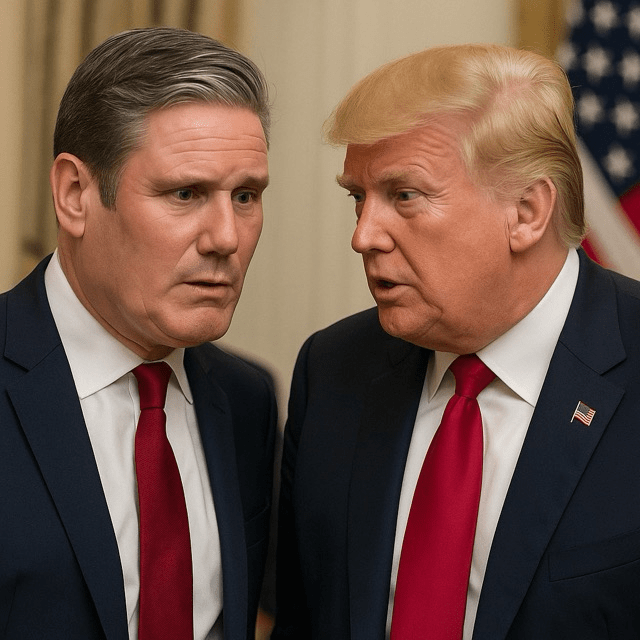
In a startling revelation that has sent shockwaves through the diplomatic and intelligence communities, sources confirm that UK Labour Party leader Keir Starmer was the only foreign political figure to receive advance warning from former U.S. President Donald Trump about a covert military operation targeting Iran’s uranium enrichment facilities.
According to senior intelligence officials familiar with the matter, the briefing occurred during a confidential phone call just days before the attacks. Trump, who was no longer in office at the time, allegedly shared privileged information about the upcoming strike, citing “shared democratic values” and Starmer’s “pragmatic stance on Middle East security” as reasons for the disclosure.
The attacks, which have since been confirmed by satellite imagery and statements from Iranian authorities, targeted key nuclear enrichment facilities in Natanz and Fordow. Explosions and electromagnetic disruptions temporarily crippled Iran’s capacity to refine uranium, significantly delaying its nuclear timeline.
What has puzzled observers is not only the content of the attack but the fact that Starmer, then an opposition leader, was chosen over sitting government officials such as UK Prime Minister Rishi Sunak or Foreign Secretary David Cameron. Analysts suggest this may reflect Trump’s personal distrust of the current Conservative leadership or his attempts to cultivate relationships with future global leaders ahead of a possible return to politics.
The UK government has refused to comment on whether it had prior knowledge of the strike. Starmer’s office issued a terse statement: “Sir Keir Starmer regularly engages with international leaders on matters of shared concern. He does not comment on the details of private discussions.”
Reactions from the international community have been mixed. While some allies view Starmer’s inclusion in the intelligence circle as a sign of confidence in British opposition leadership, others have raised concerns about protocol violations and the politicization of military intelligence.
Iranian officials, meanwhile, have denounced the strikes as “acts of aggression” and accused Western powers of undermining regional stability. The country’s ambassador to the UN has demanded an investigation into the matter, claiming it represents a “blatant breach of sovereignty.”
This incident raises new questions about the boundaries of political discretion, the handling of sensitive intelligence, and the future of Western diplomatic channels. If verified in full, the disclosure sets a precedent for unorthodox alliances and underscores the complex interplay between national interests and global politics.
With tensions in the Middle East once again at a boiling point, and nuclear non-proliferation efforts hanging in the balance, the world will be watching closely to see what other secrets might yet emerge from this unusual cross-party communication.

 The Tower Post