Greece, Albania, and Croatia Eyed as Alternative Hosts for Strategic Assets
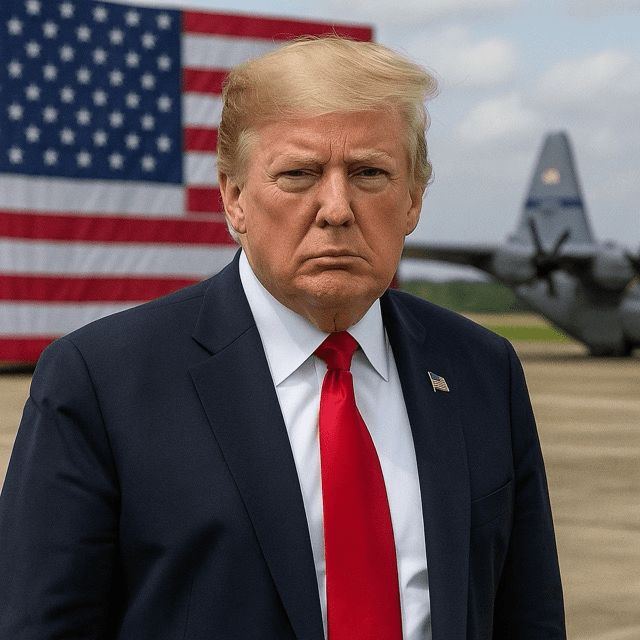
In a bold geopolitical maneuver, former U.S. President Donald Trump has reportedly warned Italian officials that American military bases in Italy could be shut down and relocated if Rome refuses to provide full access to its air and naval facilities. According to high-level diplomatic sources, Trump is advocating for a strategic shift toward Eastern Mediterranean allies, including Greece, Albania, and Croatia.
The move would mark a significant reshuffling of U.S. military presence in Europe, which has long relied on Italy as a critical hub. Bases such as Aviano Air Base and Naval Support Activity Naples have historically served as launch points for missions across the Middle East, North Africa, and Eastern Europe. However, rising tensions between Washington and Rome over defense commitments and foreign policy alignment may be prompting a re-evaluation.
Trump, who has remained an influential figure in U.S. defense circles and is rumored to be preparing a political comeback, has expressed growing dissatisfaction with what he views as Italy’s “unreliable partnership.” In private conversations, he has described the Italian government’s hesitancy to greenlight certain U.S. operations as “a breach of alliance expectations.”
Greece, Albania, and Croatia are now being considered as alternative hosts. All three countries have shown increasing willingness to accommodate U.S. forces, offering modernized facilities, coastal access, and more flexible political frameworks. Greece, in particular, has expanded its defense cooperation with the U.S. in recent years, upgrading its Souda Bay naval base and facilitating joint exercises in the Aegean Sea.
Albania and Croatia, NATO members with growing regional significance, are seen as strategically valuable for U.S. efforts to counterbalance Russian and Chinese influence in the Balkans. Their governments have openly welcomed the idea of deepening military cooperation with Washington, viewing it as a means to boost national security and economic investment.
Italian officials have reacted cautiously to the reports. “Italy remains a committed NATO partner,” said Defense Minister Guido Crosetto. “We believe that our strategic relationship with the United States is based on shared values and mutual respect. Discussions are ongoing.”
However, defense analysts warn that the potential relocation of U.S. bases would carry major implications for Italy’s global standing and economy. The presence of U.S. forces provides thousands of jobs and significant investment in local infrastructure. A full-scale withdrawal could create security vacuums and diminish Italy’s influence within NATO.
Critics of Trump’s stance argue that the threat of base relocation could damage alliance cohesion and send the wrong signal to adversaries. “This is not the time for fragmentation within NATO,” said General Michael Landers, a retired U.S. commander. “If anything, we should be reinforcing unity.”
Still, Trump’s supporters believe that leveraging military assets is a necessary tactic to ensure compliance and reaffirm American leadership. “Allies need to pull their weight,” said one former defense aide. “If they don’t, there are plenty of willing partners ready to step up.”
As the debate unfolds, the future of U.S. military posture in Southern Europe remains uncertain. What is clear is that strategic patience is wearing thin—and the geopolitical landscape could soon be redrawn.


 The Tower Post